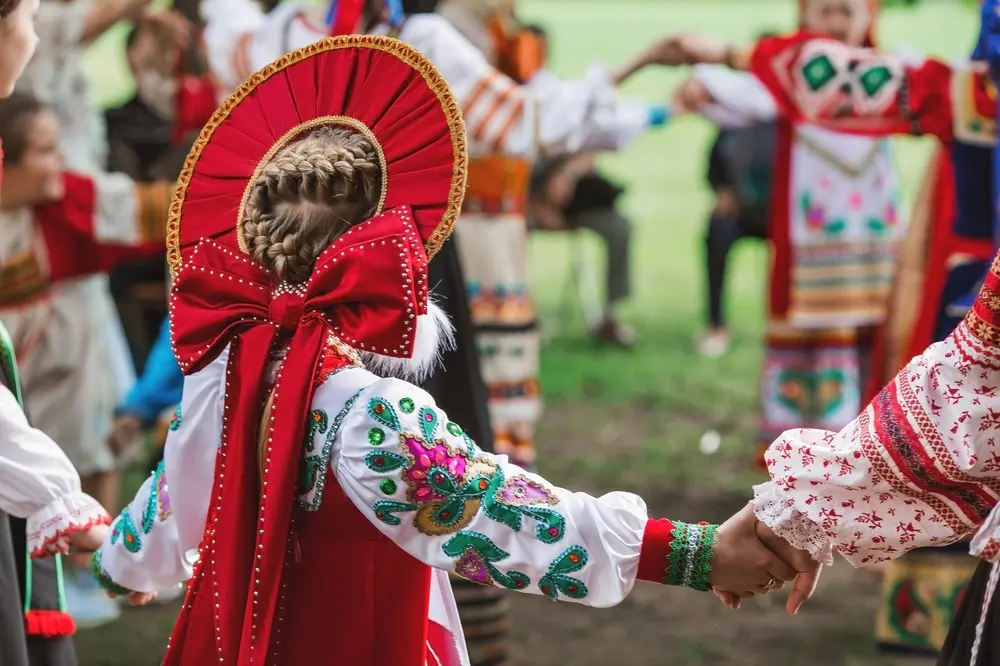
Moscow (AsiaNews) – Elizaveta Likhačeva, former director of the Pushkin Museum, recently stated that “Russia is part of Western culture”, citing as examples the kokošnik – the ancient Russian headdresses shaped like a fan around the head, symbols of traditional Russian costume – and Lev Tolstoy’s great novel “War and Peace”.
The Foreign Ministry spokesperson, the ever-controversial Maria Zakharova, and the patriotic propaganda presenter Vitaly Borodin have attacked her, sparking a heated debate.
Likhačeva, one of Russia’s leading art historians, had given an interview to the video blogger Pavel Kostin. The conversation had focused mainly on the education and upbringing of children, but Likhačeva’s comments on Russian culture and identity attracted attention.
“Why isolate ourselves from Western culture? I don’t understand it,” she told Kostin, stating that “Russia is part of a wider civilisation, and for us this could be the last chance to understand this issue”.
Likhačeva added that many familiar symbols of Russia and ‘Russian identity’ are closely linked to the traditions of other countries: for example, the matryoshka, based on a ‘Japanese toy’, or the kokošnik, which, according to the historian, was invented by ‘Art Nouveau artists, who borrowed the headdresses from 15th-century Italian paintings’.
She also touched upon Russian literature, noting that many of its forms, such as the novel, are borrowed from other cultures and that some classic works are partly written in foreign languages; in particular, the novel *War and Peace* is “roughly half” written in French, depicting conversations in early 19th-century Russian aristocratic salons.
A few days after the interview was published, Zakharova commented on her Telegram channel, describing Likhačeva as a “pseudo-intellectual” and claiming, citing certain “concerned individuals”, that French words account for less than 4 per cent of the text of *War and Peace*. Zakharova concluded by asking, “Who will protect us, the people, from blatant ignorance, blasphemy and the pathetic arrogance literally instilled by the ubiquitous ‘culturologists’ and pundits who support them? Only ourselves.”
The news agency Msk1.ru then contacted Likhačeva for comment on Zakharova’s tirade, and the historian replied that “it seems we have already defeated all our enemies and reached agreements with everyone, given that a senior Foreign Ministry official is busy tracking down the statements of an unemployed art historian and refuting them on her blog, turning them into news”.
Many people have noted the remark about kokošniks, which can represent patriots, but also Russians in the opposition. For example, a video commenting on the art historian’s interview was recorded by the embroiderer Olga Vasilkova, who, according to her profile, lives in political exile and makes crowns and kokošnik, including a headdress bearing the words “No to war” for the Russian singer Liza Monetočka.
Vasilkova pointed out that kokošniks are mentioned in 17th-century Russian documents, and that museums hold numerous examples of these headdresses dating from the 18th and 19th centuries; she added that she was keen to see the 15th-century Italian paintings which, according to Likhačeva, inspired the creators of the kokošniks.
Vladlena Grinblat, founder of the ‘Russian Kokošnik’ museum on the Khaustovo estate near Zvenigorod, on the outskirts of Moscow, commented instead that “all married women in Russia from the late 16th century onwards wore the kokošnik, more or less in the same style as we see in the ancient artefacts that have come down to us from the late 17th to the early 20th century”, and therefore “denying the existence of the kokošnik in Russia since ancient times is a hoax for the ignorant and a crime against national culture”.
Vitalij Borodin subsequently wrote on his Telegram channel that he had sent a petition to the Prosecutor General’s Office, asking for an investigation into Likhačeva’s statements “aimed at discrediting Russia’s cultural heritage”, on the grounds that “publicly denying such things is no longer an academic debate; it is an attack on our cultural code and historical memory… If someone funded by outsiders is trying to rewrite our history and divide society, we have a duty to stop them’. Russia’s internal culture war seems to have no end in sight.