Journalist Galina Sidorova, former editor-in-chief of the magazine Soveršenno Sekretno, wonders whether, against the backdrop of Kiev’s retaliatory drone and missile strikes across Russia, “the inarticulate lamentations of the Russian oligarchs will finally succeed in reining in the Kremlin’s ship, and in pushing the mad captain away from the helm”.
For Russia is now a country cut off from all external communication, where people are ‘locked away – some in prisons and psychiatric hospitals, others at home – and the country is sealed off, all whilst attempting to reach every form of life beyond its borders… for Putin’s brotherhood of dysfunctional elders, this has become both a creed and an instrument of their very political existence’.
Recent threats by Ukrainian President Volodymyr Zelenskyy, claiming that ‘Russian airspace can no longer be considered safe’, are making the sense of the ‘Russian prison’ even more acute for its inhabitants.
Just as in the ‘glorious’ days of Covid, when everyone was forced to stay at home and nobody went anywhere, a document on exit visas for Russians has suddenly appeared in recent days – likely inspired by the FSB – imposing new rules on travel to ‘hostile countries’.
Travel will only be permitted in tourist groups of at least 10 people, following an approved itinerary; ostensibly in the name of public safety, but in reality this amounts to a requirement for state authorisation for any departure from the Russian Federation.
The ban on free movement was in force for almost the entire existence of the USSR, when permits – known as ‘exit visas’ – had to be obtained through the Department for Visas and Registration Ovir, a special division of the Ministry of the Interior.
Tourism was permitted only in organised groups, and Soviet citizens were generally allowed to spend their holidays in peaceful, socialist Bulgaria; only through good behaviour could one ‘earn’ the right to subsequently admire the sights of some Western capital.
The best students and labour heroes of the ‘best country in the world’ were rewarded with a trip to the ‘decadent’ West.
Galina Sidorova was an excellent student of French, and was fortunate enough to travel abroad for the first time on a student exchange programme, attending a two-week language course in Paris in the mid-1970s.
The instructions were strict: one must never speak to strangers, especially if someone approached you in the street, because malicious dissidents, it was said, ‘always try to get you to accept dangerous material’ such as the magazine Russkaja Mysl, one of the leading publications of Russian émigrés in France at the time.
If we went out, we had to do so in groups of at least three people, and breaching the ‘rules’ was punishable by expulsion from the institute.
We were given a little pocket money for souvenirs, provided with meals during lessons, and had breakfast and dinner at the hotel. Galina recalls that “we were staying in a splendid location, not far from the Louvre, in an old hotel with creaky floors… we had practically no free time, but our young hearts yearned to go out into the city at every opportunity”.
There was also a cinema nearby, where The Exorcist was showing at midnight – a horror film they’d heard of despite the Iron Curtain, as films of that kind were neither produced nor distributed in the USSR.
So, after waiting until everyone was asleep (or at least ‘holed up in their hideaways’), two bright young students, paralysed with fear at every creak, made their way towards the hotel exit to dash to the cinema.
Today in Russia, everything is organised, in one way or another, just as it was at the end of the Brezhnev era: having adopted the practices of his Soviet predecessors, Putin has failed to realise that widespread mistrust of everyone and everything is nothing more than a sign of the state’s weakness.
However, waging war on all fronts, and in a context where part of the older generation has already experienced the freedom to leave the country and the younger generation has settled on the World Wide Web, the Kremlin’s ‘captain’, now exhausted, has reached new heights of brutality and sophistication.
All the more so because Russia is a country of perpetual restrictions, which are easy to impose and even easier to forget. For example, the very same anti-Covid-19 restrictions are still in force in many regions: the authorities cite them whenever they need to ban demonstrations.
Not even the war mobilisation has been suspended, so should it be renewed in October (something people are talking about on every street corner in Russia today), there will be no need to announce anything new: the measures set out in Putin’s decree will simply be stepped up.
The same applies to ‘exit visas’, the first ‘victims’ of which are currently the security forces: active-duty FSB officers are subject to a total travel ban. This ban can be extended by law for up to five years, even after dismissal.
The ability of officials from the Ministry of the Interior and the National Guard to leave the country was initially blocked by internal decrees, and following the start of the invasion of Ukraine, the rule was enshrined in federal legislation.
In July 2022, criminal penalties were introduced for citizens with security clearance who travel abroad without permission, which directly affected judges, prosecutors and investigators with security clearance; in August 2023, a law on the surrender of foreign passports was passed, requiring all public officials and members of the security forces holding such authorisations to deposit them with state bodies for safekeeping.
From May 2024, judges, lawyers, members of the State Duma and senators are required to submit a written notification to the FSB and the Foreign Intelligence Service SVR at least 30 days before their planned journey, specifying the itinerary, dates, means of transport and address abroad.
The rest is predictable, reminiscent of another rule from the Soviet era, when after every business trip one had to hand over one’s passport to the personnel officer.
Although journalists are obviously not privy to any state secrets, in these times public-sector employees are naturally the first to suffer, and the state will certainly find a way to collect and retain the travel documents of all ‘ordinary Russians’ who are not directly under its control.
Given the current global trend towards border closures, which is setting humanity back by decades, it is unlikely that such internal abuses will provoke outrage even in developed democracies, as was the case during the Cold War.
Finally, a total ban on citizens entering and leaving the Russian Federation could be imposed via martial law, which in Russia is introduced by a special presidential decree.
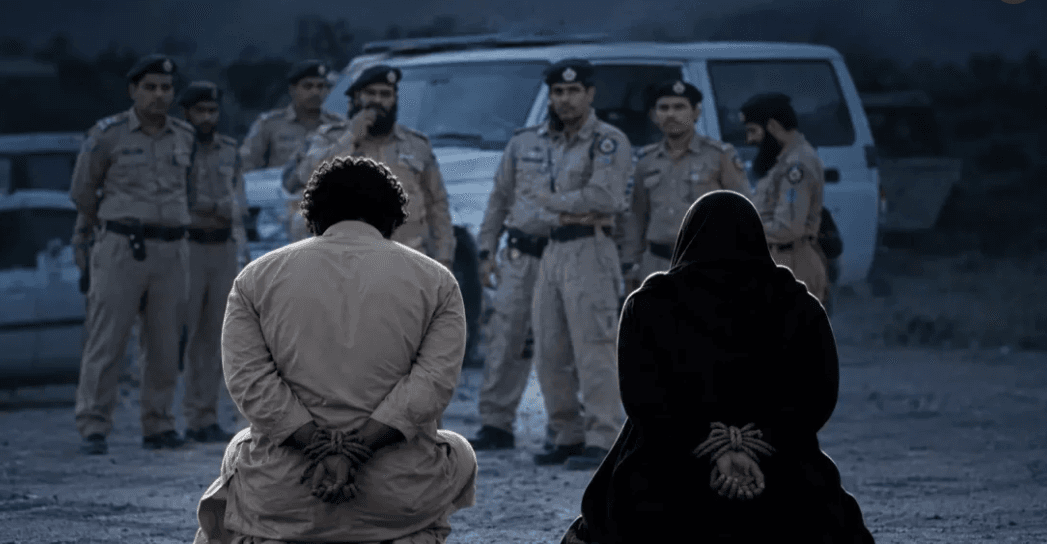
This is an integral part of the trend, and the main tool against those who threaten the Kremlin: since 2022, over two thousand people have been charged with high treason, espionage and collaboration with a foreign state ‘to the detriment of Russia’, as a logical consequence of the country’s isolation.
In 2025, the number of people arrested for such offences was thirty times higher than in 2021, and in the first six months of 2026, 312 people were added to the ranks of convicted ‘traitors’ – an all-time record. Of these, only 4 per cent of the total had access to state secrets.
The average sentence for treason has risen from 12 to 16 years, and ten people have been sentenced to life imprisonment; thirteen have died in custody.
Scientists have been the subject of particular scrutiny by the law enforcement agencies: they have been deprived of the freedom to communicate with foreign colleagues, and all research is under the surveillance of the secret services.
It is not difficult to imagine what this means for the development of science. Since 2022, around fifteen scientists have faced charges of treason; ten of them were over 60 years old at the time of their arrest.
The main charge was that they had participated in joint projects with foreigners and presented their work at international scientific conferences.
Recently, Putin let slip: ‘When Operation Svo ends, what will we do?’. Apparently, this question was put to him by some volunteers providing assistance at the front, but in reality it seems more like a reflection on his own nightmares. And the president answered this question decisively: the war must continue. After all, as his spokesperson Dmitry Peskov stated, this is “the perfect crisis” for Russia, one that fills “the whole of our people’s lives with unity and moral fortitude”.
RUSSIAN WORLD IS THE ASIANEWS NEWSLETTER DEDICATED TO RUSSIA. WOULD YOU LIKE TO RECEIVE IT EVERY SATURDAY? TO SUBSCRIBE, CLICK HERE.