Dinajpur (AsiaNews) – For decades, the red-brick workshops of Novara Technical School trained generations of carpenters, mechanics and electricians in northern Bangladesh.
Founded by missionaries from the Pontifical Institute for Foreign Missions (PIME), the institution helped young people from rural and indigenous communities acquire practical skills and secure livelihoods.
Now, in a new chapter of its history, the Catholic Church in Dinajpur has transformed the school into a diploma-level engineering institution, hoping to expand opportunities for a region where access to higher technical education remains limited.
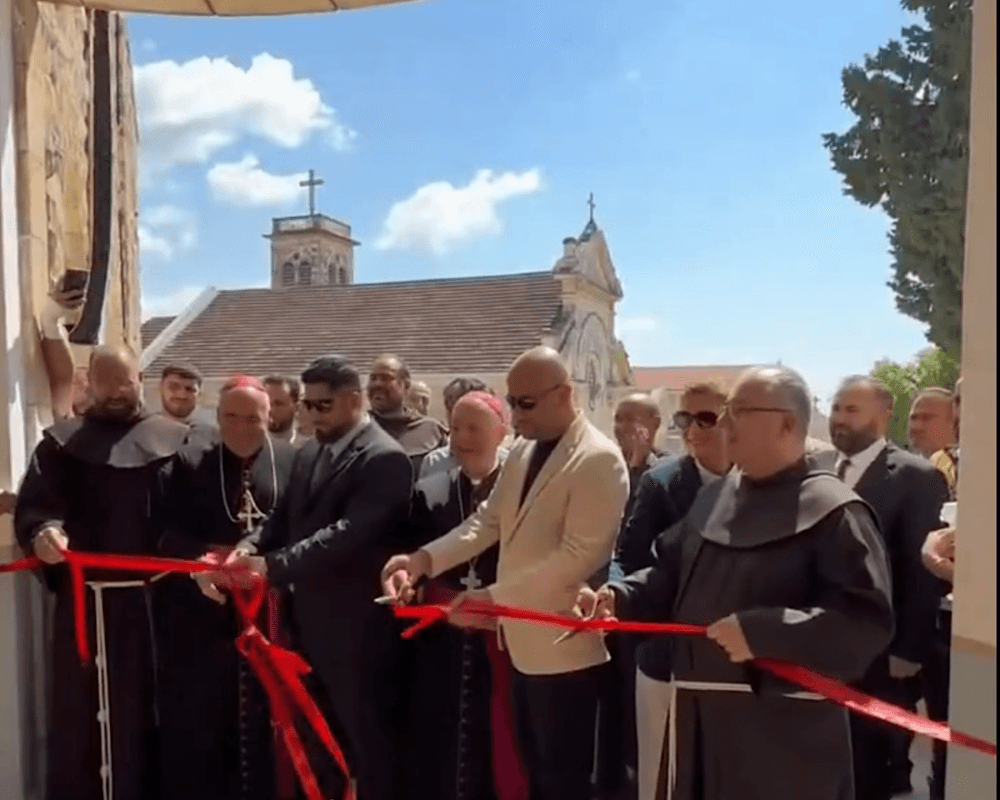
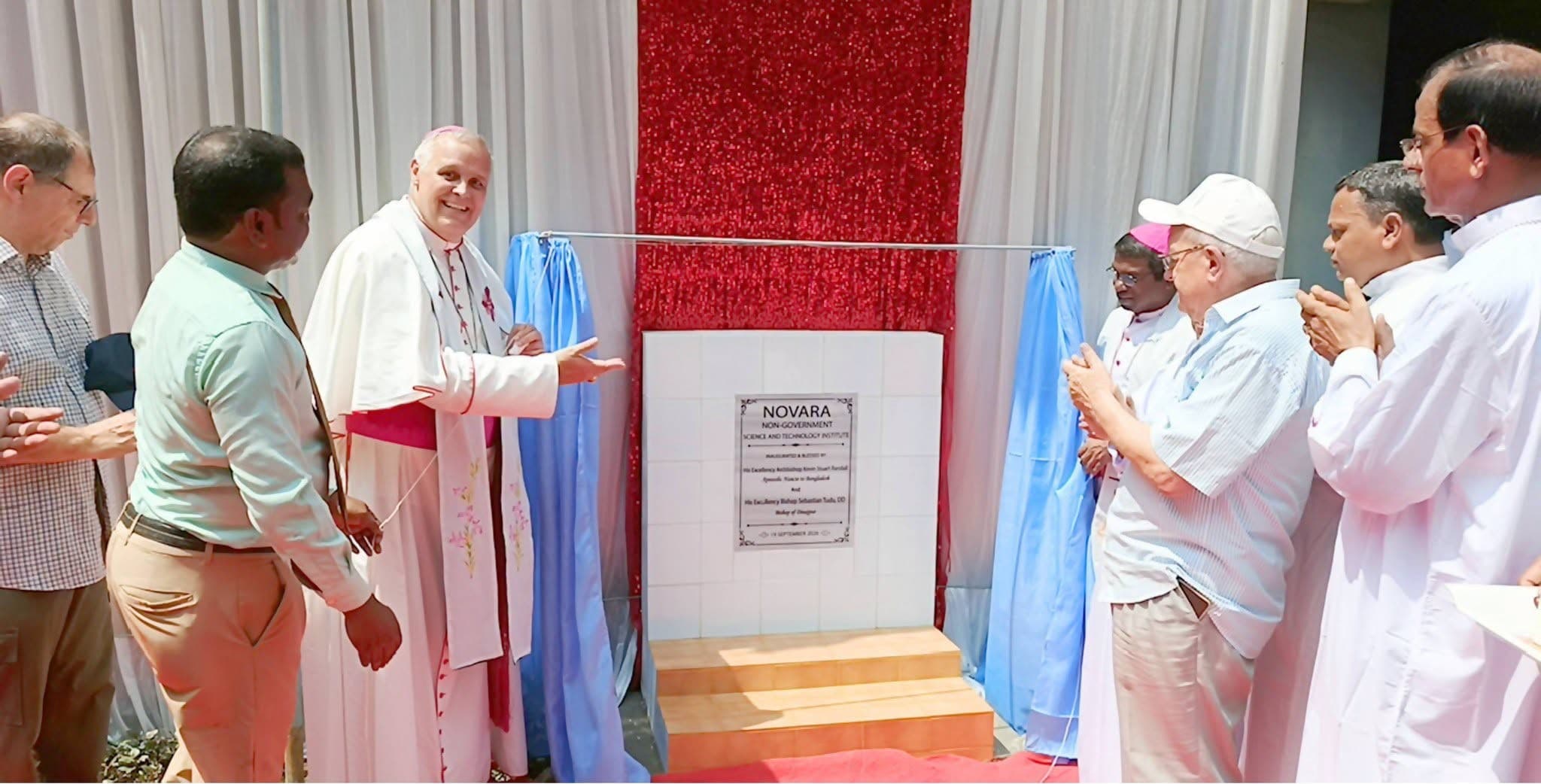
The newly renamed Novara Non-Government Science and Technology Institute was formally inaugurated on 19 September in Suihari, on the outskirts of Dinajpur, during a ceremony attended by the Apostolic Nuncio to Bangladesh, Archbishop Kevin S. Randall.
The institute, originally established by PIME missionaries in the 1960s, was handed over to the Diocese of Dinajpur last year. Church leaders see the move as a continuation of a long missionary legacy that combines evangelisation with education and human development.
Archbishop Randall: "Studenti spina dorsale del Paese"
Addressing students, teachers and local residents, Archbishop Randall stressed the importance of technical education in a rapidly changing world.
“Today’s students are the true backbone of the country’s future,” he said. “Just as a strong backbone supports the human body, educated and skilled young people help build society on a solid foundation.”
He noted that technical skills are increasingly valued worldwide and expressed hope that the new institute would equip thousands of young Bangladeshis to contribute to the country’s development at home and abroad.
The inauguration began with a traditional welcome involving indigenous music and dance, reflecting the cultural diversity of northern Bangladesh, where many ethnic minority communities live. After the raising of the national flag and the flag of Vatican City, Church leaders unveiled the institute’s plaque before joining a discussion session and cultural programme.
An opportunity for indigenous communities
For Bishop Sebastian Tudu of Dinajpur, president of the institute, the project responds to an urgent local need.
“Young people in North Bengal are not pursuing higher education in large numbers, and there are very few diploma engineering colleges in this region,” he said. “Through this institute, many young men and women will be able to contribute to socio-economic development.”
The bishop noted that technical education has become essential rather than optional in today’s technology-driven society. In particular, he said, it can help young people from marginalised backgrounds become self-reliant and employable.
For Michael Mardy, principal of the institute, the launch is deeply rooted in the vision of the missionaries who established Novara Technical School more than six decades ago.
“We are deeply grateful to the PIME missionaries,” he told AsiaNews. “Had they not established the Novara Technical School in the 1960s, we would not have been able to launch this institution today. Their contribution was a gift of love and service.”
Door to the labour market
The institute can accommodate 200 diploma students and has already enrolled 17 in its first intake. Another 137 students are currently attending one-year and two-year technical courses.
The new four-year diploma programmes include Automobile Technology, Mechanical Technology, Electrical Technology and Civil Technology. Church leaders hope these disciplines will meet the growing demand for skilled workers in Bangladesh and overseas labour markets.
One student attending the inauguration said the new institute could provide opportunities that previously required young people to move far from home.
“Many of us wanted to study engineering but did not have access to suitable institutions nearby,” he said. “Now we have that opportunity in Dinajpur.”
The legacy of the school remains closely tied to PIME missionaries, who continue to play a role in the area.
Among those attending the ceremony was Father Paolo Ballan, superior of the PIME Fathers in Bangladesh. He welcomed the decision of the local Church to take responsibility for the institution.
“PIME missionaries came to Bangladesh to proclaim the Gospel, but they also worked in education and social development,” he said.
While the institute is now administered by the diocese, the PIME Fathers continue to manage a 100-bed student hostel on the campus. Accommodation costs are kept low, at 1,200 taka (US$ 9.75) per month, making it accessible for students from poorer families and remote villages.
Historic cooperation between Novara and Dinajpur
The transformation of Novara comes at a symbolic moment in its history.
The institution traces its origins to a partnership between the dioceses of Novara in Italy and Dinajpur in what was then East Pakistan. In 1965 it opened its first carpentry course under Brother Mario Fardin, who became its first director. Over the years, workshops for electrical, mechanical and metalwork training were added.
During Bangladesh’s Liberation War in 1971, classes were suspended and the Novara Centre became the site of military confrontation. Educational activities resumed after the war, and the institution gradually expanded. Between 2000 and 2003, major investments added new classrooms, administrative facilities and modern workshop equipment.