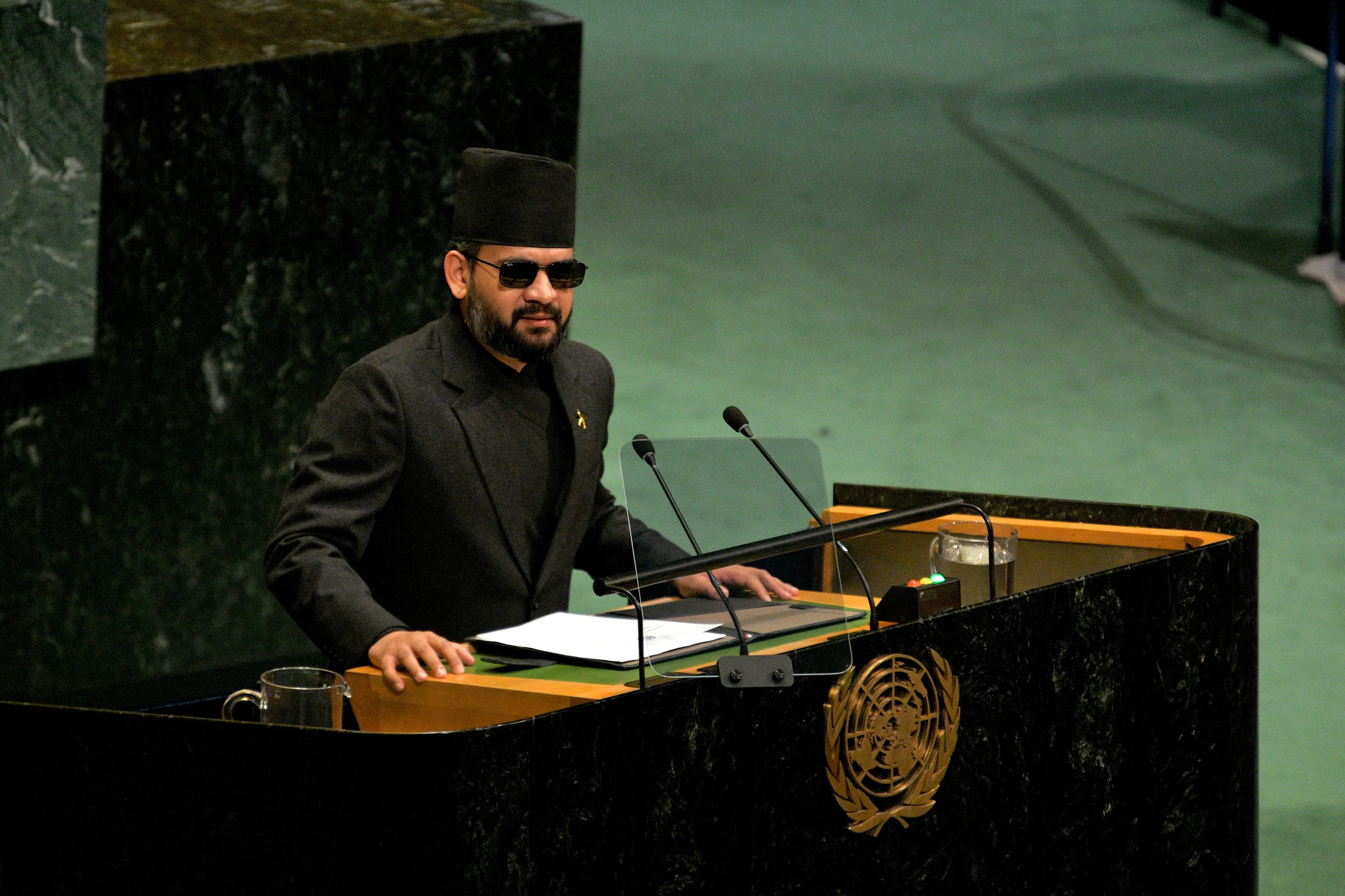
Thimphu (AsiaNews) – On 23 September, during Climate Week and the Science Summit 2026 in New York, Bhutan’s Prime Minister Tshering Tobgay announced the introduction of the Gross Ecosystem Product (GEP), an indicator that measures the economic value of ecosystem services generated by forests, rivers, and land.
While the Gross Domestic Product (GDP) reflects the total value of goods and services produced in a country, GEP assigns a monetary value to services such as carbon sequestration, water regulation, erosion control, and agricultural production, many of which are not fully captured by traditional economic indicators.
“For decades, Bhutan has believed that development cannot be measured by economic growth alone. By measuring GEP alongside GDP and GNH, we recognize nature as the foundation of our economy and wellbeing,” Tobgay said.
According to the prime minister, the GEP reached a value of US$ 6.2 billion in 2024, nearly double the national GDP.
Used alongside GDP, this new metric aligns with the philosophy of Gross National Happiness (GNH), an indicator introduced by Bhutan’s fourth king in the 1970s to measure citizens' well-being beyond mere economic metrics.
The index covers nine areas, ranging from health and psychological well-being to community vitality and views on government, and its results help shape laws, budgets, and reforms.
Integrating GEP allows Bhutan to once again place natural capital at the centre, linking environmental conservation with human well-being and sustainable development.
Bhutan is not alone in this endeavour. Supporting the country in the GEP development are the Natural Capital Alliance, an international research hub based at Stanford University, and the Enlight Foundation, a US-based philanthropic organisation.
In doing so, the Bhutanese government embraces the Beyond GDP initiative launched by the United Nations in May, which holds that GDP is insufficient to measure a country's progress, particularly regarding human well-being and sustainability.
Although Bhutan is the first country to officially adopt GEP, the indicator was originally developed in China, where it has been used for years in various provinces and cities, including Shenzhen and Qinghai, to evaluate the performance of local administrations and guide land-use planning.
Bhutan is also not the only country interested in this approach. Researchers and institutions involved in developing GEP are working with other countries, including Chile, Colombia, Indonesia, India, and the Philippines.