Imphal (AsiaNews) - "The silence of the prime minister, the incompetence of the interior minister even after his visit to the state, and the indecisiveness of the local government in ending the violence are worrying. The authorities cannot escape responsibility and shift blame."
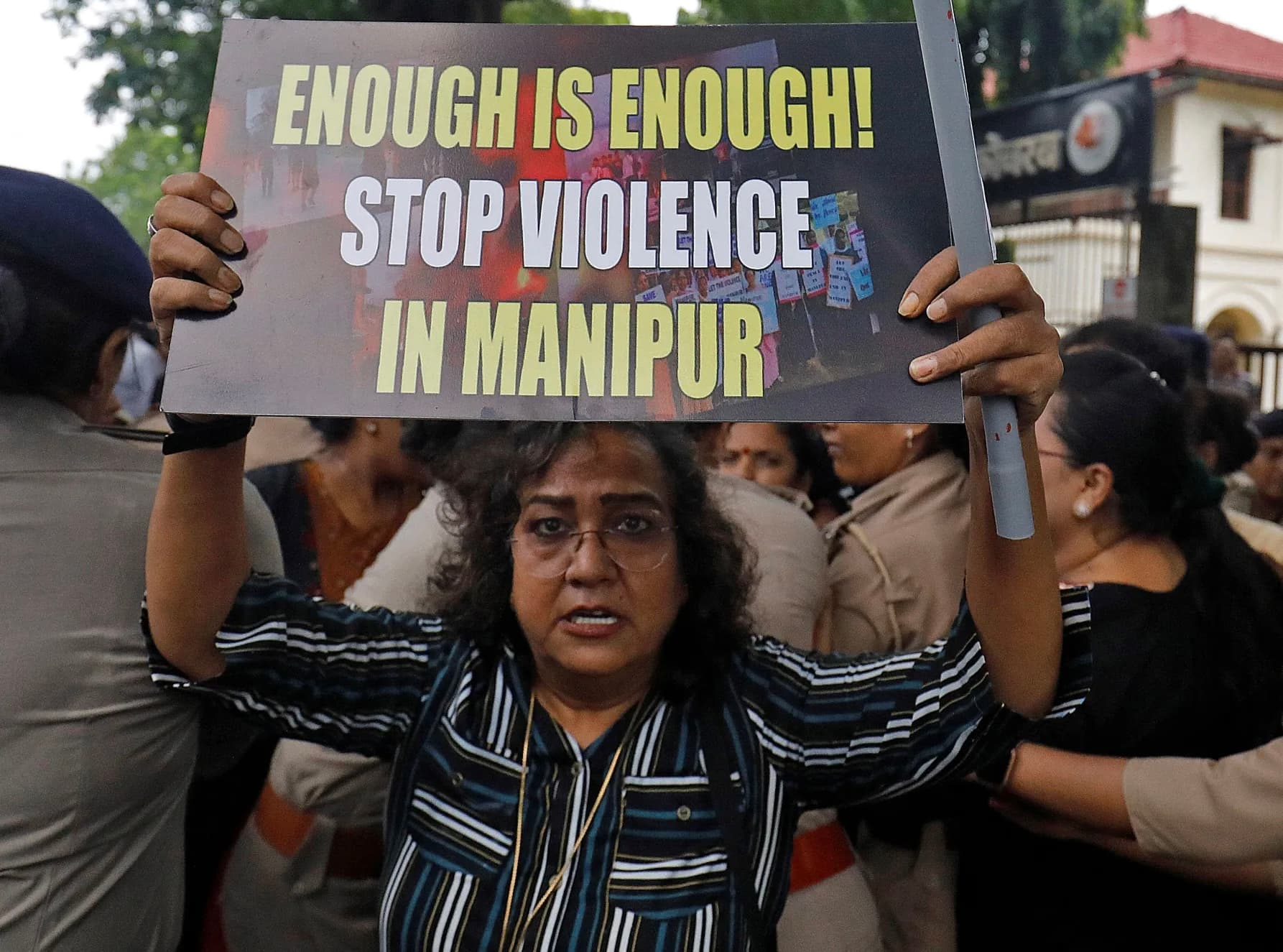
In the face of violence that has now been going on continuously for a month and a half in Manipur State, he is calling the government of Narendra Modi to its responsibilities by the Archbishop of Imphal, Msgr. Dominic Lumon.
He does so in a detailed report issued to all of India's brother bishops on the situation in the battered northeastern Indian state rocked since early May by serious fighting between the Meitei and Kuki.
"The violence and fires," writes Msgr. Lumon, "continue unabated, especially in the suburbs of the region. Precious lives have been lost, homes and villages burned or destroyed, property vandalized and looted, places of worship desecrated and burned. More than 50,000 people have lost their homes and are languishing in camps for the displaced. Many have left the capital Imphal and the state to safer places in neighboring Mizoram State, other northeastern states, and metropolises. There is a complete collapse of the constitutional apparatus in the state. In short, there is fear, uncertainty and a general sense of hopelessness."
The archbishop points out that in the clash between the two communities it is the entire Manipur community that suffers, regardless of affiliations. "In a month and a half," he denounces, "the elected state government and the central administration in New Delhi have been unable to restore the rule of law and put an end to the insane violence. It can be said that we are facing the collapse of the state machinery at the local level. One wonders why President's Rule (direct administration by the federal government in New Delhi, provided for in serious cases by Article 356 of the Indian Constitution ed.) is still not considered as an option."
The prelate speaks of many more casualties than the 100 deaths in the official figures, "Violent activities in the suburbs outside the capital are greatly underestimated," he writes. "But still house fires continue to occur, even in the heart of the city of Imphal.
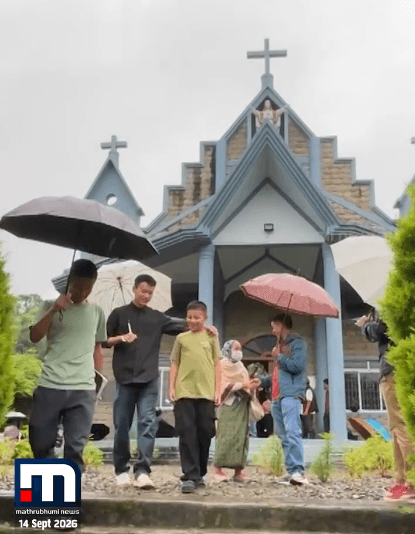
The archbishop points out that it would be "categorically wrong to say that the current one is a religious conflict." However, he adds, in the clashes between Meitei (mostly Hindu) and Kuki (mostly Christian) people, religiously motivated attacks are an undeniable fact: "Each of the more than 200 Kuki villages has seen one or more churches attacked. And all of the approximately 249 churches of Meitei Christians were also destroyed in the first 36 hours after the violence began."
Bishop Lumon also points to the emergence of militias claiming to protect Sanamahism, the traditional religion of this area. "There are accounts of Meitei Christians being threatened if they do not return to their original religion and of pastors being told not to rebuild destroyed churches," explains the Imphal archbishop.
"The involvement of a 'third element,'" Msgr. Lumon continues, "is visible and very similar to what happened in the Gujarat and Kandhmal district riots in Orissa. Narratives that speak of a 'war on drugs,' 'operation against Kuki militias,' or 'fight against illegal immigrants from Myanmar' have their own weight in the violence, but the undercurrent of religious intolerance emerges clearly from the figures. Amid this orchestrated propaganda, a subtle attack on Christianity seems to have found a free and unsuspected space."
In this difficult situation-where emotions and tensions remain high-the Church for the prelate has a duty to "calmly assess the situation and refrain from too hasty decisions that can be considered partisan. It must maintain neutrality and promote peace and unity, prioritizing relief to those in dire need."
The challenges for the Catholic community itself are demanding: today," Msgr. Lumon recounts, "Kuki priests and religious can only be assigned to Kuki communities," "although we hope that the situation will soon return to normal. There are parishes where all the faithful have been dispersed and there is a risk of not being able to reconstitute the community. And then there are schools, wiped out after already suffering the crisis because of Covid.
With regards solidarity efforts, the Archbishop of Imphal asks everyone to understand that "the crisis facing the people and the Church of Manipur is not an isolated incident," but should be seen in the broader perspective of "concern for minorities in India." He calls for concrete gestures in this regard from other dioceses and the Indian Bishops' Conference.
"Our Church in Manipur," the archbishop concludes, "is grieved, saddened and above all concerned about the situation that has arisen. I pray that common sense will return, that peace, forgiveness and brotherhood will be restored, and that peaceful coexistence will become a reality once again. I thank everyone for their solidarity, messages and prayers at this time of crisis. Please continue to support us in your prayers."