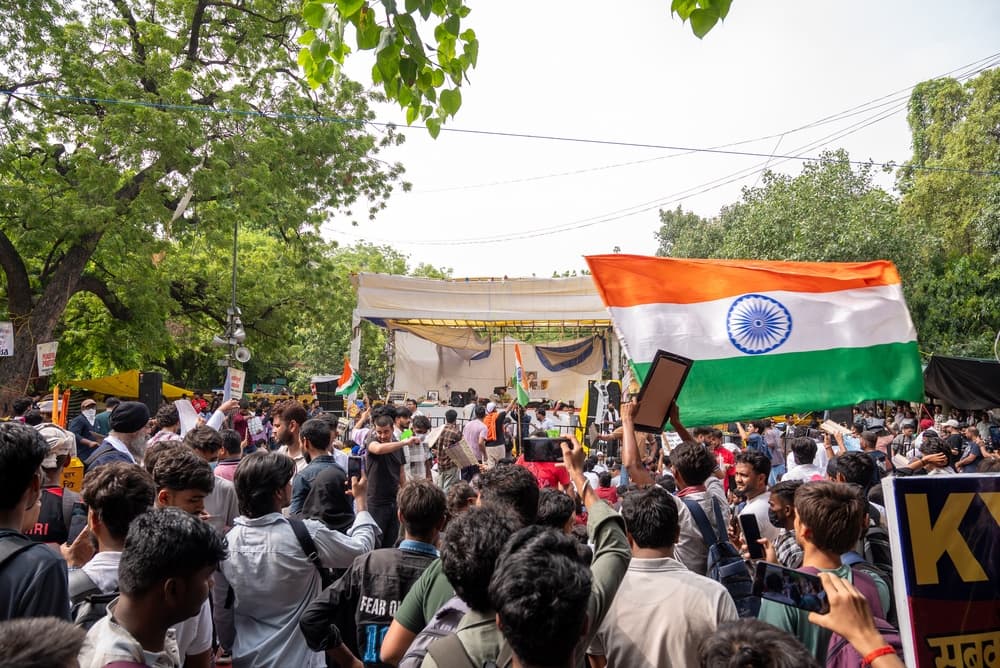
Chennai (AsiaNews) - “In this context, we need someone who is outside the political system and can challenge the authorities.” For the Jesuit Sebasti L. Raj, of the Indian Social Institute, the youth-led protest movement that has shaken New Delhi and other Indian cities in recent weeks can play an important role in keeping those in power in check. This is because, in his view, the media and Parliament are no longer able to sufficiently challenge those in government.
“My only hope is that they try to remain an independent student movement,” he tells AsiaNews. “Not just now, but also towards whoever comes to power in three years’ time. They must be able to challenge those who come after them too” in order to achieve their demands. Raj is not certain that the young people will manage to maintain this autonomy, “but right now the country needs a movement like this”.
Once again, the protests are being led by the Cockroach Janta Party (CJP), the youth movement that began as a satirical trend on social media and which quickly rallied a large number of young people frustrated by politics and a lack of job opportunities. Initially, the young people succeeded in securing the resignation of the Minister of Education, who was accused of irregularities in university entrance exams.
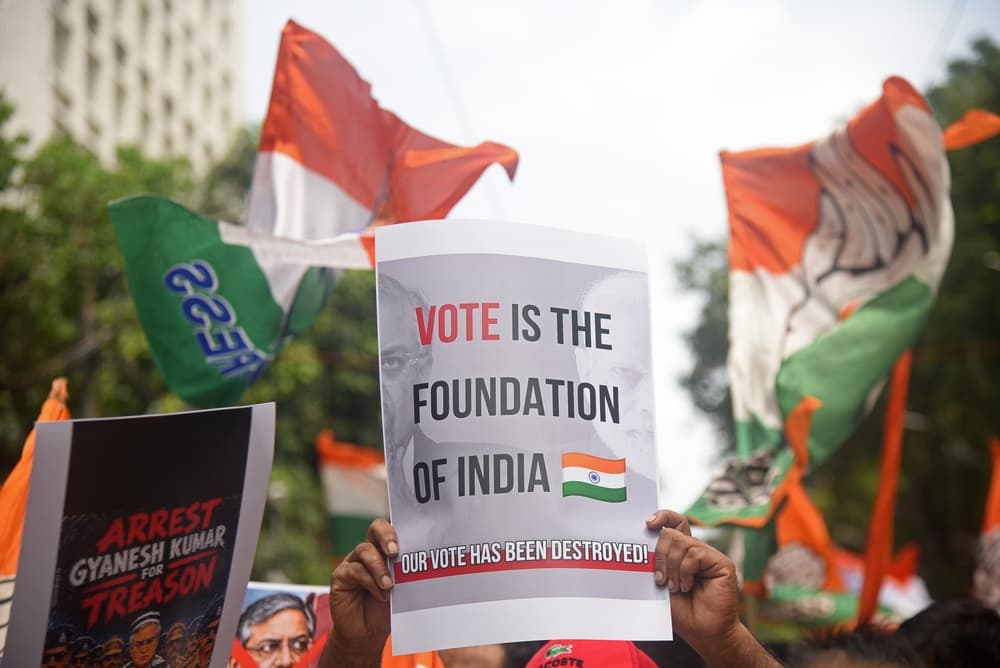
The CJP has now been joined by the All India Students’ Association, a student organisation linked to the opposition Congress Party, whose political leaders have taken to the streets alongside the young protesters. For weeks, the demonstrations have been calling for the resignation of the Election Commission chairman, Gyanesh Kumar, accused of facilitating the removal of thousands of names during the revision of electoral rolls ahead of local elections in several Indian states to benefit the Bharatiya Janata Party (BJP), the party of Prime Minister Narendra Modi.
Employment and transparency at the heart of the discontent
For Raj, the protest is not just about the conduct of the elections. Underlying it is also the frustration of a generation which, after years of study, is struggling to find work. “Unemployment is very high,” he observes. “There is constant talk in politics of major projects, but these will not bring direct benefits to students, who instead need answers for themselves. Once they’ve finished their studies, where will they go? There are no jobs waiting for them.”
The competition for the few available opportunities, he adds, risks favouring those with connections and influence. “There’s fierce competition. Here too, only those belonging to the most influential sectors of society can secure the jobs they want. The rest will remain where they are.”
“ Ultimately, the reason is economic: ‘Give us a job, give us security, so that we can move forward and get on in life,’ says the Jesuit. In his view, public debate instead devotes too much attention to issues that benefit only a minority, whilst neglecting the needs of the majority of young graduates and those with technical qualifications. This frustration is further amplified by a lack of transparency and accountability on the part of the institutions.
The detention of leaders and the limits of executive power
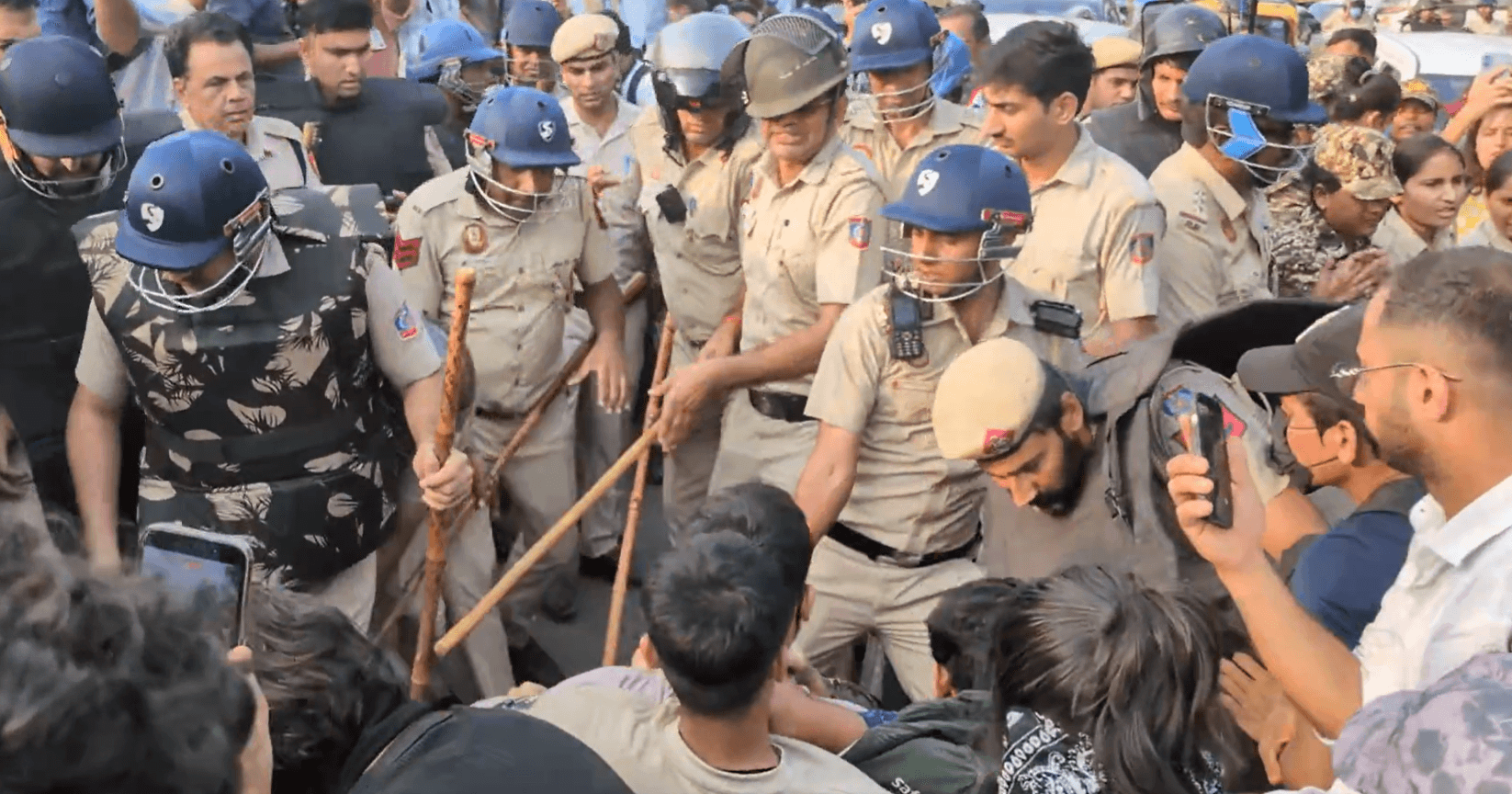
On 13 October, Saurav Das and Ashutosh Ranka, two CJP leaders, entered the Jantar Mantar area – which had been off-limits to protesters by the authorities – and waved the Indian flag. The following day, they were arrested and transferred to Tihar Prison on charges of trespassing.
After five days in custody, a special executive magistrate appointed by the government ordered their detention to be extended until 21 October, raising several doubts about the legitimacy of the operation. Whilst the special executive magistrate may, in fact, exercise preventive powers under the law, the scope for using these powers to order detention is disputed.
The young Indians who have taken to the streets in recent days are also protesting against this modus operandi of the government. The demand for serious and reliable institutions, transparent elections and the freedom to challenge the government is rooted in the idea of a secular and pluralist India where citizenship does not depend on religious affiliation. A principle that has been eroded in recent years due to the political project of Hindu ultra-nationalism promoted by Narendra Modi’s BJP, which has strengthened the role of religious identity in all aspects of public life.
An independent and pluralist movement
According to Raj, the movement’s ability to influence Indian politics will depend on its openness to the country’s diverse religious and cultural communities. “There are people of different faiths joining the students. They should be a multi-religious and multicultural group, working towards a single goal: what is good for the nation.” If the movement were to end up representing just one community, he warns, it would risk splitting and losing its strength.
Another condition is that it must maintain its independence from opposition parties. The Congress and other political forces may support the protesters’ demands, but they should not co-opt them into their own strategies. “A few years ago, a protest movement also lashed out against the Congress, which has its own way of responding to dissent,” Raj explains.
Instead, the movement should retain the freedom to support positive decisions by any government and challenge negative ones. “If something good happens, they can support it. If something negative happens, they can challenge it.”
The future remains uncertain
Raj does not rule out that the protests could bring about change, but he remains cautious about the possibility of them bringing the government to its knees. Much will depend on how long the protests last, on court rulings and on the young people’s ability to withstand pressure. “People are afraid; they don’t feel they can speak freely,” he observes. He adds that the situation remains fluid: “We don’t know exactly what will happen.”
The movement is particularly strong in the north of the country, whilst in the south the mobilisation is more subdued. The hope is that young people will manage to establish a lasting presence in the public debate, not least because those under 25 now account for almost half of India’s population. “I hope they can continue to be a truly strong movement, capable of withstanding pressure from the government and any other political party.”