Peshawar (AsiaNews) – Exams have been postponed, schools and universities closed, roads blocked, and telephone and internet connections cut off in several districts. In Khyber Pakhtunkhwa, a province in north-western Pakistan bordering Afghanistan, the introduction of a state of emergency and ‘governor’s rule’ is already causing difficulties in daily life in a region already scarred by violence from armed groups. Those most affected are students, low-income families and day labourers.
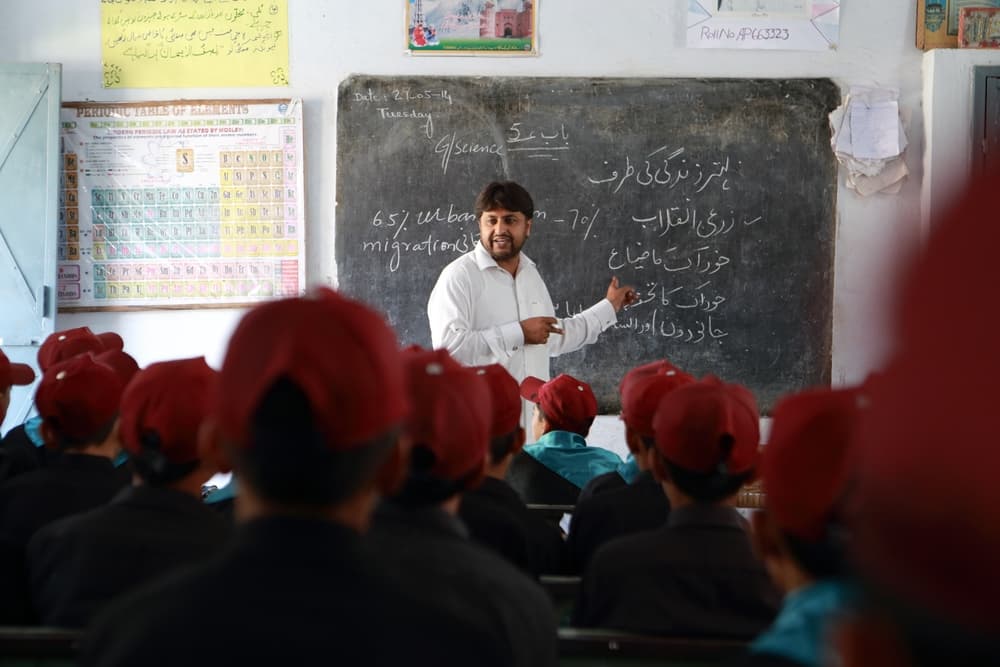
Yesterday, 12 October, the day after President Asif Ali Zardari’s decision to introduce the extraordinary measures, the local authorities in Peshawar, Mardan, Swabi and Nowshera ordered the closure of schools and universities. Several educational authorities have also postponed the Secondary School Certificate (SSC) examinations – the equivalent of secondary school leaving exams – without specifying a new date. The exams have also been postponed in the districts of Bannu, Lakki Marwat, North Waziristan and Dera Ismail Khan.
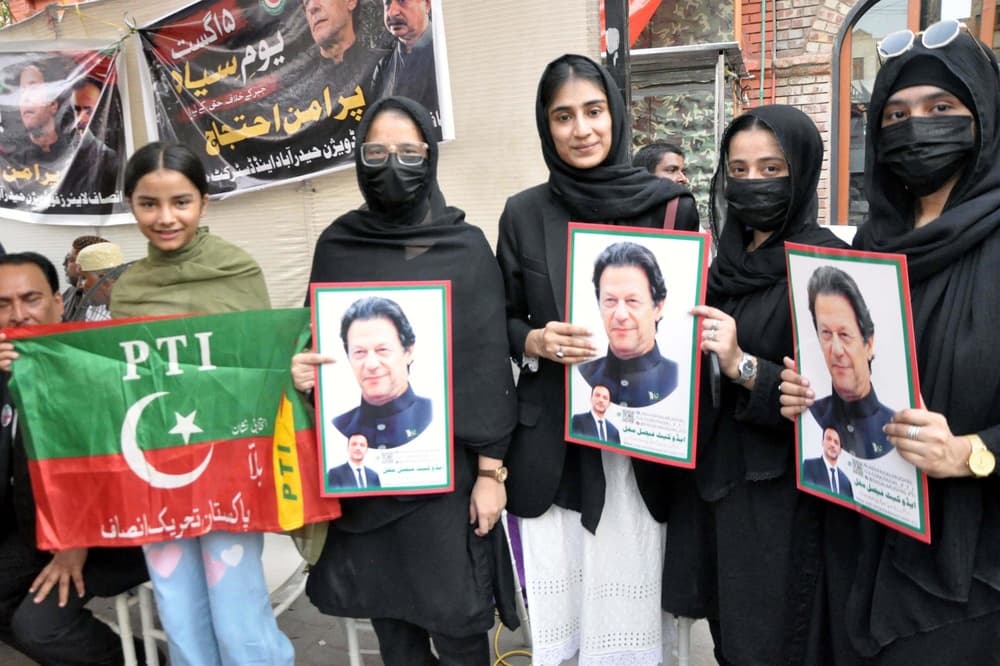
The difficulties for students, however, had already begun before the emergency. On 7 October, school boards had postponed some exams due to the protest march organised by Pakistan Tehreek-e-Insaf (PTI), the party of former Prime Minister Imran Khan, who is currently in prison. The new restrictions are causing uncertainty for young people and their families, who need to organise their children’s education.
The consequences are being felt by those who cannot afford private tuition or do not have a stable internet connection to continue studying from home. For informal sector workers too – such as construction workers, street vendors and drivers – roadblocks and disruptions to communications risk making it more difficult to reach their place of work or maintain contact with customers. For families living on a day-to-day income, even a brief disruption forces them to re-evaluate their spending on food, rent, medicines and education. No data is yet available to quantify the economic losses caused by the imposition of the state of emergency, but restrictions on movement and essential services leave people without savings more vulnerable.
In Peshawar, the authorities have blocked off some roads with shipping containers and banned public gatherings for a week. In Swabi District, where the PTI march was due to take place, around 140 party supporters were detained, and further arrests have been reported in other areas. Disruptions to mobile and internet services have also made communication difficult. However, the situation is not uniform across the province: in some districts, normal commercial activities have continued as usual.
The state of emergency and ‘governor’s rule’ were announced on 11 October by the federal government in Islamabad, which accused the PTI-led provincial administration of refusing to cooperate in the fight against terrorism.
‘Governor’s rule’, in particular, suspends the functions of the administration led by Chief Minister Sohail Afridi and transfers powers to Governor Faisal Karim Kundi, a member of the Pakistan Peoples Party, an ally of the ruling coalition in Islamabad. An 11-member advisory council will assist him in governing the province.
The government led by Prime Minister Shehbaz Sharif has justified the intervention on the grounds of deteriorating security and what it sees as the provincial authorities’ inability to tackle the threat posed by armed groups active in the region, referring primarily to that posed by Tehreek-e-Taliban Pakistan (TTP), the Pakistani Taliban. Several reports have long indicated an increase in terrorist attacks in the province, and the Minister of Information, Attaullah Tarar, has therefore accused the provincial government of collusion with armed groups, without, however, making public any independent evidence to support the accusation.
The PTI, on the other hand, claims to have been excluded from security decisions. The party has long been calling for consultation on military operations in the region and contests a strategy that risks exacerbating the conflict. In response, Chief Minister Afridi and other party leaders have been arrested or detained.
Amnesty International has also spoken out on the matter. In a statement on 12 October, Babu Ram Pant, the organisation’s Deputy Director for South Asia, expressed concern over the arbitrary detentions of political figures and the internet shutdowns. These measures, he warned, raise doubts as to their proportionality. “Emergency measures are not a blank cheque to curtail human rights, silence dissent or concentrate power,” he said.
Amnesty also warned of the risks associated with the deployment of the army, citing reports of enforced disappearances and extrajudicial killings during counter-terrorism operations carried out by the armed forces in other provinces, particularly Balochistan. The organisation called on the authorities to avoid using the military for routine policing duties
In a statement on 11 October, TTP spokesperson Muhammad Khurasani condemned the introduction of ‘governor’s rule’, accusing the federal authorities of using the Constitution to legitimise military interference in the province. The group then directly called on the people of Khyber Pakhtunkhwa to support it in its struggle against the Pakistani military establishment.
The TTP has long rejected Pakistan’s constitutional and parliamentary system and justifies its armed struggle against the state on the basis of this opposition, yet it is now invoking the constitutional rights of an elected government. The group is seeking to exploit the discontent caused by Islamabad’s intervention to gain support for its militant agenda. The students, however, are still waiting to sit their exams and resume their lessons, regarding which no announcement has been made.