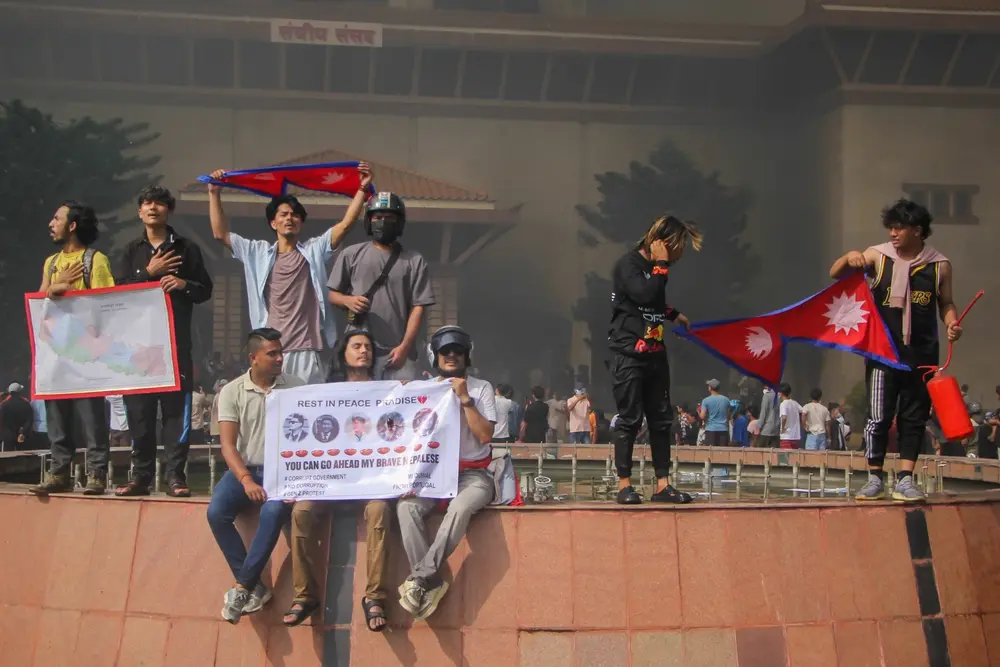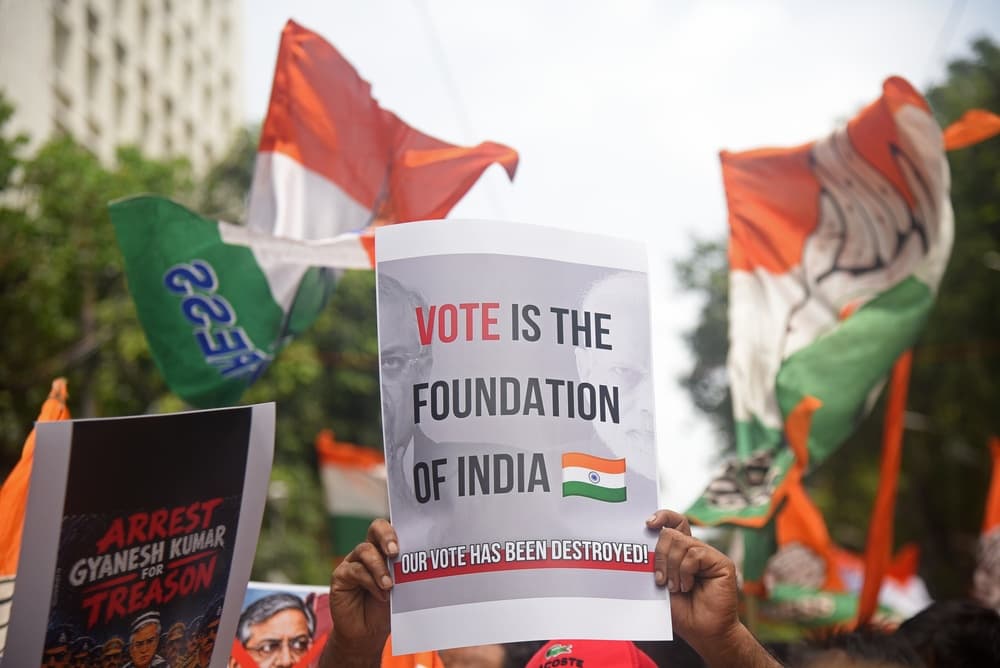
New Delhi (AsiaNews) – Thousands of people have taken to the streets in India in recent days to protest the way the Election Commission of India (ECI) operates and to demand the resignation of its chief commissioner, Gyanesh Kumar, accused by students, activists, and opposition parties for his role in the removal of thousands of voters during the Special Intensive Revision (SIR) of the electoral rolls.
Today, lawmakers from the INDIA opposition alliance marched from Parliament to ECI headquarters in New Delhi, including Indian National Congress leader Rahul Gandhi and party president Mallikarjun Kharge, but were stopped by security forces before they could reach their destination. As a result, the lawmakers staged a sit-in, demanding Kumar’s resignation and challenging certain aspects of the SIR.
The Church's perspective
Auxiliary Bishop Savio Fernandes of Bombay also weighed in on the debate with a reflection titled Standing with Gen Z: A Christian Call for Electoral Justice and Democratic Accountability.
For the prelate, the Church cannot remain indifferent when democratic participation and human dignity are at stake. Citing the biblical mandate to “seek justice”, Bishop Fernandes linked the issue to the Church’s social doctrine, specifically the principles of human dignity, common good, and participation in public life.
According to him, citizens have the right to demand transparency from the institutions responsible for ensuring the integrity of elections, and anyone excluded from electoral rolls must have access to an effective and timely remedy.
Young people entering the electorate for the first time call for special attention. For Fernandes, democracy should not present itself to new voters as a bureaucratic hurdle, but rather as an accessible form of participation in community life.
However, the bishop’s appeal is not in support of any particular party. Christian solidarity, he stressed, must be extended to every citizen, regardless of age, political affiliation (majority or minority), or political preferences. The issue concerns everyone’s right to participate peacefully in public life.
A new wave of protests
On Sunday, hundreds of demonstrators were detained by police as they tried to reach Jantar Mantar, a traditional protest site in the Indian capital, including Neha Bora, president of the left-leaning All India Students’ Association (AISA).
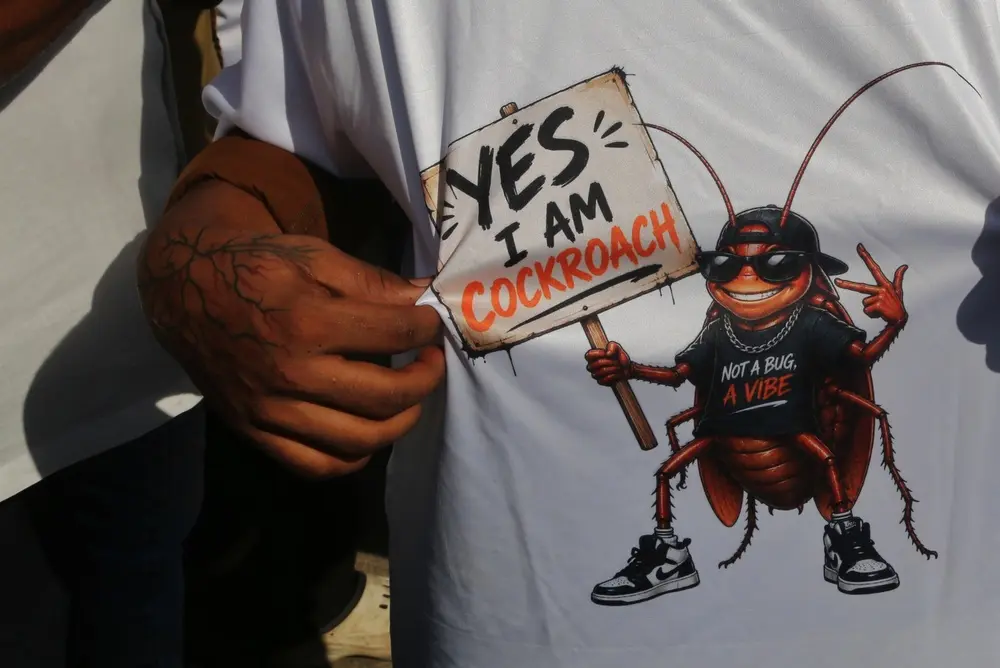
Likewise, the Cockroach Janta Party (CJP), a Gen Z movement led by Abhijeet Dipke, took to the streets in Mumbai on Friday. Hundreds of supporters joined a rally at Shivaji Park, where they also demanded Kumar’s resignation.
The movement has announced a new mobilisation in New Delhi next Sunday, should the chief commissioner fail to step down before then.
Anti-government protests resumed after the publication of an inquiry into the Special Intensive Revision.
The latter began in Bihar in 2025 and was subsequently extended to other Indian states in order to identify duplicate entries or deceased voters; however, an inquiry later revealed that the process also resulted in the exclusion of citizens with a legitimate right to vote.
The controversy intensified further after two of the three election commissioners raised objections regarding decisions on the revision and the handling of electoral data.
Yesterday, the matter came before the Supreme Court, which directed the ECI to provide the documentation to establish who had authorised certain modifications. However, the Court did not order Kumar’s suspension, deferring any assessment until after the ECI’s response.
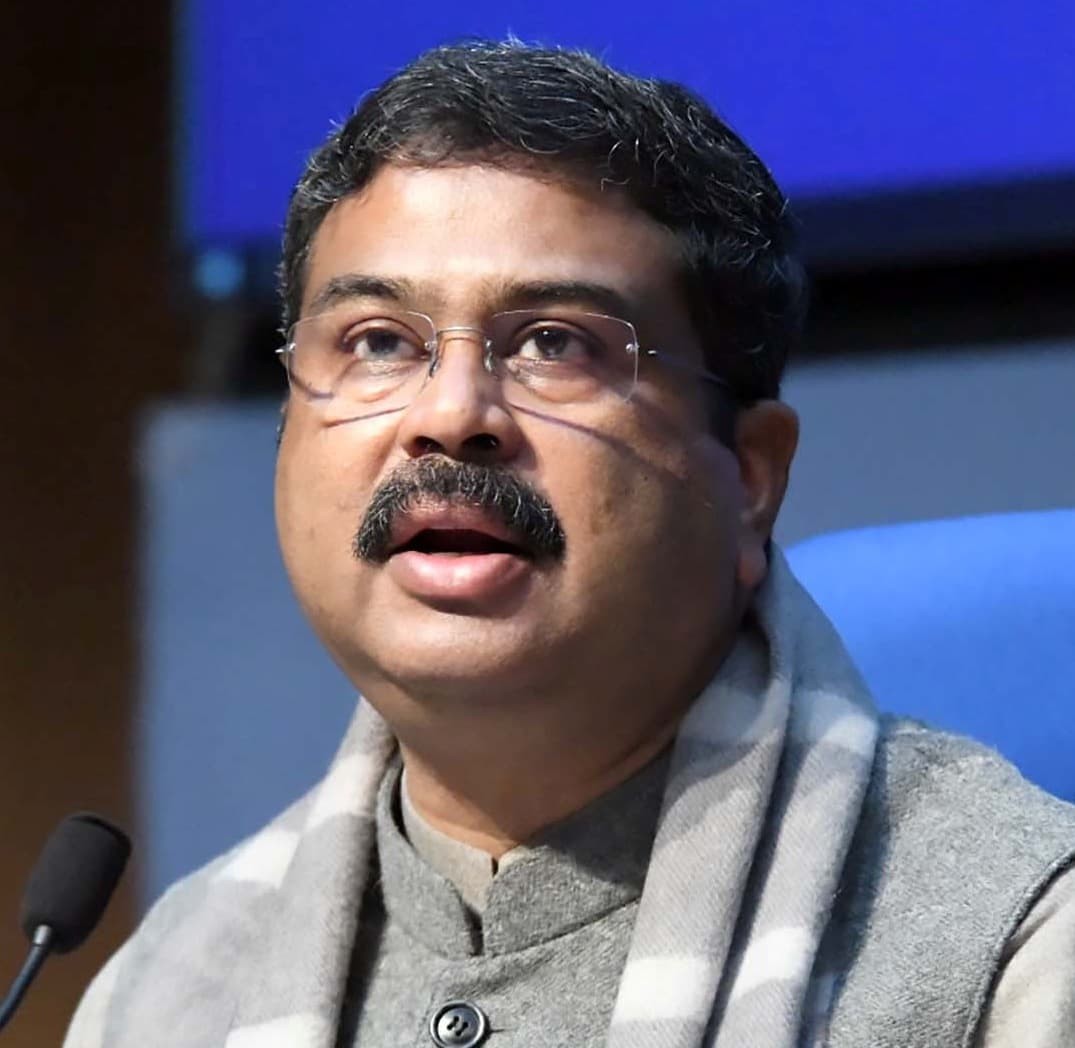
Recently, mobilisation by the Cockroach Janta Party led to the resignation of Education Minister Dharmendra Pradhan following a scandal involving irregularities in university entrance exams.
The protests quickly morphed into a national campaign against the management of the examination system and the government's inadequate measures to resolve youth unemployment.
The movement has now shifted its focus to the ECI and the protection of voting rights.
This time, Neha Bora and AISA, organisations linked to the political opposition, also took part in the demonstrations in New Delhi.
Although the two actions do not entirely overlap, both challenge the handling of the SRI and demand greater transparency from the ECI.