Kathmandu (AsiaNews) – The long two-week period of celebrations and events marking Dashain, Nepal’s main religious festival, has begun – albeit on a somewhat lower key than in previous years. It will last until 25 October, culminating on 21 October.
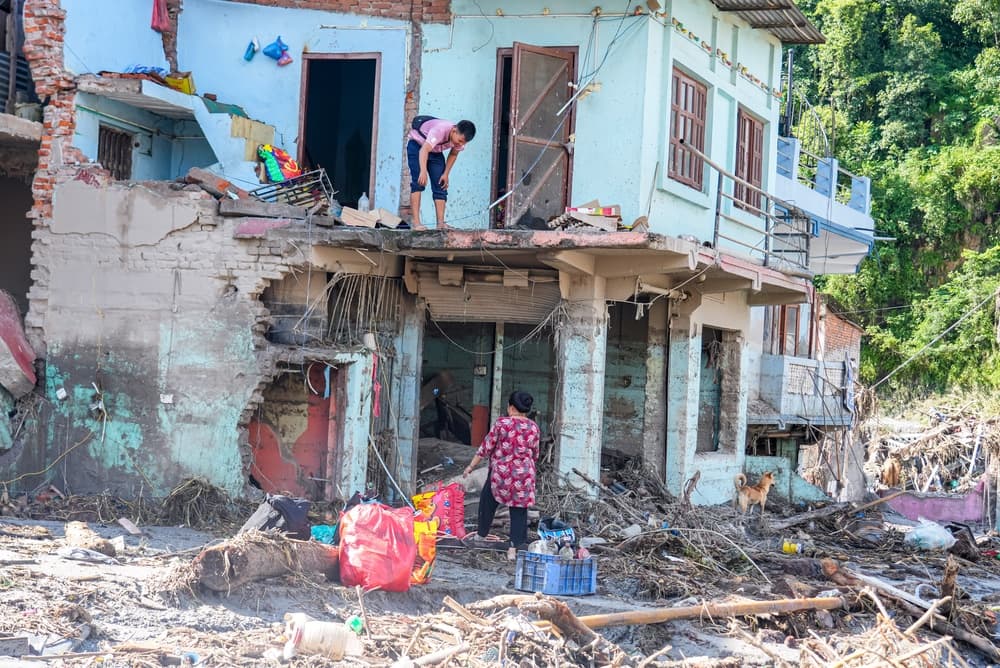
The celebrations are taking place on a more subdued note, due to the many casualties and the consequences of the natural disasters that continue to affect the country’s mountainous regions following the devastating flood of 26 August, which struck the Bhotekoshi River valley and other areas traversed by watercourses forming part of the same river system.
In the weeks that followed, Mustang, Manang and, more recently, Solo Khumbu – the gateway to Everest – have also suffered the full force of the floodwaters as a result of excessive temperatures and the growing instability of the mountain environment.
At the same time, however, the festival dedicated to the goddess Durga – an embodiment of the feminine aspect of the divine (devi) and the repository of energy (shakti) which, together with her divine male counterpart, generates and sustains existence – rekindles the hope and the need to ‘look beyond’, with a view – which can no longer be postponed – towards greater awareness of environmental risk for the entire Himalayan region.
A reference to the ancestral cults of the Mother Goddess, yet not merely an occasion for elaborate rituals (puja), Dashain is also the harvest festival and a time for family gatherings, for the exchange of gifts and blessings. A communal event that leaves even non-Hindus moved, and in which Nepal rediscovers its identity, unity and joy.
At present, however, a further consequence of the devastation and disruption inflicted on Nepal’s road and communications networks is a significant rise in costs. Families are having to cope with rising prices for basic necessities, which are hitting particularly hard the 20 per cent of the population living below the poverty line.
The sustained rise in food prices is inevitably eroding the purchasing power of low-income families and day labourers, leaving them with fewer resources to meet other basic needs.
A key factor in the strain on household budgets is undoubtedly the rise in fuel and energy prices following the escalation of the conflict in the Middle East; however – as has been highlighted by various quarters – other contributing factors include the fragility of supply chains, the presence of numerous middlemen and the inadequate enforcement of consumer protection legislation.
The price rises particularly affect clarified butter (ghee) and oils, fruit, meat, fish and vegetables. The consumer price index published by the central bank, the Nepal Rastra Bank, shows that food inflation has accelerated significantly compared with 12 months ago, reaching 5.2 per cent.
According to the National Consumer Price Index published by the central bank, in mid-August year-on-year inflation for the food sector as a whole stood at 6.77 per cent; however, within this sector, over the same period, the prices of ghee and oils rose by 15.62 per cent, whilst fruit prices increased by 15.39 per cent. The increase for meat and fish stood at 8.65 per cent, whilst vegetable prices rose by 6.90 per cent.
Whilst the impact of rising prices is most evident and immediate on Nepalese dining tables, inflationary pressure also affects other goods and services: transport costs rose by 13.17 per cent, whilst clothing and footwear saw an increase of 5.52 per cent.