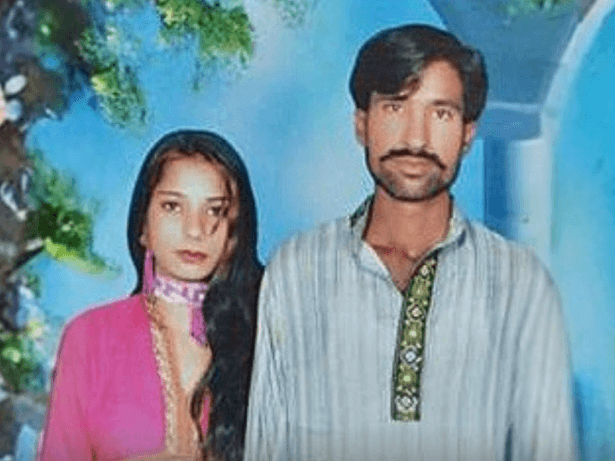
Lahore (AsiaNews) – Nearly 12 years after one of Pakistan's most horrific incidents of religiously motivated mob violence, the Supreme Court of Pakistan has acquitted the remaining three men sentenced to death for the brutal killing of Christian couple Shahzad Masih and his pregnant wife, Shama Bibi, in Kot Radha Kishan, Kasur district, in 2014.
The judgment, delivered on Thursday by a three-member bench headed by Justice Malik Shahzad Ahmad Khan, overturned the convictions and death sentences of Irfan, Mehdi, and Riaz.
The Court held that weaknesses in the prosecution's case and inconsistencies in the evidence meant the charges had not been proved beyond reasonable doubt. Consequently, the accused were granted the benefit of the doubt and acquitted.
The Supreme Court also dismissed an appeal filed by the Punjab government against an earlier Lahore High Court verdict that had acquitted 102 other people accused in the same case.
With the latest ruling, all of the death sentences originally handed down in connection with the killings have now been overturned, effectively bringing one of Pakistan's most closely watched criminal cases to a legal conclusion.
The case arose from the tragic events of 4 November 2014, when Shahzad Masih and his wife, Shama Bibi, who was pregnant at the time, were falsely accused of committing blasphemy while working at a brick kiln in Kot Radha Kishan. The allegations rapidly spread through the area, provoking a violent mob that attacked the couple.
According to witnesses, Shahzad and Shama were beaten, tortured and eventually burned alive in the brick kiln before police could intervene. Their deaths shocked Pakistan and drew widespread international condemnation, focusing global attention on the vulnerability of religious minorities and the dangers posed by mob violence linked to blasphemy allegations.
Following the incident, police registered a case against hundreds of named and unidentified individuals. Anti-Terrorism Court later convicted several accused, sentencing five men to death while awarding prison terms to others for their involvement in the attack.
Upon appeal, the Lahore High Court acquitted two of the five men sentenced to death but upheld the convictions of Irfan, Mehdi and Riaz. The Supreme Court's latest judgment has now overturned those remaining convictions, citing deficiencies in the prosecution's evidence and concluding that the legal standard required for sustaining the convictions had not been met.
The decision has reignited debate over Pakistan's criminal justice system and its ability to prosecute cases involving religious violence and mob attacks effectively.
Human rights activist Isaac Dominic of Karachi described the killing of Shahzad Masih and Shama Bibi as one of the country's most disturbing examples of mob violence triggered by allegations of blasphemy.
“The deaths of Shahzad Masih and Shama Bibi became a symbol of the vulnerability faced by Pakistan's Christian community and other religious minorities," Dominic said.
Lahore-based Christian lawyer, human rights activist and religious freedom defender Shawaiz Javed also expressed disappointment over the outcome, saying the verdict raises broader concerns about public confidence in Pakistan's justice system.
He noted that uncertainty of punishment weakens deterrence and contributes to the persistence of murder, religious violence and other forms of brutality.
“This is not merely the story of one Christian family," Javed said. “It is a question about the future of every orphaned child, like Suleman, the son of Shama and Shahzad. It is a question about justice, security and every citizen's faith in the rule of law in Pakistan."
The lawyer added that although Shama and Shahzad can never be brought back, their children's search for justice continues to resonate.
The Kot Radha Kishan tragedy remains one of the most significant cases of religiously motivated mob violence in Pakistan's recent history.
While the Supreme Court's ruling has concluded the criminal proceedings against the accused, the case continues to be cited by human rights advocates as a stark reminder of the challenges faced by religious minorities and the importance of ensuring credible investigations, effective prosecutions and equal protection under the law.