Colombo (AsiaNews) – According to a recent study by Our World in Data, a project by the UK-based Global Change Data Lab, led by researcher Hannah Ritchie, the average person’s daily household electricity consumption could barely cover air conditioning usage.
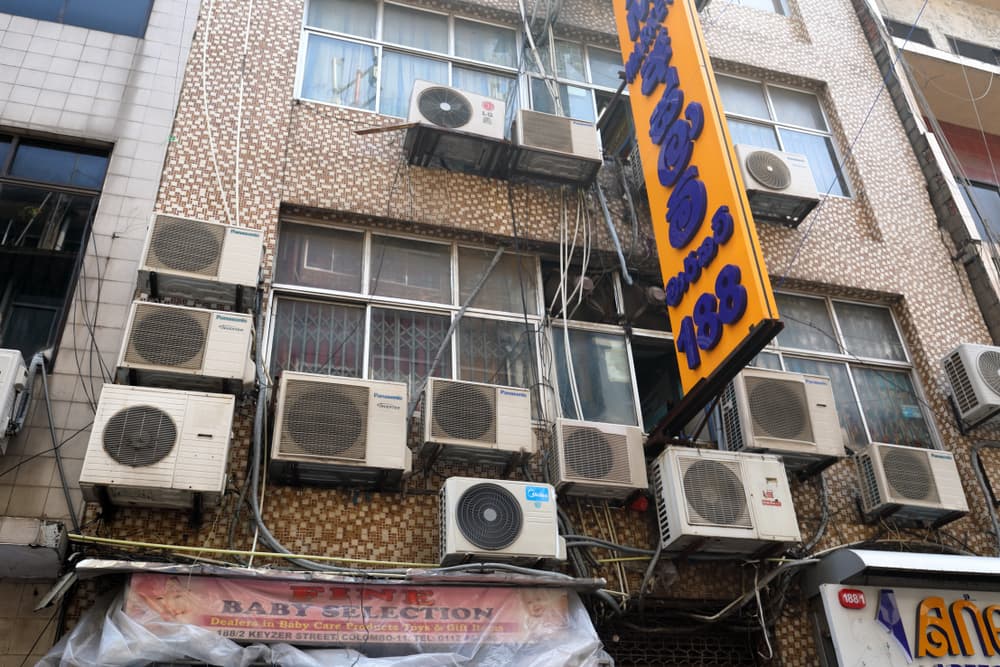
A typical single-room air conditioner consumes about 1,000 watts in one hour of use. For most Sri Lankan households, despite extreme weather conditions, it is impossible to maintain air conditioning or use fans because of high costs.
As temperatures continue to rise rapidly, the gap becomes increasingly hard to ignore.
The average person’s daily electricity budget for air conditioning in Sri Lanka is about 39 minutes. The figure varies in other South Asian countries: In India, it is 44 minutes; in Pakistan, 37 minutes.
When temperatures reach 34 or 35 Celsius in Colombo, Polonnaruwa or Anuradhapura, people need air conditioning, but most are unable to do so. Sometimes, they do not even use fans.
In most houses, basic equipment like electric fans is not available, even though they use far less power than air conditioning, even though, the latter is a necessity rather than a luxury.
“Currently, owning an air conditioner is no longer as expensive as it once was, but its operation is onerous,” say senior electrical engineers Subashini Tennakoon and Linidu Alwis speaking to AsiaNews.
According to the current tariff of the Ceylon Electricity Board (CEB), a single unit of electricity costs 87.18 rupees, including the 2.5 per cent Social Security Contribution Levy.
“For a family that uses air conditioner for a few hours a day, the expense adds up quickly,” the two note.
According to the latest tariff review by the Public Services Commission of Sri Lanka (PUCSL), the gap has widened.
Domestic consumers who use more than 180 units per month will see their bills rise by 18 per cent, but 95 per cent of households who consume less per month will see no change. Households who use air conditioning regularly, exceeding the 180-unit mark, will bear the brunt of the rise.
At present, most households cool a single bedroom, while some turn on air conditioning after midnight, when both the CEB tariff and the heat of the day begin to decrease.
Many reserve it for an elderly parent or a child, but most use a fan or open a window. A majority of households have no air conditioning.
Scholars Chaminda Dissanayaka and Lakmali Wickramasinghe note that “extremely high temperatures are recorded at night because concrete accumulates heat during the day and releases it slowly after sunset, while glass facades reflect heat onto the street instead of absorbing.”
In many parts of Colombo, tree cover and natural shade have been reduced over the years. As a result, in the evening, city streets and sidewalks continue to radiate heat long after sunset.
Extreme heat is unpleasant and prolonged exposure can lead to dehydration, heat exhaustion and, in the most serious cases, illness, with senior citizens, children and people working outdoors at greatest risk.
Prolonged exposure to heat also disrupts sleep and leads to higher rates of chronic diseases, including cardiovascular and kidney disease.
For the two scholars, “access to a cooler environment, at least for a few hours a day, significantly reduces such risks.” For its part, “the body's cooling system is effectively switched off even if it continues to work overtime”.