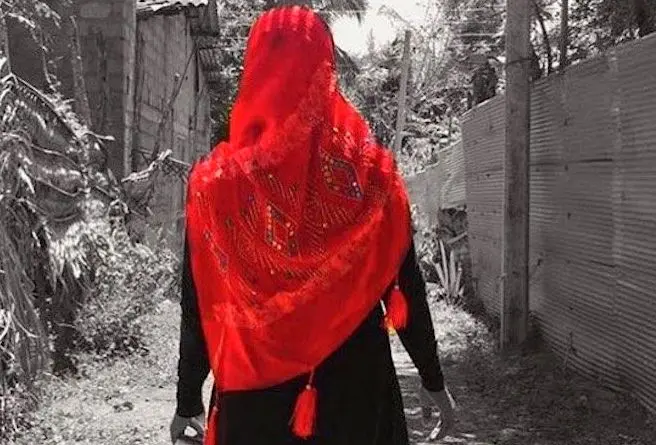
Colombo (AsiaNews) – Nine Muslim healthcare workers, recently appointed at the Kalmunai North Government Base Hospital, have lodged a complaint with the Sri Lankan Human Rights Commission, claiming that their fundamental rights have been “violated”. The hospital is situated in the Ampara district, in the Eastern Province (on the island’s east coast), in a case that once again highlights the issue of violations and abuses against the Muslim minority in a predominantly Buddhist nation over matters related to faith.
Sri Lanka’s population of 22 million comprises Sinhalese, Tamils, Muslims, Malays and Burghers (a small minority of Portuguese descent – ed.); the Muslim population accounts for approximately 10 per cent of the total.
The women stated that on 10 August, as they were preparing to start their shift at the hospital – which operates under central government control in Colombo and is one of the oldest in the Ampara district – the management ordered them to remove their headscarves. This directive came suddenly, shortly before the start of their shift, and was immediately deemed unacceptable by the Muslim healthcare workers.
According to their legal adviser, the women “lodged five complaints with the Sri Lankan Human Rights Commission on 13 August”. In their formal letter of protest, the employees accuse Kalmunai North Hospital of violating their “fundamental right to practise their religion” freely and without coercion.
“The hospital allegedly asked the women to remove their hijabs – the headscarves required by their religious beliefs – before starting their shift on 10 August,” said the women’s legal adviser, Mubarack Azzam. The lawyer had told the media on 13 August that preparations were also under way to lodge an application concerning fundamental rights; this is a procedure used to request the direct intervention of the Supreme Court when the government or a public authority violates a citizen’s right protected by the Constitution.
When contacted on the matter, the hospital’s chairman rejected any allegations or accusations of rights violations, stating that the hospital was operating in accordance with guidelines issued in 2000. The regulations, continues Chairman Chandrasekaram Rajan, set out the uniforms required for healthcare workers, which “apply equally to everyone without distinction based on caste, ethnicity, religion or language”.
AsiaNews discussed this case involving women from the Eastern Province with a number of Sinhalese and Muslim human rights activists, who stated: “For decades, this country has faced not merely ethnic issues, but full-blown conflicts. Therefore – they emphasise in unison, regardless of their professed faith or ethnic background – we do not want to see our country face another cycle of conflict. “It is wrong,” they conclude, “to raise issues about the customs of another ethnic group. Whatever they may be, it is their right.”
Jesima Kahn, Waheedah Ismaile, Sister Deepa Fernando, Nadeera Gunasekara, Padma Pushpakanthi and Husman Wahhib, part of a group comprising Sinhalese and Muslim women activists, continue: “The time has come for the government led by the National People’s Power (NPP) to introduce an acceptable national policy to prevent such disputes that arise from time to time. Once there is a national policy, everyone will have to respect it”.
On this issue, Sr Deepa Fernando added to AsiaNews: “No dress code should ever again cause serious conflicts amongst people living in the same country. If these issues continue to be a source of conflict, when will we ever be able to accept one another and live as brothers and sisters?”






.PNG&w=3840&q=75)