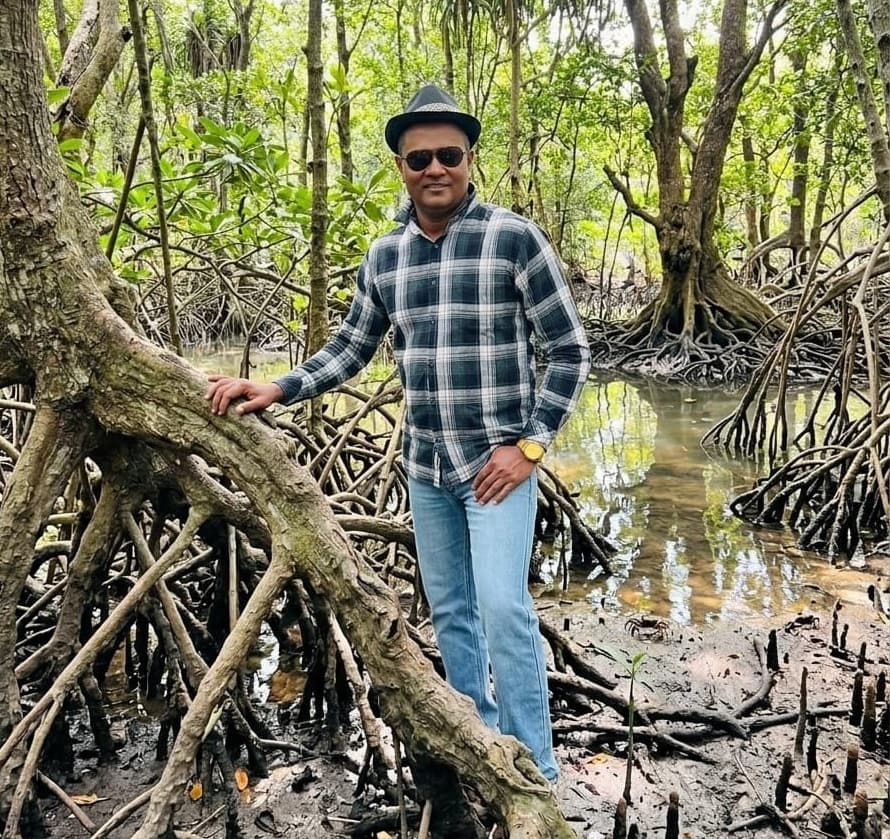
Colombo (AsiaNews) – On UNESCO’s World Mangrove Day, celebrated yesterday, reforestation, awareness-raising, and protection activities for one of the country's most precious ecosystems were carried out in several Sri Lankan provinces.
Among the main events, replanting was held in the Muthurajawela Wetlands, considered the green heart of the Western Province, undertaken with the contribution of the Lions Club and associations committed to environmental protection.
A healthy mangrove environment for a sustainable blue economy and climate resilience was the theme chosen for the 2026 edition, centred on the critical role these coastal forests play in combating climate change and protecting coastal communities.
UNESCO established World Mangrove Day in 2015, celebrating it for the first time the following year; the aim was to raise awareness of the importance of these ecosystems and promoting their sustainable management.
According to Diluka Mahawatta, Lions Club District 306 D4 Leader, mangrove forests are currently threatened by rapid destruction around the world.
For this reason, it is everyone’s duty “to contribute to the protection of the mangrove system of our country in any way possible, as it is impossible to remain silent in the face of such a tragedy.”
The new reforestation programme in the Muthurajawela wetland was made possible thanks to the collaboration of environmentalist Dinusha Nanayakkara, chair of the Archbishop’s Committee for the Protection of Muthurajawela, which was established on the initiative of Cardinal Malcolm Ranjith in 2020.
Dinusha Nanayakkara told AsiaNews about her work in managing a mangrove area covering several acres.“The global environmental crisis in the world is being mitigated by mangrove systems,” he explained.
Although they grow in a thin band between land and sea, covering approximately 0.3 per cent of Sri Lanka's land area, they play a disproportionately important environmental role.
“Protecting the mangrove system in Sri Lanka is a special task that must be done,” he insisted.
Nanayakkara also noted that mangroves represent one of the most effective natural tools against global warming.
“More than any other plant, mangroves provide a great service to the world through their roots and leaves, absorbing carbon and releasing oxygen, thereby reducing global warming,” he said.
For this reason, it is more necessary than ever to invest in their protection and expansion.
The environmentalist issued an appeal against wrong reforestation practices. Some organisations, in fact, remove young trees from established mangrove forests and transplant them to unsuitable areas.
“Very few survive and, in the meantime, their original habitats are destroyed,” he explained, calling this method very harmful.
The priority, he insists, must be to preserve existing forests and develop new plantations according to scientific criteria.
Lastly, Nanayakkara stressed the importance of environmental education. Nurturing an interest in mangroves from school age is essential to ensuring the survival of these ecosystems.
He feels very happy to know that this “large mangrove system belongs to the entire society,” and that it will help people survive even after he is gone.