Phnom Penh (AsiaNews) – On 17 November 2006, Bishop Emile Destombes entrusted Fr Mario Ghezzi, a PIME missionary and then parish priest of the Bambin Gesù community in Phnom Penh, with the task of setting up a new centre to care for the poorest patients from Cambodia’s provinces. To choose a name for the centre, the missionary looked at the calendar: “I checked to see who the saint of the day was, and it was Saint Elizabeth of Hungary, who had long cared for the sick.” Thus was born the project for the Saint Elizabeth Centre, which would officially open in 2007 with the support of PIME and the contribution of Paola Maiocchi, a professional nurse from the Community of Lay Missionaries.
It was not the first initiative of its kind in the capital. Since the late 1990s, the Catholic Church had been running a hostel for the sick at St Joseph’s parish, in the centre of Phnom Penh, where people arriving from the provinces to receive medical treatment were accommodated. The new facility, however, was to be established at the Bambin Gesù parish, in the southern part of the city, to meet a growing need: to offer a more organised form of care to those facing serious illnesses who lacked the resources to cover the costs of travel, hospitalisation and medical care.
The idea was also inspired by other missionary experiences, in particular that of Fr Mariano Ponzinibbi in Bangladesh, where PIME had developed a support service for the sick. In Phnom Penh, patients were referred by parishes in the provinces, which carried out an initial screening of the cases to be accompanied to the capital. The centre then took charge of their reception, supported them throughout their treatment and liaised with hospital doctors. This service was provided free of charge, in a country where even public healthcare is subject to a fee.
“Some priests would return from the provinces with one, two, three or four sick people in their car,” says Fr Gianluca Tavola, a PIME missionary who is now rector of the Phnom Penh seminary and head of the centre. “By the time they returned for their second visit, the villagers had already lined up a queue of people in need of help.”
Over time, the St Elizabeth Hostel has become a point of reference, especially for the most seriously ill patients, particularly cancer patients who needed to stay in the capital for extended periods. In 2010, Bishop Olivier Schmitthaeusler decided to merge the patient care centres of St Joseph’s Parish and the Infant Jesus Parish into a single diocesan project, retaining the two facilities and assigning them distinct roles: St Luke’s – the new name for St Joseph’s Hostel – for short stays and an initial assessment of cases; St Elizabeth’s for patients requiring longer-term care and hospitalisation, particularly at the Khmer-Soviet Friendship Hospital, which was then the only hospital in Cambodia equipped to provide cancer treatment.
From an initiative that began within a parish, the project thus became a diocesan service and a coordination centre for its healthcare activities. Alongside the reception services in the capital, a screening programme was also developed in the provinces to identify patients’ needs and prevent them from having to undertake costly journeys when treatment could be received closer to home.
Over the past twenty years, healthcare in Cambodia has made great strides. In the provinces, access to primary care has improved, but for those facing a serious illness, the journey to the capital and the cost of treatment remain significant obstacles. According to a World Health Organisation report published in March this year, around half of the Cambodian population is still not covered by the main national social protection programmes, and over 60 per cent of healthcare expenditure is borne directly by households. This burden can become unsustainable for those living in poverty.
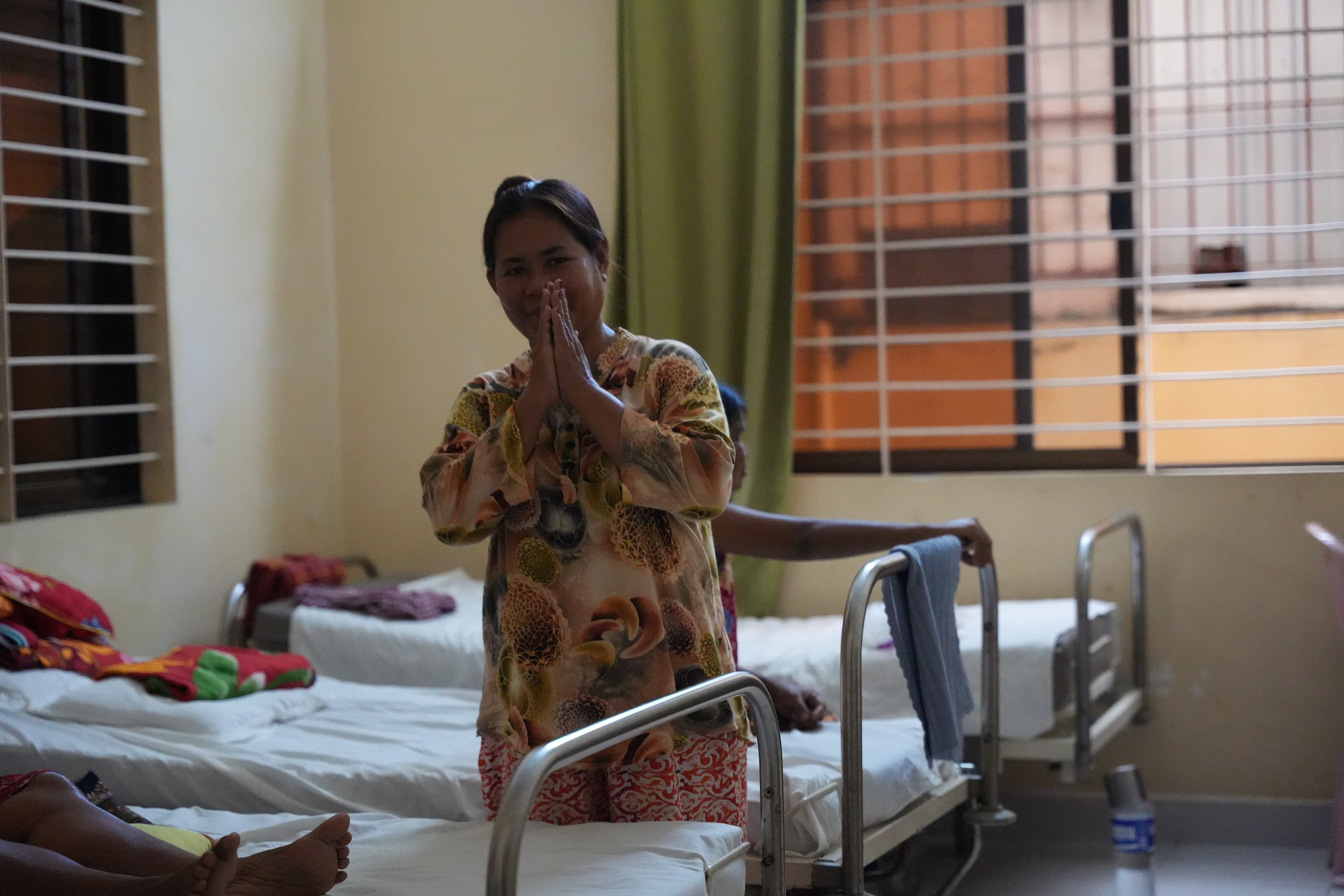
Today, the Santa Elisabetta Centre continues to support patients during their hospital stay, throughout their treatment and during their recovery period before returning home. It is also equipping itself to address one of the most pressing shortcomings of the Cambodian healthcare system: care for people in the terminal stages of their illness.
The Centre, explains Fr Tavola, has in fact recently signed a memorandum of understanding with the French organisation Douleurs Sans Frontières (DSF), which has been present in Cambodia since 1996 and is committed to pain management and the development of palliative care. The collaboration aims to extend care for the terminally ill not only to Phnom Penh, but also to four provinces where the Church already has an established healthcare presence and agreements with the Ministry of Health.
The project is still in the preparatory phase: over the coming months, the centre will need to adapt certain areas and organise the storage of essential medicines for treatment, including morphine, which is subject to strict control regulations.
This situation also reflects the country’s wider challenges. According to a survey conducted in April by the Asia Pacific Hospice Palliative Care Network in collaboration with DSF, palliative care in Cambodia remains underdeveloped, partly due to the limited availability of morphine and other medicines, restrictions on prescriptions, and insufficient training for many healthcare workers.
“In the provinces, the sick die on a bamboo bed, waiting for their final day in great pain,” says Fr Tavola. The aim is to ensure that even those who can no longer be cured have access to support and care that alleviates their suffering. For the missionary, this commitment is “a true testimony of selfless love, because in such cases one cannot really expect to receive anything in return”. It is a service which, from the initial support organised by the priests right through to the current diocesan care network, continues to place the most vulnerable people at its heart.