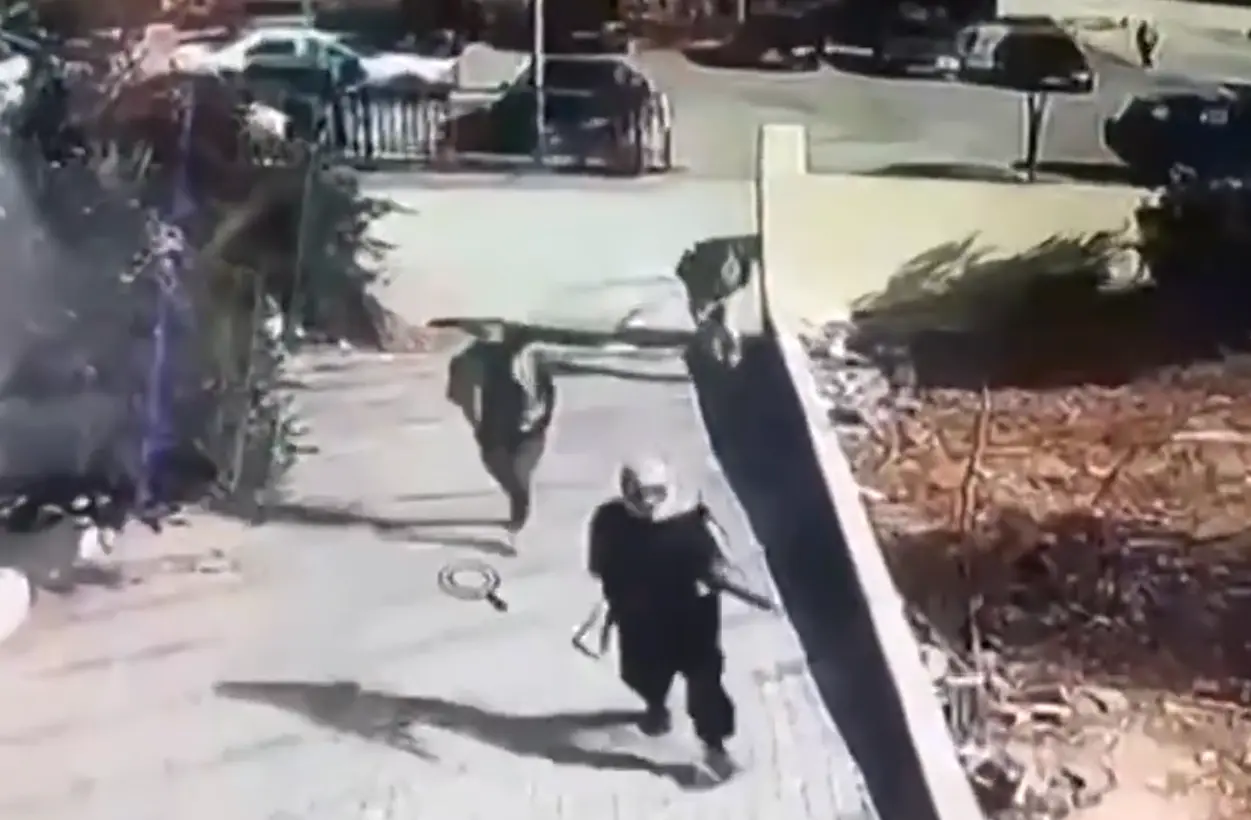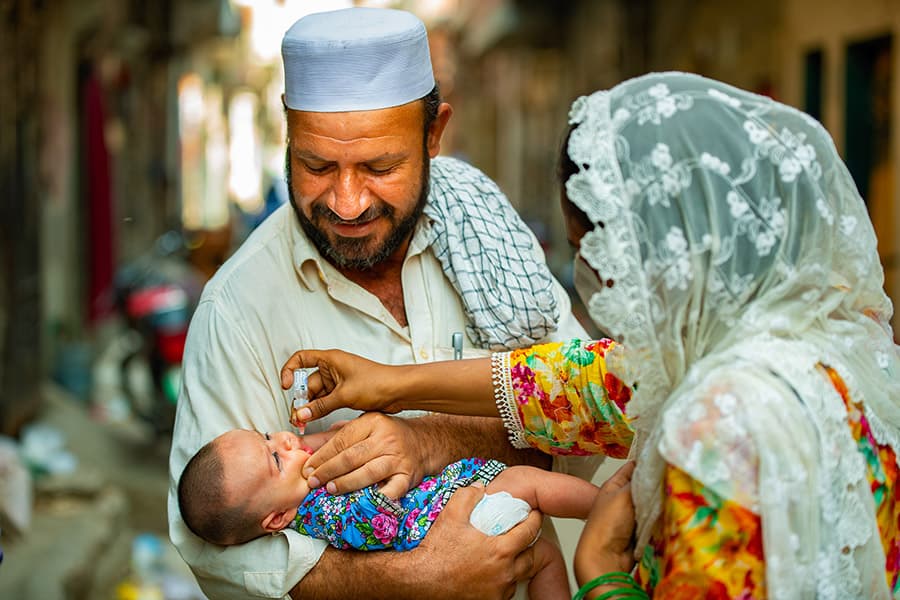
Peshawar (AsiaNews) – Vaccination campaigns in Pakistan have once again come under fire from Islamic extremist groups: two police officers were killed and another was injured yesterday when armed men – as yet unidentified – attacked personnel deployed to protect a polio vaccination team in the north-western district of Mohmand. The targeted raid has reignited concerns about the safety of frontline healthcare workers and the personnel tasked with protecting them, as the country struggles to eradicate a disease that continues to threaten thousands of children.
The incident took place in the Tamanzai area, under the jurisdiction of Pandiali police station in Khyber-Pakhtunkhwa (KP), during a nationwide vaccination campaign. District Police Commander Raza Muhammad Khan confirmed that the attackers opened fire on the officers present at the scene. The deceased have been identified as Zahoor and Arabi, whilst the injured police officer is named Sabir. One of the attackers was also wounded during the exchange of fire, whilst a thorough investigation is under way to identify those responsible and any accomplices.
President Asif Ali Zardari strongly condemned the attack, expressing his deepest condolences for the deaths of the officers and paying tribute to their dedication, courage and service to the nation. The Head of State described as particularly deplorable the fact that the police officers tasked with protecting the vaccination teams had been targeted, as they were carrying out a duty in the interests of the entire nation: safeguarding children’s health. “Their sacrifices,” he added, “will not be forgotten”, whilst expressing his condolences to the families of the victims and praying for the speedy recovery of the injured officer.
Other political and administrative authorities have also condemned the violence, calling for stricter security measures for vaccination staff. The attacks have raised concerns amongst communities in the affected tribal districts, where insecurity and militant activity have repeatedly hampered public health programmes.
Polio: eight cases in 2026
The latest attack comes at a critical stage for Pakistan’s polio eradication programme. On 1 November, the National Emergency Operations Centre (NEOC) confirmed the eighth case of wild poliovirus in 2026. The latest infection was detected in a 13-month-old girl from the Janbaz-B Union Council, in the Bara tehsil of Khyber District. This was the second case recorded this year in the district and the sixth reported in Khyber-Pakhtunkhwa Province. The other two cases were reported in Sindh, one of which was in East Karachi in October.
According to the Pakistan Polio Eradication Programme, the latest case of infection highlights how important it is to ensure that every child receives the vaccination. “This is the second case reported this year in Khyber District, and the sixth in Khyber-Pakhtunkhwa Province. This underlines – as officials explain in a statement – that no child will be safe from polio until all children are systematically vaccinated and protected across the country”.
The figures show a reduction compared with previous years, but transmission remains a serious cause for concern. Pakistan reported 74 cases of wild poliovirus in 2024 and 31 in 2025. The eight cases recorded so far in 2026 indicate progress, although the virus continues to circulate in vulnerable communities. Environmental surveillance has also detected the presence of poliovirus in wastewater samples, particularly in the Peshawar Block, which comprises the districts of Peshawar and Khyber. These findings indicate that the virus remains present even where no new cases of paralysis have been identified.
24 million to be vaccinated
The latest sub-national vaccination campaign, running from 2 to 8 November, aims to protect nearly 24 million children under the age of five in 97 high-risk districts. The initiative follows four large-scale vaccination rounds conducted throughout 2026, which repeatedly reached over 45 million children. The September campaign alone enabled more than 29.3 million children to be vaccinated.
In Balochistan, according to Inamul Haque, coordinator of the Provincial Emergency Operations Centre, more than 2.2 million children across 31 districts are involved, with 8,888 vaccination teams deployed. Haque emphasised that the absence of recent polio cases in Balochistan does not mean the province is free from risk, particularly as the virus continues to circulate in neighbouring Afghanistan and other parts of Pakistan.
A never-ending battle
Pakistan and Afghanistan remain the only two countries in the world where wild poliovirus is endemic. Polio is a highly contagious disease that mainly affects children under the age of five and can cause permanent paralysis. There is no cure, but vaccination offers effective protection. The campaign also faces resistance, misinformation and security threats. For some time now, healthcare workers carrying out vaccinations and their security escorts have been the target of repeated attacks in certain areas of Khyber-Pakhtunkhwa and Balochistan, whilst insecurity has made it difficult to reach children in some remote communities.
According to Issac Dominic, a medical student from Karachi, the deaths of Zahoor and Arabi highlight the human cost of protecting healthcare workers and ensuring that children receive life-saving vaccines. “For Pakistan, the eradication of polio will require far more than repeated vaccination campaigns. It will depend on public trust, community participation, effective health services and adequate protection for those who risk their lives to reach every child. “Our medical teams engaged in the fight against polio,” concludes Issac, “are serving the nation, and we must recognise their work; let us all pay tribute to the martyrs who have lost their lives and pray for the protection and well-being of all those working to eradicate polio.”