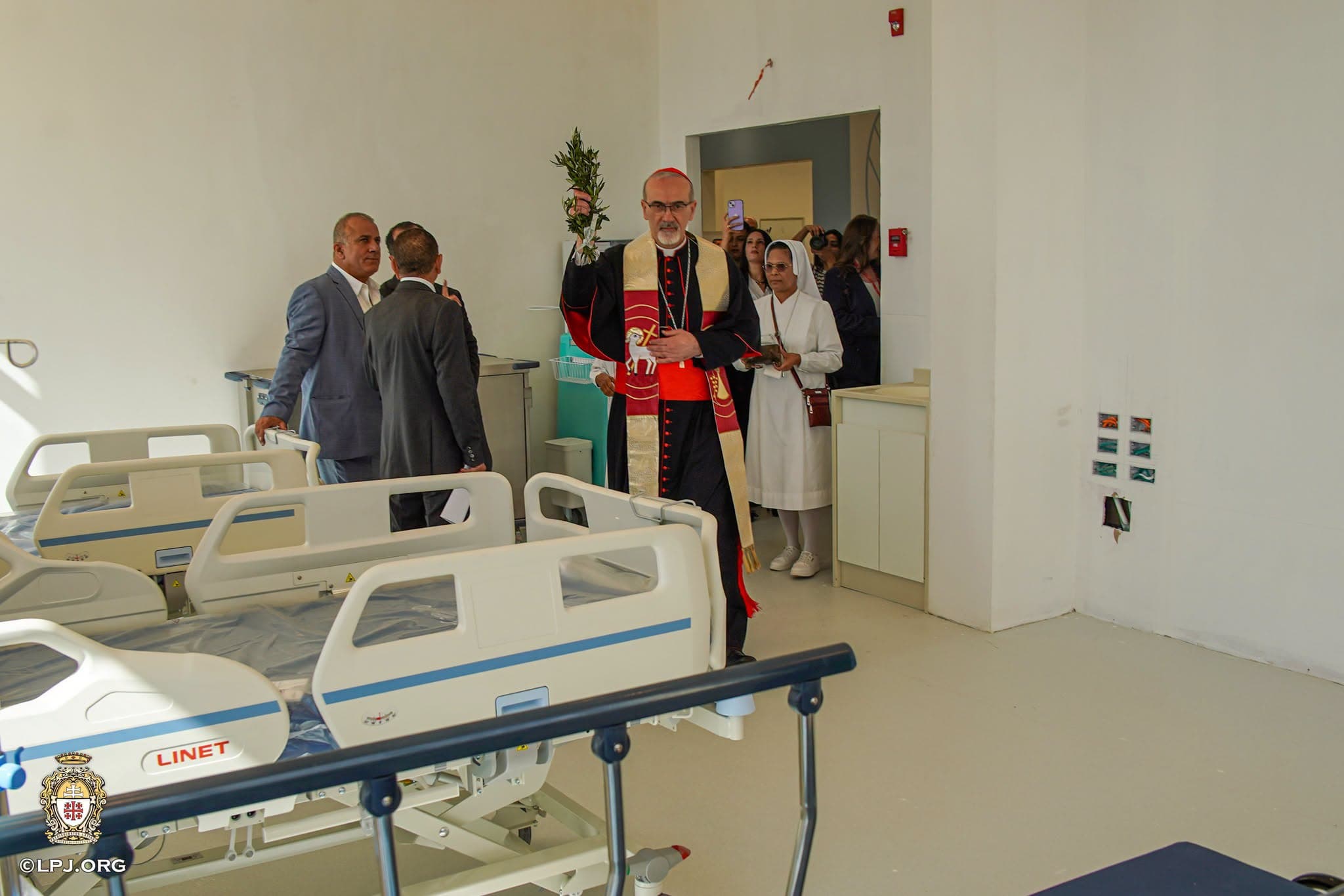
Milan (AsiaNews) – A new paediatric surgery unit was recently inaugurated in a ceremony attended by civil and religious authorities, including the Latin Patriarch of Jerusalem, Cardinal Pierbattista Pizzaballa, as well as members of the hospital’s medical and administrative staff.
“Caritas Baby Hospital is the only exclusively paediatric hospital in the region," said Shireen Khamis, marketing and communication manager for the medical facility in Bethlehem, Palestine.
“To have a surgical facility within the hospital is very important because children don’t get to go to specialised centres for surgeries,” she explained. Instead, “they go to adult hospitals to do surgery, which are not specialised, which are not child-friendly.
“This is the gap that we will fill. We will make it more child-friendly, more specialised, and safer for children to be treated and operated.”
Jubilee wing
On 29 October, Patriarch Pizzaballa blessed the new Jubilee Wing, the paediatric day-surgery unit established at the Caritas Baby Hospital (CBH), a vital healthcare facility for Palestinians, both Christian and Muslim.
The unit is dedicated to children requiring scheduled, specific surgical procedures, sparing them from long journeys, waits at checkpoints, and the often-difficult process of obtaining permits to reach other medical facilities.
Known as an oasis of health and peace for the sick and injured children in Palestine, the hospital first opened its doors in 1952 to mothers and their children regardless of their religious faith or social background.
On Christmas Eve 1952, while travelling to the Basilica of the Nativity, a Swiss priest, Father Ernst Schnydrig, passed by a refugee camp and saw a Palestinian man bury his child, who had died due to a lack of basic medical care. Deeply moved by this tragedy, he imagined the Caritas Baby Hospital, a facility intended, above all, to be an open hospital for all children.
Together with Palestinian physician Antoine Dabdoub and a Swiss woman named Hedwig Vetter, Father Schnydrig began by renting two rooms. Over time, the facility expanded into what it is today, a place of tranquillity, open to families from across the West Bank.
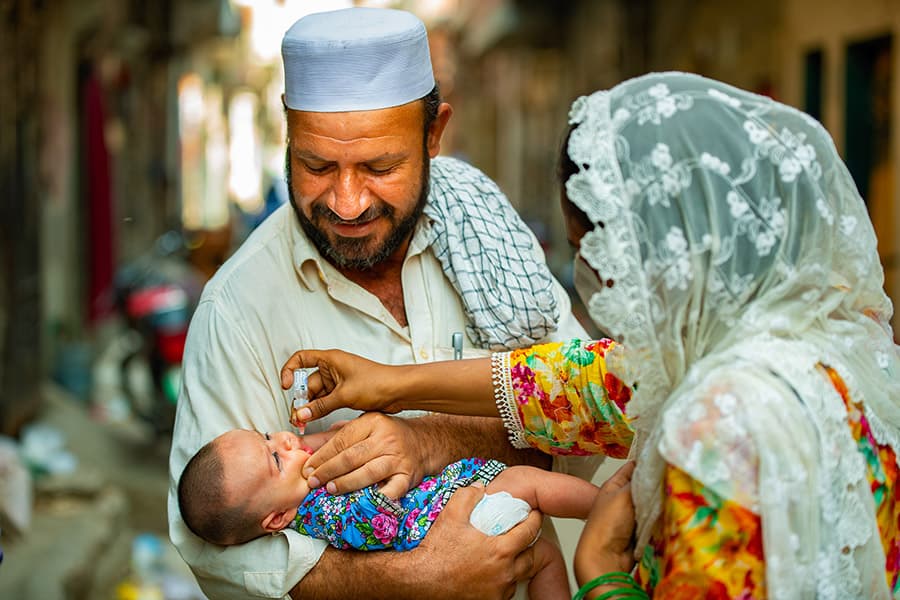
In this region, about 300,000 children lack access to proper healthcare; consequently, the Caritas Baby Hospital serves as an indispensable resource, providing care for young patients from Gaza as well.
Each year, up to 48,000 children pass through the hospital’s outpatient clinic, and nearly 5,000 young patients are admitted to its 74 beds.
At the end of 2019, construction began on a new short-stay paediatric observation unit, complemented by an intensive care unit for managing emergencies and treating young patients in critical condition.
In October 2014, a play room was inaugurated, a space where children can “play, study, and, in doing so, heal.”
Dreaming of the future
Speaking at the inauguration, Cardinal Pizzaballa described the surgical unit as “a sign of commitment and dedication to peace,” noting that it addresses clear, and significant gaps in the Palestinian healthcare system, which has been strained by conflicts and Israeli-imposed blockades.
The new wing of the facility, which operates under the aegis of the Patriarchate, will allow for safe, same-day surgical procedures, such as tonsillectomies, the insertion of tympanostomy tubes (ear tubes), and the treatment of abscesses. This will substantially reduce both waiting times and the hardships faced by families.
Despite the challenging regional context, the new unit, Cardinal Pizzaballa added, demonstrates an ability to “dream of the future” and build “better prospects” for the new generations.
For Issa Bandak, director of the Caritas Baby Hospital, the unit represents a milestone “in the history of paediatric medicine in Palestine, a country where children make up more than 40 per cent of the population.”
Construction began in 2023, for a total cost of approximately US$ 8 million.
The new Jubilee Wing is situated on land that belongs to the Custody of the Holy Land, largely funded by private donors, foundations, and dioceses through the Children's Relief Bethlehem associations in Italy, Germany, Austria, and Switzerland.
Other major supporters include the Arab Fund for Economic and Social Development and the Representative Office of Switzerland in the Occupied Palestinian Territory.
In the days following the inauguration, the facility began scheduling treatment for its “first young patients,” according to the hospital’s chief physician, Dr Ra’fat Allawi, with surgeries set to commence this coming January.
The problem with healthcare in Palestine, Shireen Khamis explains to AsiaNews, has two main aspects. “The first is accessibility: with 900 checkpoints in Palestine, or in the occupied Palestinian territories of the West Bank, people cannot move, commute easily. Some people wait for days or, sometimes, for weeks until they take their children to a hospital; and this is very dangerous.”
Sadly, “We have lost over the last three years thousands of patients who could not even come from villages near Bethlehem or [. . .] Hebron.”
In this regard, she notes the harrowing experience of a woman forced to give birth at a checkpoint, and that of a premature infant weighing just 650 grams, who was in an ambulance that was forced to stop at a checkpoint, a situation that required the baby to be transferred to another vehicle to continue the journey.
“The second challenge is that we are lucky, we are an NGO hospital. [. . .] We are largely funded by the European community. We are lucky but we don’t live in isolation from the community.”
In fact, “The community is facing so many problems with health issues; for example, public hospitals are not functioning well b because of the financial crisis,” like “the UNRWA hospital.”
“We don’t have every speciality. We cannot treat every age.” Overall, “There is a big gap in medical care in Palestine, because of the collapse of the PA[*] system and the UNRWA.”
Finally, the Palestinian government “has not been able to fulfil its financial obligations and to refer children to other hospitals, like the private or NGO hospitals. This also affects the treatment in the community, and there are so many shortages in medical supplies and medications.”
Pope: A just and lasting peace
Today, in the Consistory Hall, Pope Leo XIV received in an audience, delegations from L’Œuvre d’Orient and the Institut Chrétiens d’Orient.
In his address, he stressed the importance of continuing to “explore” the conditions for “a just and lasting peace” in the Middle East.
The pontiff reiterated his encouragement for a twofold dialogue, between faith and reason, as well as between culture and history, which he pointed to as a path toward “reconciliation” among peoples.
In this light, Leo expressed hope for the creation of an international network of scholars that would make the concept of communion a subject of research.
The delegations arrived in Rome for a conference set for tomorrow and Friday at the Pontifical Oriental Institute, themed Peace Put to the Test by the World: Eastern Christians, Conflicts and Peace Building, an event they themselves organised.
Addressing those present, and citing the recent commemoration of the faithful departed, the pope entrusted to divine mercy “the many victims of the armed conflicts that still ravage the world.”
Leo XIV highlighted the message of hope as a guiding principle for the conference, intended to help “better understand contemporary conflicts”; to this end, he encouraged participants to work with “a humble and peace-loving heart.”
(Photo Credit: Latin Patriarchate of Jerusalem)
[*] Palestinian Authority.