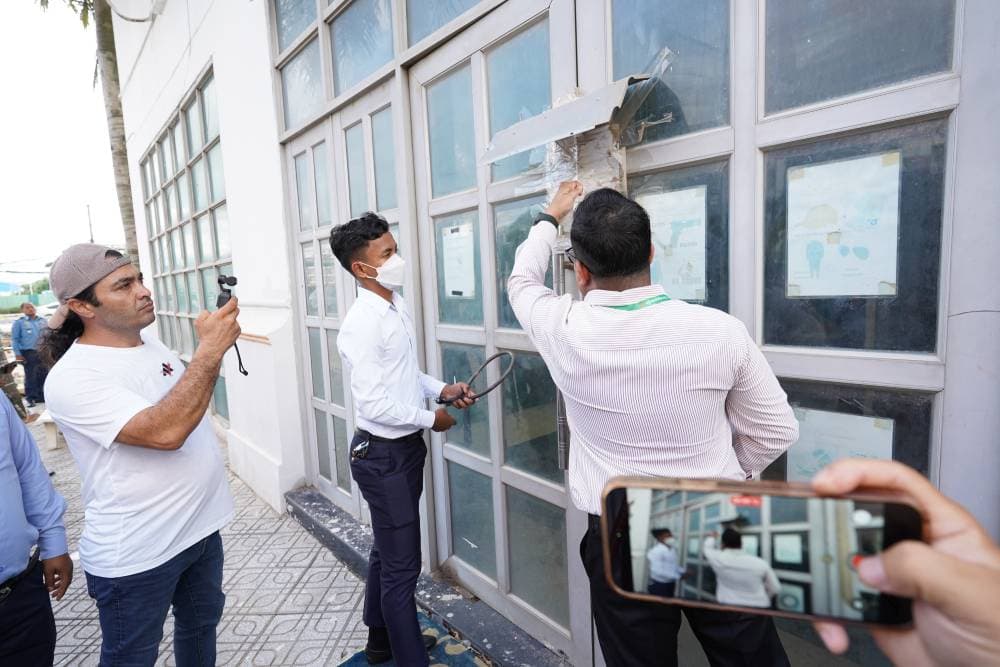
Phnom Phen (AsiaNews) – A new report highlights not only the size, but also the growth of cyber scamming in Cambodia.
Organised by powerful cross-border gangs, the activity has enjoyed a blind eye, if not support, from the authorities, and is linked to the development of other illegal activities, such as money laundering, workers’ enslavement, and the extortion racket.
Thanks to initiatives by local and international organisations, the authorities finally began to investigate and convict; yet, they themselves view such illegal activity as economically useful for the country.
In its latest report, titled Transnational Crime in Southeast Asia: A Growing Threat to Global Peace and Security, the United States Institute for Peace (USIP) highlights how organised crime and local elites have developed close ties, allowing the former to thrive without apparent obstacles.
The return on cyber scamming is estimated to exceed US$ 12.5 billion annually in the Southeast Asian country, whose formal GDP comes under US$ 30 billion.
The Cambodian economy grew consistently last year, and is doing the same so far this year; however, its potential is limited by groups that run a substantial underground economy, and by the lack of foreign investors deterred by the country’s lax attitude towards the rule of law.
For Yong Kim Eng, president of the People's Centre for Development and Peace, the level of cybercrime is such that many foreign observers are concerned about it and raise the issue whenever discussing the country.
Kim Eng himself acknowledges that the government has taken repressive measures, including the arrest and deportation of many suspects, often Chinese nationals.
But precisely this makes repression problematic, given Cambodia’s close relations with China, from which it gets most of its foreign investments and aid, giving Chinese businesses ample opportunity to operate in the country, and use its resources and manpower.
In many cases, business activities cover illegal activities; casinos, for example, are open to money laundering.
The USIP report notes ties between local authorities, criminal groups, and supranational institutions, citing the decision by the Financial Action Task Force on money-laundering to remove Cambodia from its grey list of countries under observation following lobbying by the Cambodian government.
It is still an open question whether this was done to protect businesses of dubious reputation or Cambodia’s national interests to allay concerns among potential foreign investors.