Kuala Lumpur (AsiaNews/Agencies) – An early election and a unique successional dispute touching the delicate balance of power on which modern-day Malaysia is founded are the background that will see nearly 900,000 eligible voters cast their ballot on 1 August in Negeri Sembilan, one of the thirteen states that make up the Malaysian Federation.
A unique monarchy in Southeast Asia
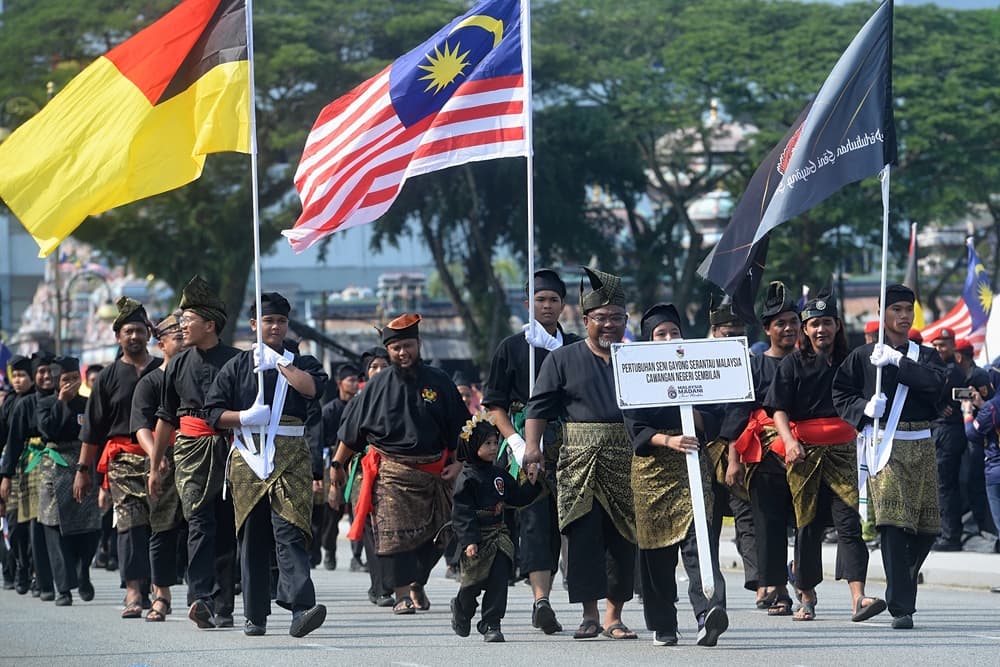
Negeri Sembilan holds a special place in Malaysian history. Its very name means "Nine States" and harks back to an ancient confederation founded by Minangkabau migrants, who arrived centuries ago in the Malacca Peninsula from what is now Indonesia. They brought Adat Perpatih, a system of customary law that still governs many aspects of the state's social and political life.
Unlike all other Malay monarchies, in Negeri Sembilan, the post of ruler, Yang di-Pertuan Besar, is not automatically inherited, but elected by a four-member of Council of Ruling Chiefs, known as Undangs, who are constitutionally granted the power to pick the monarch.
This delicate balance between tradition and modern institutions has allowed the system to survive even after the end of British colonial rule and the birth of the Malaysian federation.
The current crisis erupted in April 2026, when the four Undangs began the process to remove the current ruler, Muhriz Munawir. A few weeks later, on 5 June, they proclaimed Tunku Nadzaruddin Ja'afar as the new Yang di-Pertuan Besar.
The dispute is not just about the prestige of the monarchy or its succession. It is also a struggle for power over economic affairs. Since the crisis broke out, allegations have been made that one of the Undang granted mining concessions despite lacking the legal authority.
The decision, however, was not endorsed by federal authorities. Based on the attorney general's opinion, Prime Minister Anwar Ibrahim's government in Kuala Lumpur continues to consider Muhriz the sole legitimate ruler.
The state government, led by the reformist Pakatan Harapan (PH) coalition, has also publicly reiterated its support for the monarch.
The dispute has thus reached the courts, where the validity of the dismissal procedure, the legitimacy of the appointment of certain traditional leaders, and the interpretation of the constitutional rules governing succession are under scrutiny.
Meanwhile, Muhriz has appointed new Undangs to fill vacant or contested positions, further fuelling the institutional conflict.
Politics enters the dispute
The crisis has had immediate repercussions on the state's political stability. The UMNO, the main party of the Barisan Nasional (BN) coalition, withdrew its support from the state government led by Menteri Besar Aminuddin Harun, causing the early dissolution of the Legislative Assembly and a snap election, two years ahead of time.
For some political observers, the succession crisis is the real issue of the election campaign, far more than economic or political issues, especially among voters in rural and Malay-majority constituencies, where the role of the Undangs continues to be perceived as central.
The main opposition parties, the Barisan Nasional and the Perikatan Nasional, accuse the state government and Prime Minister Anwar Ibrahim of interfering in a matter that should be resolved exclusively by traditional authorities.
The ruling Pakatan Harapan coalition, however, recognised Muhriz as a necessary choice to ensure the continuity of institutions and respect for constitutional legality.
The dispute has also taken on a strong identity dimension. Many people consider Adat Perpatih a fundamental element of Malay culture in Negeri Sembilan and believe that any interference by political leaders constitutes a threat to local traditions.
Among Muhriz's supporters, however, the prevailing belief is that a ruler cannot be removed without strictly adhering to the procedures established by the constitution. They also stress that the monarch has ruled in recent years with balance and good administration, which is why they continue to recognise his authority.
There are, however, those who openly support the Undangs, believing that respect for the Adat requires accepting their decision in choosing the ruler. From this perspective, the conflict is less about the ruler himself than about defending the autonomy of traditional institutions.
The generational gap
Presenting the challenge of this vote through local voices, the Straits Times also highlighted a significant generational divide. Many older people view the issue as crucial to the survival of the state's historical identity, while a significant portion of younger people appear more distant.
Some younger voters admit to barely knowing the role of the Undangs, while others say that the dispute does not affect their daily lives, preferring to focus on economic hardships, employment, and the cost of living.
Still, the crisis has renewed interest among many people of their cultural roots. Several interviewees described rediscovering the meaning of belonging to their traditional clan and now consider Negeri Sembilan's historical heritage as something to be preserved alongside democratic institutions.
Whatever the outcome of the election and court decisions, the Negeri Sembilan crisis represents one of the most significant events in recent decades in Malaysia’s institutional landscape.
More than a simple successional dispute, it pits two different conceptions of authority against each other. On the one hand, legitimacy is based on constitutional law and federal recognition; on the other, legitimacy is rooted in the ancient customs of Adat Perpatih.
How this plays out could redefine not only the future of the state's monarchy, but also the delicate balance between tradition and modernity on which the Malaysian federation rests.