Kyauktaw (AsiaNews) – At least 49 people were killed yesterday and another 58 wounded in an airstrike by Myanmar’s military on a market in Kyauktaw, Rakhine State, the Arakan Army (AA) reported.
The AA is the state’s main ethnic armed group fighting Myanmar’s military junta. However, yesterday's attack struck a civilian area far removed from the zones where actual fighting has been ongoing.
The Kyauktaw area is inhabited by ethnic Rakhine (or Arakan), who are predominantly Buddhist. Yet Rakhine is also the homeland of the Rohingya, a mostly Muslim ethnic minority, who have faced decades of persecution by Myanmar’s authorities and military.
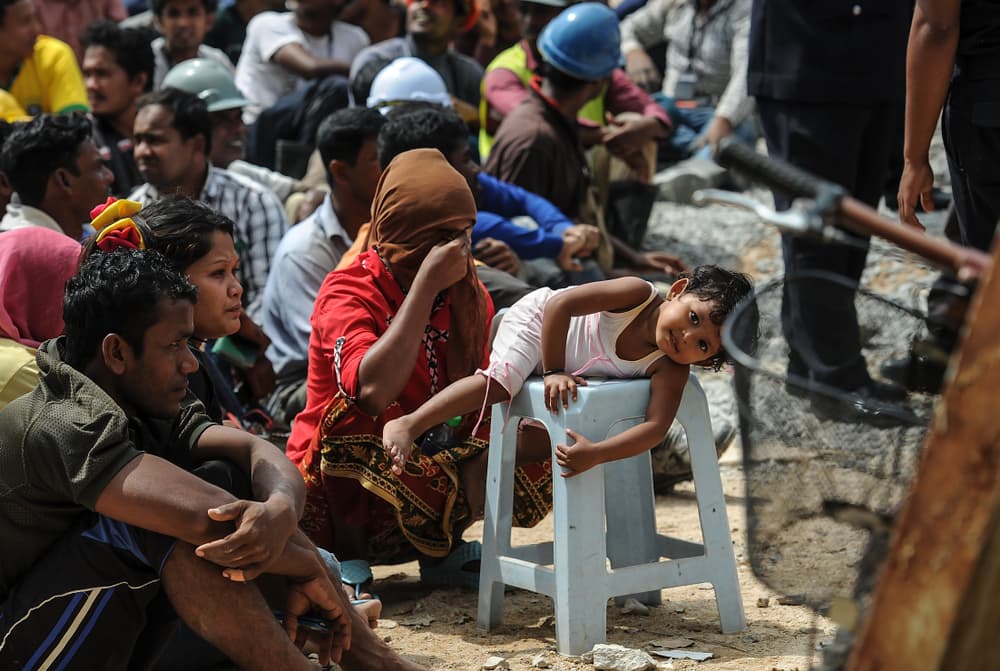
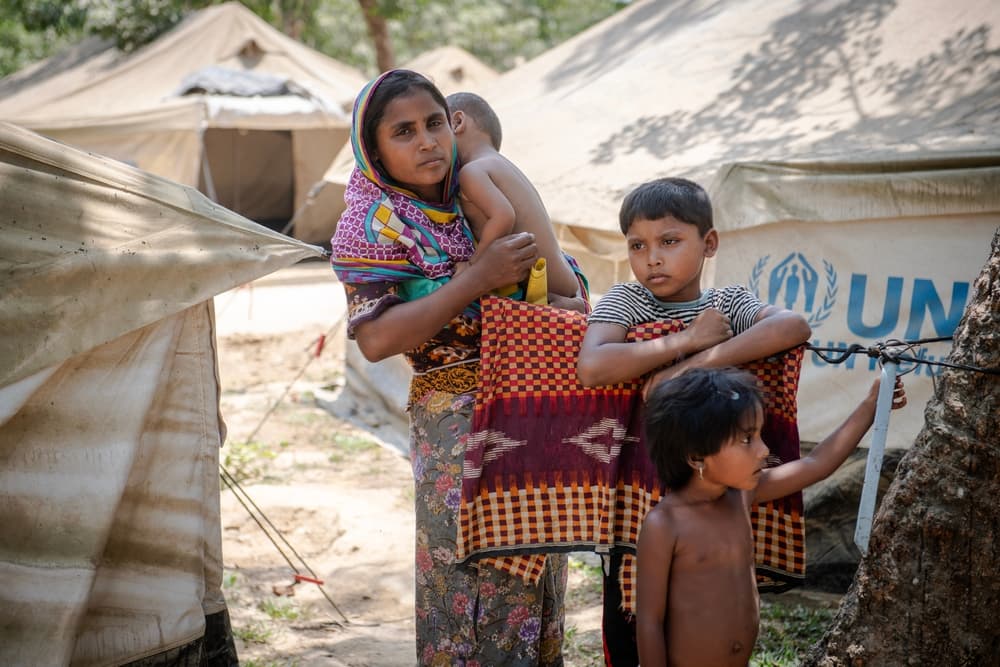
Today, more than a million Rohingya live in refugee camps in Bangladesh (with more than 150,000 fleeing since late 2023 alone), while thousands more attempt to escape by sea each year, risking their lives, in a bid to reach Malaysia or other Southeast Asian countries.
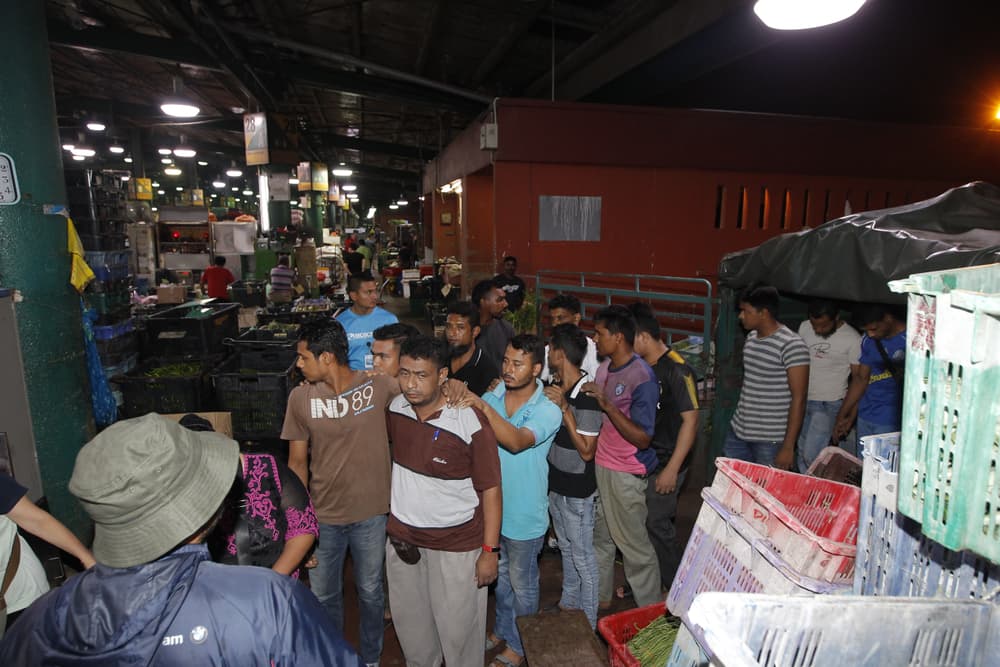
Despite the active fighting, Malaysia repatriated 1,476 Myanmar nationals this morning held in Malaysian immigration detention centres. Malaysian authorities have refused to disclose how many Rohingya there are, defying recommendations from United Nations experts and various humanitarian organisations.
The Rakhine frontline
Located about 100 kilometres north of Sittwe, the capital of Rakhine State, Kyauktaw has been under AA control since February 2024.
According to the Democratic Voice of Burma, three airstrikes hit the Indian Market and the nearby Kissapanadi Bridge, situated along a key route connecting AA-controlled areas.
Rakhine is currently one of the most active battlegrounds in Myanmar’s civil war, which broke out in 2021 following a military coup.
In late 2023, the AA launched a major offensive alongside the armed forces of two other ethnic groups, successfully capturing 14 of the state’s 17 townships.
Earlier this month, the regular army launched Operation 4926. According to overseas opposition-aligned media outlets, the military is deploying fighter jets, artillery, and the navy in this offensive.
The fiercest fighting so far has been concentrated in the area between Sittwe and Ponnagyun. While the AA has not yet reached the state capital, it has captured all the surrounding areas.
In addition to Sittwe, the junta controls the deep-water port of Kyaukphyu and Manaung Island, locations that are crucial to Chinese commercial interests.
According to The Irrawaddy, citing testimony from two soldiers captured by the AA, government forces ordered troops to target civilians as well; however, these claims could not be independently verified.
The army appears to have suffered heavy losses from fighting in Kyaukphyu, a district with an estimated 30,000 internally displaced persons, and Ponnagyun.
In recent weeks, the army has continued to carry out airstrikes against the population. According to the Democratic Voice of Burma, at least six civilians were killed and 16 people wounded between 17 and 27 September.
On 23 September, a nighttime airstrike in Ponnagyun killed two civilians and destroyed several homes. In the following days, thousands of people fled villages along the border between Ponnagyun and Sittwe.
Many families, often already displaced, sought refuge in informal camps in the forest, without proper shelter and facing food shortages and very limited access to medical care.
Just days before yesterday’s bombing, on 24 September, the UN Independent Investigative Mechanism for Myanmar had highlighted that civilians in Rakhine are constantly subjected to airstrikes, drone attacks, arbitrary detention, torture, and killings, while the delivery of humanitarian aid is hampered.
United Nations experts reiterated once again that conditions for the safe return of the Rohingya do not exist.
Supply lines and aid under attack
The situation is particularly critical in Sittwe, where tens of thousands of residents are trapped by fighting in surrounding areas that prevents movement.
Since early September, in addition to launching a new offensive, the regime has imposed new restrictions on aid distribution, banning direct donations and mandating that supplies pass through government channels.
Sittwe relies almost entirely on boats from Yangon for its food supply. Local witnesses report that displaced people are sheltering in 53 Buddhist monasteries, with many families having enough resources for only one meal a day.
In recent years, Rakhine State has become increasingly dependent on trade routes with neighbouring countries due to aid blockades imposed by the junta, which prohibit the transport of goods along the roads and waterways connecting the state to the rest of Myanmar.
One particularly vital corridor runs through the neighbouring Indian state of Mizoram and the Paletwa Township in Myanmar’s Chin State, an area also controlled by the Arakan Army.
Food, medicine, fuel, and other essential supplies arrive via this route. However, the latter is fragile; in recent months, it has been repeatedly disrupted by violence, fuel shortages, landslides, and airstrikes by the Myanmar military.
The recapture of territory is a crucial factor in the civil war, not least because the AA has managed to establish an extensive local administration, one that has frequently been accused of committing abuses comparable to those perpetrated by the military.
Several independent reports have documented instances of arbitrary detention, torture, forced displacement, and restrictions on aid access, acts committed, among others, by AA members.
The Rohingya thus find themselves exposed to violence from both sides. In some areas, they are even recruited by the Myanmar military, sometimes against their will, to fight against the Arakan Army.