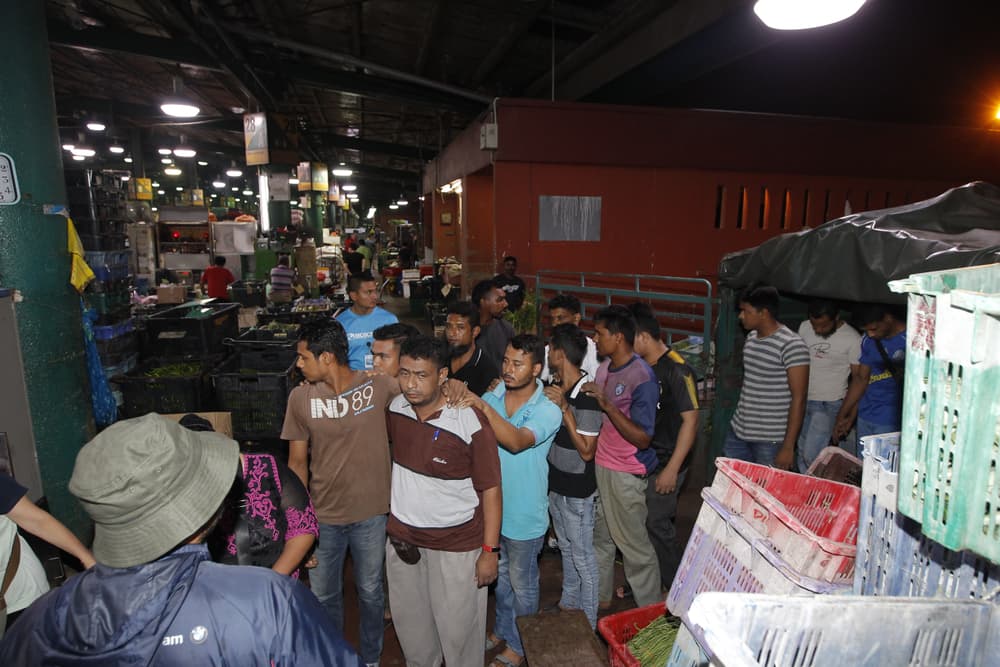
Kuala Lumpur (AsiaNews) – About 465 people have died in Malaysian immigration detention centres between 2021 and 2025, including 393 men, 60 women, and 12 minors, this according to data provided in early July to the Malaysian parliament by Home Affairs Minister Datuk Seri Saifuddin Nasution Ismail.
“Horrific conditions in detention camps are responsible for needless deaths in custody. Malaysia has a legal responsibility to treat people in its custody humanely, and to provide them with prompt and adequate medical care when needed,” said Peter Bouckaert, Senior Director at Fortify Rights
Overall, since 2024, the year the campaign to control irregular immigration began, 140 deaths have been recorded in the facilities, 31 in the first six months of this year.
The ministry cited deaths due to sepsis, leptospirosis, and meningitis – conditions that can be caused or aggravated by untreated infections, contaminated water, poor sanitation, and overcrowding, and which are potentially preventable or curable.
The deaths in detention follow an unprecedented surge in operations against undocumented migrants and refugees as part of a government campaign launched in 2024.
In 2025, immigration-related arrests reached their highest levels in a decade, with overcrowding in detention facilities exacerbating the problems. According to the latest government data, the centres hold 22,045 detainees, exceeding the declared capacity of 21,530.
“Malaysia’s immigration depots have become places where people are sent to die,” said Lynn Htet, Human Rights Specialist at Fortify Rights. “The government must investigate whether detainees were denied timely and adequate medical care, and publish full details on every death in detention.”
Since 2025, Fortify Rights has collected stories from dozens of former detainees who reported severe barriers to accessing healthcare in immigration detention centres.
Witnesses describe being denied care, delayed medical treatment, or, at times, being punished for seeking care. They also describe how living in degrading conditions, combined with inadequate nutrition and limited access to clean water, aggravated pre-existing conditions.
Under international law, all detainees have the right to adequate healthcare, and authorities must ensure timely access to medical care without discrimination.
“Everyone has the right to life, liberty and security of person,” reads Article 3 of the Universal Declaration of Human Rights.
For its part, Rule 24 of the Standard Minimum Rules for the Treatment of Prisoners, adopted in 2015 and commonly known as the Nelson Mandela Rules, requires states to guarantee all detainees access to medical care.
Over half of the asylum seekers registered by the UNHCR in Malaysia but considered irregular migrants are ethnic Rohingya fleeing persecution in Myanmar.
They face a particularly harsh fate, both due to their inability to return home and the appalling treatment they receive in a country that shares the same Islamic faith.
Despite this, Malaysia remains a popular destination, even though sea journeys often end tragically.
In fact, some 500 Rohingya are missing, believed to be victims of two recent sea accidents off the coast of Rakhine State, Myanmar, the first in late June and the second in early July.