The Hague (AsiaNews) – More than nine years after the persecution and exodus of hundreds of thousands of Rohingya to Bangladesh, the International Court of Justice (ICJ) ruled that Myanmar committed acts of genocide against the Muslim minority during military operations in 2016 and 2017.
This is a historic development, as it marks the first time the Court has directly recognised a state’s responsibility for genocide, attributing the acts committed by its security forces to Myanmar state. Yet, the ruling, reached by a vote of nine to six, comes at a time when the country is vastly different from the one in which the persecution originally took place.
The 2021 coup d’état plunged it into a civil war that has reshaped territorial control and transformed Rakhine, the ancestral homeland of the Rohingya, into a new battlefield.
Today, the group finds itself once again caught between the military, ethnic militias, and various armed groups that claim to be defending them.
How today’s ruling came about
The Gambia launched legal proceedings in November 2019, with the support of the Organisation of Islamic Cooperation (at the time the African country chaired the group’s ad hoc committee on the Rohingya), alleging that Myanmar had violated the Genocide Convention during its 2017 military operations.
That year, Myanmar’s military had launched a large-scale security operation in northern Rakhine State following attacks on several police outposts by the Arakan Rohingya Salvation Army (ARSA), a Rohingya armed group.
The violence, which, according to accounts gathered by international organisations, included mass killings, rape, torture, and the burning of entire villages, forced more than 700,000 Rohingya to flee to Bangladesh.
The ICJ today confirmed that over the past few years, some 10,000 Rohingya were killed during the 2017 military operations; it reached this conclusion after examining evidence of killings, sexual violence, and attacks against civilians who were attempting to flee.
The court also took into account marriage and procreation policies imposed on the predominantly Muslim minority group, including the obligation to get special permission to marry and to limit their number of children to two per couple.
Judge Yuji Iwasawa further noted that, prior to the military operations, approximately 815,000 Rohingya lived in the northern part of Rakhine State.
The International Court of Justice
Unlike the International Criminal Court (ICC), the ICJ was established to resolve disputes between states; it therefore cannot convict individuals, issue arrest warrants, or determine the criminal guilt of military or political leaders.
In the case of the Rohingya, the ICC prosecutor requested an arrest warrant in November 2024 for junta leader Min Aung Hlaing, citing crimes against humanity, specifically deportation and persecution, though the matter remains pending.
While ICJ rulings are binding upon the parties involved, the court lacks the means to enforce them; consequently, in the event of non-compliance, the issue may be referred to the United Nations Security Council.
The purpose of such proceedings is also to ensure that states fully accept their responsibility when atrocious acts are committed within their territory or by their own agencies.
The accusation of failing to prevent genocide
The 1948 Genocide Convention imposes an obligation to prevent genocide, ensuring that those who carry out such atrocities cannot hide behind the justification that they were merely following orders.
Aung San Suu Kyi, who was arrested in the 2021 coup d’état, was the head of government in 2017. In December 2019, she appeared in person at The Hague to defend Myanmar against accusations brought by The Gambia, rejecting the charge of genocide and arguing that the military operations should be understood within the context of an internal conflict.
Her stance reflected her position within a political system where the military held broad autonomy from the civilian government.
The 2008 Constitution, drafted by previous military rulers, reserved one quarter of parliamentary seats to Myanmar’s military (Tatmadaw) and granted it control over key security-related ministries, including Defence, Home Affairs, and Border Affairs.
Aung San Suu Kyi framed her decision to defend Myanmar as an attempt to avoid an open confrontation with the military and to prevent the crisis from escalating, a perspective also echoed by her son, Kim Aris, in comments to AsiaNews, and one effectively confirmed by the outbreak of civil war following the coup.
The civil war in Rakhine today
Meanwhile, Rakhine has become one of the most complex battlefields in the civil war. The Arakan Army (AA), a nationalist militia composed primarily of Buddhists from the Rakhine (or Arakan) ethnic group, has seized control of a large portion of the state since hostilities against the junta resumed in November 2023.
According to the Myanmar Peace Monitor, the AA controls 25 of the state’s 28 towns and administers 14 townships, while the junta retains control over Sittwe and Manaung, while holding a certain presence in the strategic area of Kyaukphyu.
In recent months, fighting has intensified specifically around Sittwe, Ponnagyun, and Kyaukphyu.
In early November, Myanmar’s air force struck a temporary facility used as a maternity clinic in the Mrauk-U area; five civilians, including a newborn, were killed in the attack.
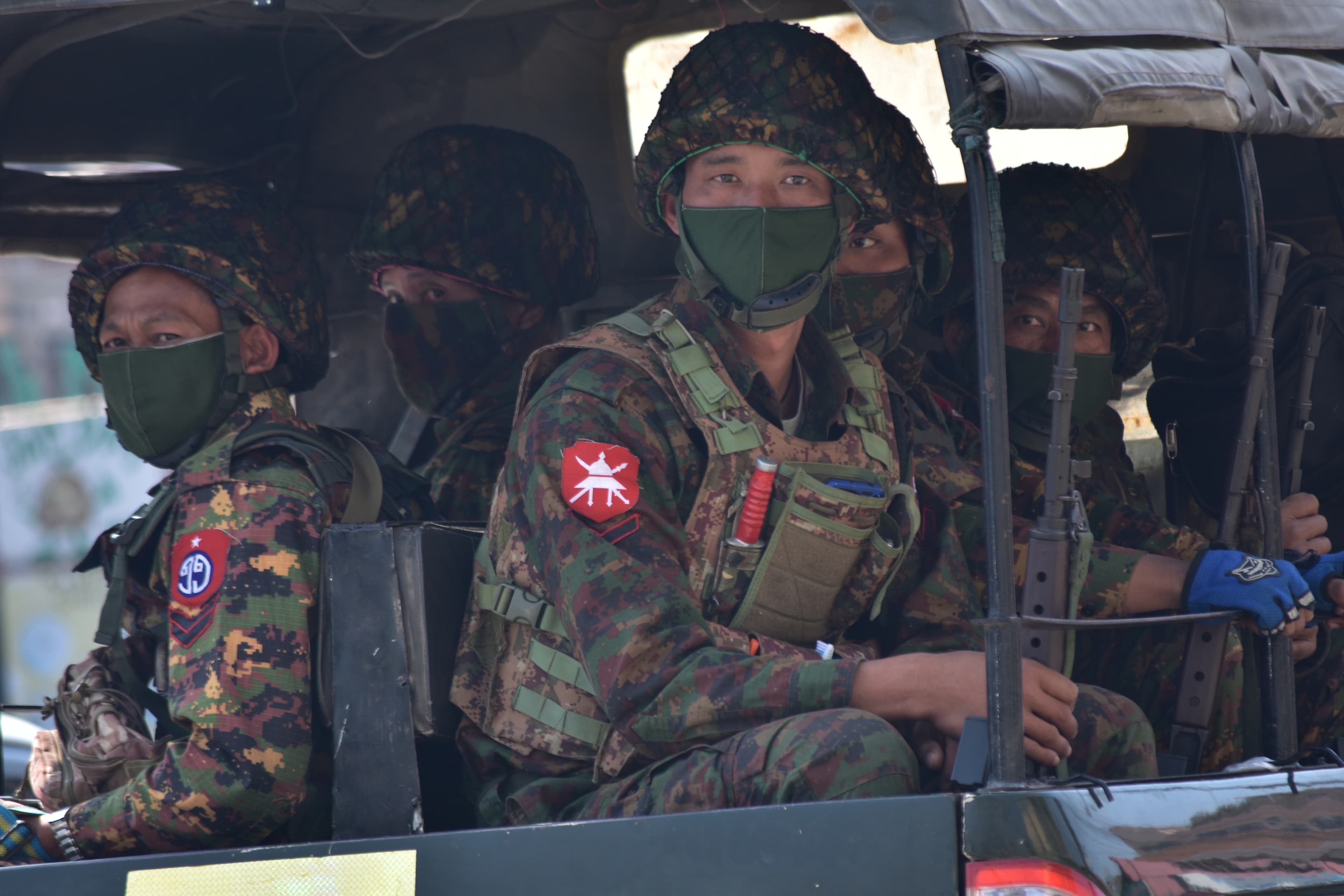
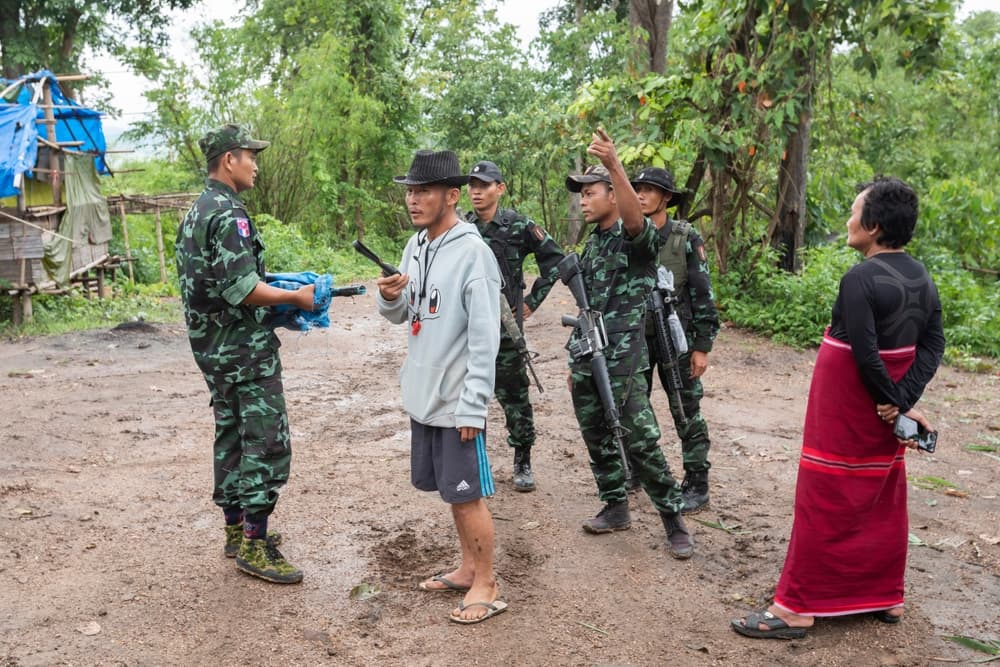
Some Rohingya have been co-opted as a military tool in the civil war. Beginning in 2024, as the Arakan Army advanced through northern Rakhine, Myanmar’s military began drafting men and boys from the Muslim minority to fight against the ethnic militia.
This practice has also been documented by Human Rights Watch. In one village in Buthidaung in 2024, an army officer demanded that 20 men be sent to the front, threatening to burn down the village if the demand was not met.
A report by the UN Office for Human Rights published in November, citing local sources, states that 1,981 Rohingya from Sittwe were conscripted by the army between June 2025 and May 2026. Some were reportedly deployed on a rotating basis to military bases and the front lines, or forced to perform manual labour.
Such recruitment is not limited to Myanmar’s military. The AA has also been accused of forcing Rohingya civilians to join its ranks or carry out work for the militia.
A report by the UN Office for Human Rights mentions quotas imposed on villages, with recruitment affecting men, women, boys, and girls, including children as young as 12.
In January 2026, according to local sources cited by the organisation, more than 2,300 cases of forced labour were recorded in northern Rakhine, at least 75 of which involved children.
Rohingya terrorist groups
Further complicating the situation, some armed Rohingya groups operate along the border with Bangladesh, including ARSA, the Rohingya Solidarity Organisation (RSO), and the Arakan Rohingya Army (ARA). Some of these groups have formed tactical alliances with the military against the AA.
Human Rights Watch has documented the involvement of ARSA and the RSO in the forced recruitment of men and boys, including through abductions from refugee camps in Bangladesh.
Military alliances do not necessarily follow religious or ethnic lines. Some Rohingya may be recruited by one side while being suspected of collaborating with the enemy by the other, a process that exposes entire villages to reprisals and collective punishment.
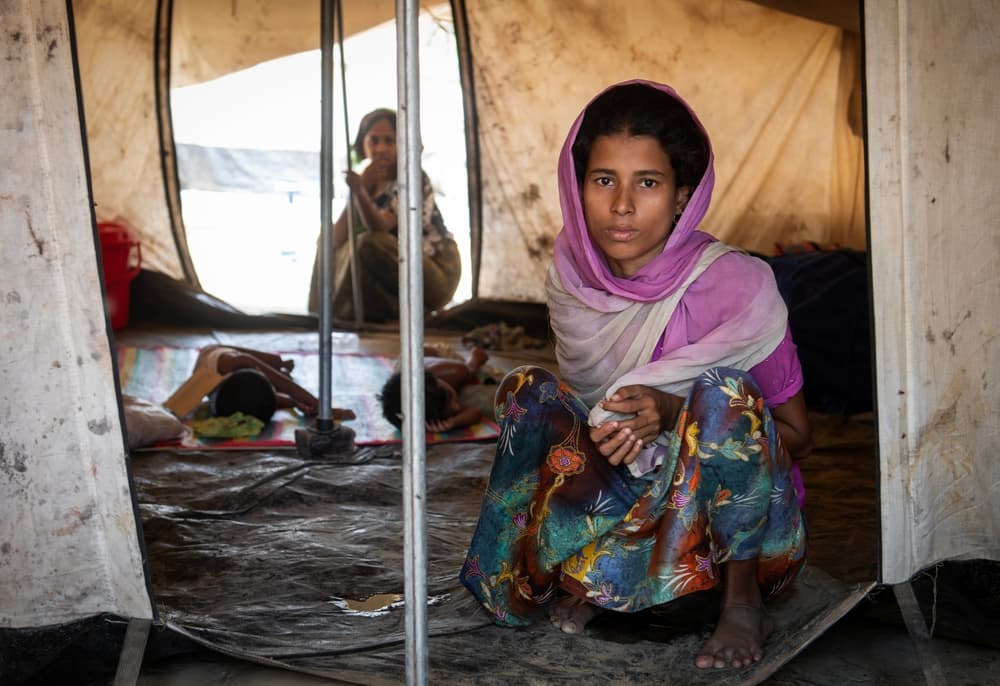
Even in the camps in Cox’s Bazar, Bangladesh, home to approximately 1.2 million Rohingya refugees, armed groups continue to exert significant control over daily life.
Between January and March of this year alone, according to Protection Sector data cited by the Danish Refugee Council, 455 serious security incidents involving 832 refugees were recorded across the 33 camps in Cox’s Bazar and on the island of Bhasan Char, a 40 per cent increase over the previous quarter. Abductions and disappearances are the most frequent occurrences.
The humanitarian situation in Rakhine remains equally dire. A United Nations report published this summer estimates that there are approximately 500,000 internally displaced persons in the state, including nearly 225,000 Rohingya confined to camps.
More than 519,000 people, the majority belonging to the Muslim minority, have been left stateless. This is yet another repressive measure taken by Myanmar against the Rohingya, who are often, as the ICJ also confirmed today, referred to as “Bengali”, a term used derogatorily to emphasise that they do not belong to Myanmar.