Singapore (AsiaNews) – The failure of the COP31 climate negotiations is unlikely to derail Singapore’s climate priorities or wider efforts across South-East Asia, but it could undermine funding for developing countries seeking to move away from fossil fuels, regional analysts say.
The absence of an agreement at the United Nations climate conference has raised concerns about international cooperation and the availability of financial support for countries facing mounting environmental challenges.
However, experts say the breakdown in negotiations does not mean that multilateral climate cooperation has failed or that governments will abandon their climate commitments.
Climate threats in Southeast Asia
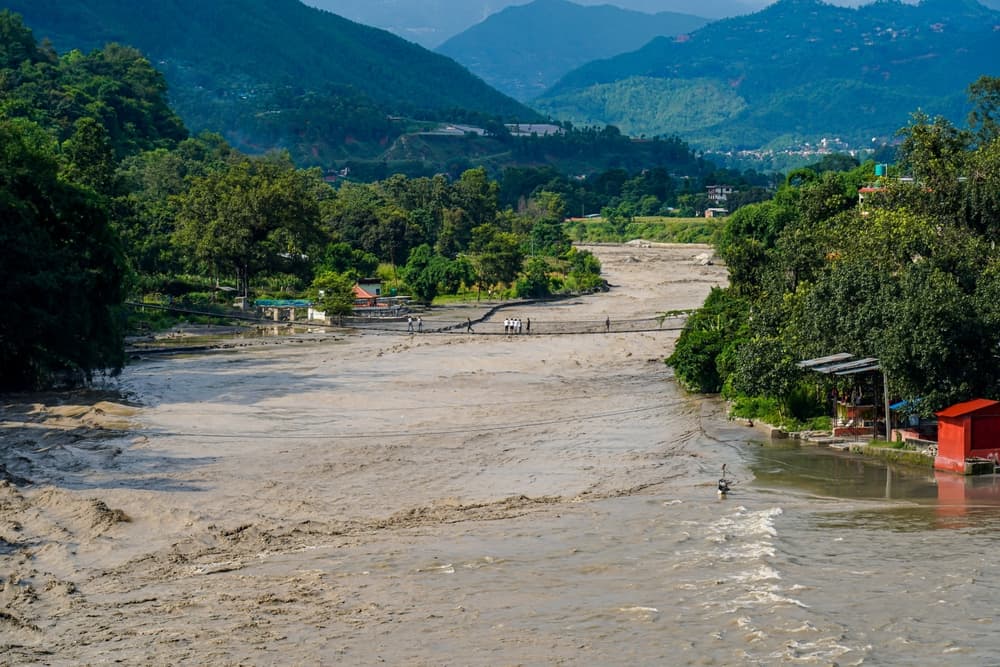
Rueban Manokara, director of carbon finance at WWF-Singapore and a former Singapore climate negotiator, said South-East Asia continues to face serious climate-related threats, including floods and fires.
The region must also secure its energy supplies and maintain economic competitiveness amid the global energy crisis, which has been exacerbated by the conflict involving the United States and Iran and South-East Asia’s dependence on fossil fuel imports from the Middle East.
Melissa Low, a research fellow at the National University of Singapore's Centre for Nature-based Climate Solutions, said the physical consequences of climate change would not disappear because governments failed to reach a political agreement.
“If global mitigation efforts slow, adaptation and resilience-building become even more urgent for Singapore and the region,” she said.
Funding remains a major concern
The greatest immediate concern could be the impact of the failed negotiations on climate financing for developing countries.
Financial contributions from developed nations are essential in helping poorer countries shift from fossil fuels to renewable energy, strengthen infrastructure and establish early warning systems to protect communities from climate-related disasters.
The question of climate finance emerged as a major point of disagreement at COP31, with developed countries blocking discussions on when and how such contributions would be provided.
Tan-Soo Jie-Sheng, director of the Institute for Environment and Sustainability at the Lee Kuan Yew School of Public Policy, said developing countries needed financing arrangements that were economically attractive, politically feasible and consistent with their development priorities.
“Otherwise, we risk having ambitious climate targets on paper without the investments needed to achieve them,” he said.
He cited research by the Australian National University indicating that financial pledges by donor countries to support the transition away from fossil fuels in Indonesia and Vietnam had stalled at the implementation stage.
Low said uncertainty over climate financing made it increasingly difficult to expect developing countries to accelerate their energy transitions.
She also pointed to the absence of United States leadership and difficulties in securing compromises among major economies as contributing factors to the breakdown in negotiations.
Regional cooperation still matters
Despite the setback, analysts cautioned against interpreting the outcome as evidence that the multilateral climate process is fundamentally broken.
Manokara recalled the collapse of negotiations at COP15 in Copenhagen in 2009, which was followed by the adoption of the landmark Paris Agreement in 2015.
“Post-failure at Copenhagen, countries bounced back with the Paris Agreement (in 2015), which now underpins global climate action,” he said.
He stressed that international cooperation remained particularly important for smaller and more vulnerable countries that depended on collective action to address climate change.
In the immediate future, however, climate initiatives could increasingly depend on bilateral agreements and cooperation between individual countries.
Praveen Tekchandani, ASEAN co-leader for climate change and sustainability services at consultancy firm EY, warned that the delivery of climate initiatives across the region could become more fragmented.
He said Singapore, which will assume the ASEAN chairmanship in 2027, had an opportunity to demonstrate that regional cooperation remained effective despite setbacks at the global level.
“However, success will need to be measured in projects financed, interconnections advanced and standards aligned, not in declarations alone,” he said.
Singapore urges countries to stay together
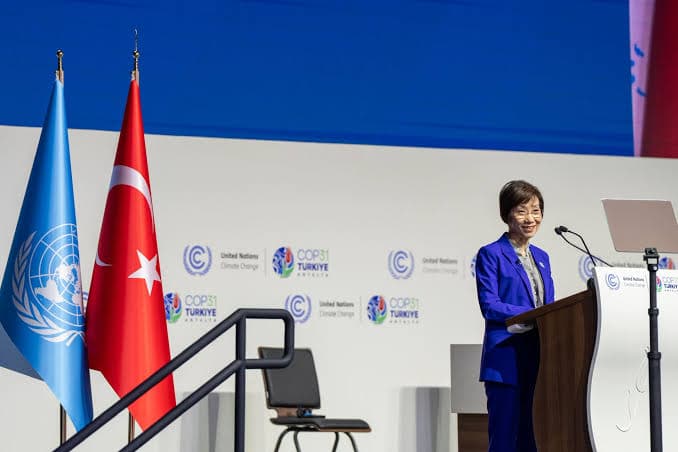
Singapore’s Minister for Sustainability and the Environment Grace Fu has also expressed regret over the failure to reach consensus, but urged countries not to allow the setback to undermine international cooperation.
In a Facebook post on yesterday, Fu acknowledged that the outcome of COP31 fell short of some countries’ expectations but said the conference had also produced positive developments.
She cited the proposed global 35-by-35 electrification target, a voluntary initiative put forward by host country Turkey to raise electricity’s share of global energy consumption to 35 per cent by 2035.
Recalling Singapore’s intervention at the conclusion of the summit in the Turkish resort city of Antalya on Sunday, Fu said the government had encouraged countries to continue working constructively with one another and with the incoming COP32 presidency to secure an agreement at the next conference.
COP31 ended on 22 November, two days after its scheduled conclusion, without an agreed outcome text among the nearly 200 participating nations.
The next climate summit, COP32, will be held in Ethiopia in 2027.
For South-East Asia, the immediate challenge will be to ensure that stalled global negotiations do not translate into stalled climate action at home. That will require governments to turn commitments into funded projects, strengthen regional energy cooperation and protect communities already experiencing the effects of a warming climate.