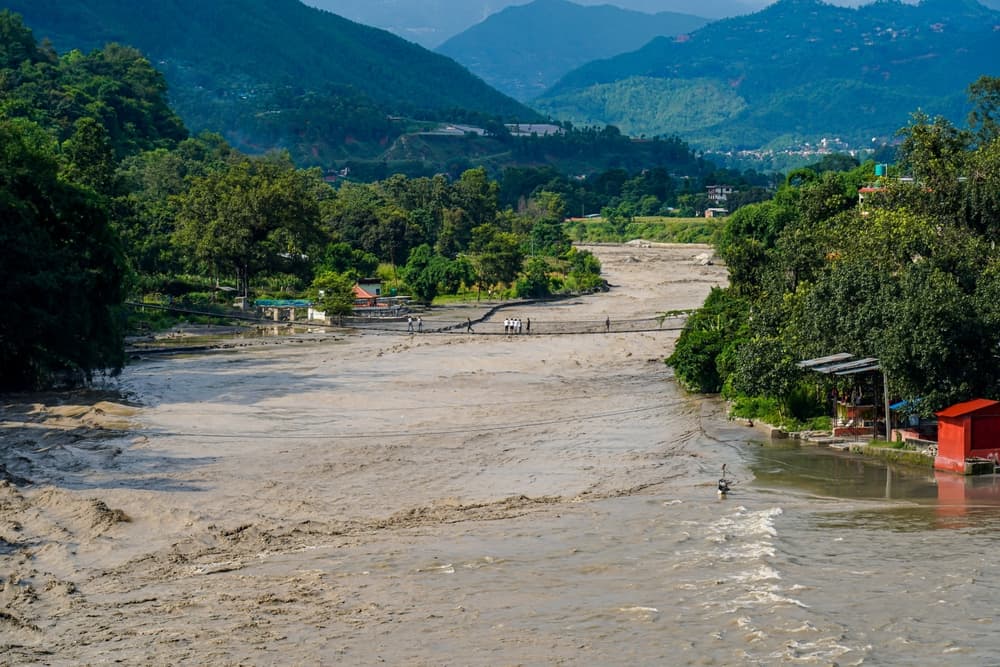
Kathmandu (AsiaNews) – Nepal has resumed electricity exports to Bangladesh, after they were suspended in the wake of floods on 26 August, which damaged various infrastructure and hydroelectric power plants.
This was made possible by an initial US$ 20 million in international funding, provided by the UN Fund for Responding to Loss and Damage (FRLD), along with support from India, which made its own infrastructure available for the transfer.
Electricity began flowing again from Nepal to Bangladesh last Friday, via the Indian transmission grid. The Trishuli and Chilime power plants, both authorised to supply the Bangladeshi market, had been damaged by the floods.
The energy currently supplied comes from the Solu Khola and Kabeli B1 plants, while supplies to the Indian state of Haryana are provided by the Lower Modi Khola power plant.
This allows Nepal to continue exporting its surplus energy, generated during the monsoon season, when heavy rainfall boosts hydroelectric output beyond the level of domestic demand.
A five-year agreement between the Nepal Electricity Authority (NEA) and the Bangladesh Power Development Board, signed on 3 October 2024, provides for the seasonal supply of 40 megawatts between 15 June and 15 November of each year.
Exports to India, meanwhile, have continued despite the damage caused by the disaster.
According to data from the NEA, between mid-September and mid-October, Nepal sold 633.986 million units of electricity to its neighbour, generating 5.925 billion Nepalese rupees.
This is 962 million higher than in the same period in 2025 and 832.5 million higher than in the previous month.
In the first quarter of the 2026–2027 fiscal year, which began in mid-July, total revenue from electricity exports reached 16.1513 billion rupees.
Approximately two-thirds of the electricity sold to India was supplied through bilateral agreements with the states of Haryana and Bihar, while the remainder was traded via the Indian power exchange.
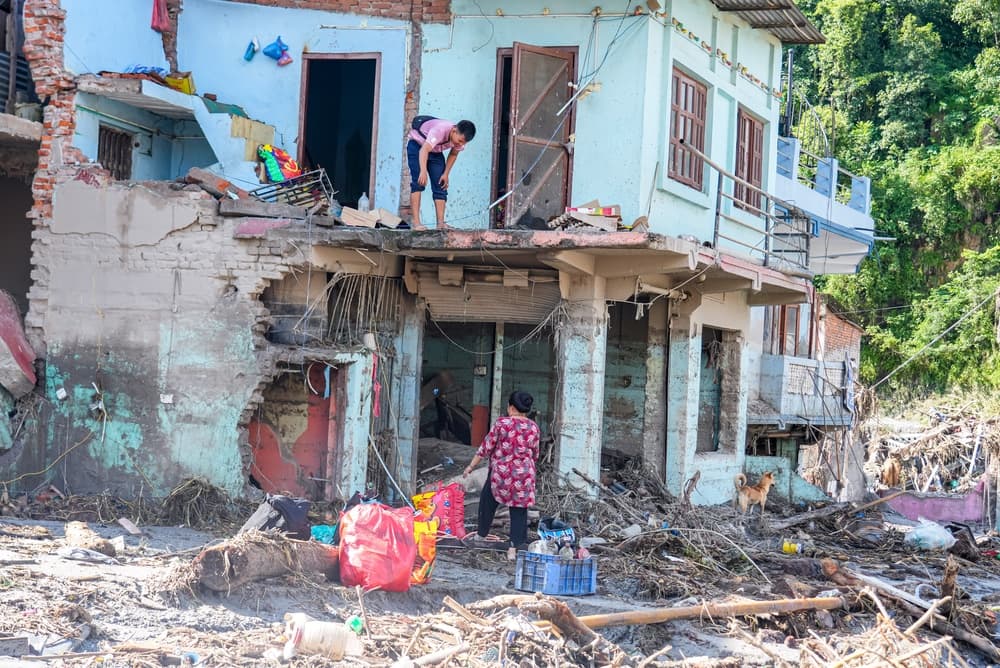
The floods damaged a total of 13 hydroelectric power plants, as well as roads, bridges, and schools. About 1,500 people have been confirmed dead with more than 5,000 people still missing. According to official estimates, the total cost of reconstruction could exceed US$ 4.7 billion.
For this reason, on 22 October, the board of the FRLD, an international fund established under the United Nations to support countries affected by the impacts of climate change, approved an allocation of US$ 20 million for Nepal.
This marks the first time the fund’s emergency procedures have been activated in response to a specific climate-related disaster. However, for the time being, the sum represents less than 1 per cent of the estimated cost of reconstruction.
By the end of September, Nepal had received approximately US$ 102 million in domestic and international aid and was seeking further resources from India, China, and multilateral development banks, this according to an official with the Nepali ministry responsible for climate and the environment, the Associated Press reported.
Once again, the situation highlights the challenges faced by countries most vulnerable to extreme climate events. Nepal’s contribution to global emissions is minimal, yet it now faces enormous costs to repair the damage.
The resumption of exports is a sign of recovery for regional trade, but it does not yet address the needs of communities that have lost their homes and livelihoods.