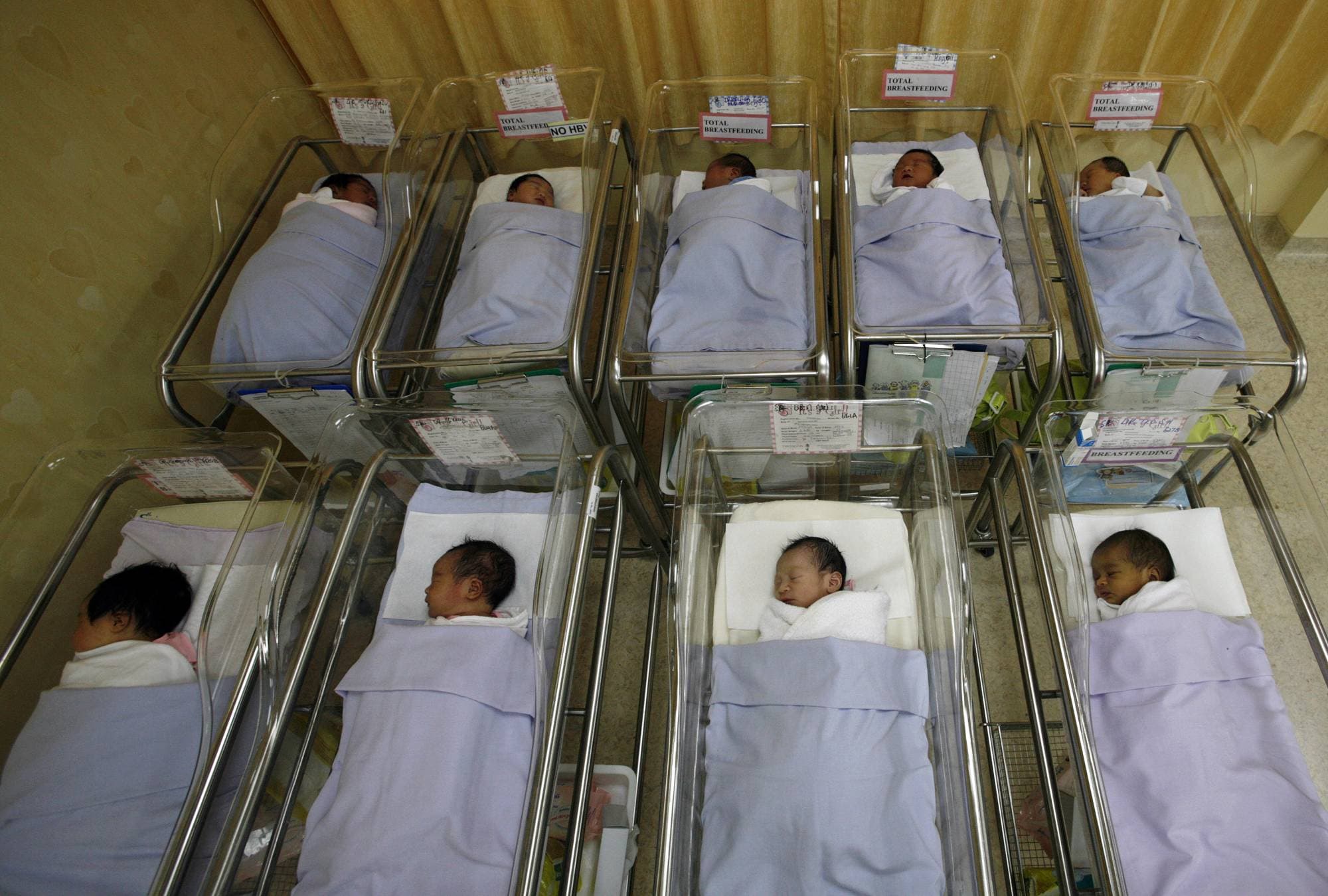
Singapore (AsiaNews) – Prime Minister Lawrence Wong has announced that Singapore will provide nearly 70,000 Singapore dollars (approximately 47,500 euros – ed.) in direct financial support to every Singaporean child from birth until the age of 17. The announcement comes as the city-state’s birth rate hits an all-time low.
Wong unveiled the SG Child Support Package during his National Day speech, stating that the measures aim to ease the financial burden of raising children and to support families amid rising living costs.
Package to be paid out from April 2027
The package, which will come into effect in April 2027, guarantees the same level of support to every child, regardless of birth order. Under the scheme, every child will receive a grant of 10,000 Singapore dollars during their first year of life, along with subsidies through MediSave and the Child Development Account (CDA) to help parents cover healthcare and other expenses.
In addition, children will receive S$2,000 annually in ‘Child Credits’ from the age of one until they turn 16, whilst additional top-up payments into their Edusave accounts will help families meet education-related expenses.
At the age of 17, the government will provide a further top-up payment of 10,000 Singapore dollars for post-secondary education, bringing the total direct support to nearly 70,000 Singapore dollars.
The government is also introducing measures to reduce the recurring costs associated with raising children. Fees for subsidised full-time childcare services will be capped at 150 Singapore dollars a month, whilst parents will receive longer paid parental leave to allow them to devote time to caring for young children. The benefits will also be extended to the children of unmarried parents, bringing them within the scope of the support measures.
Singapore has one of the lowest birth rates in the world, and the government is increasingly concerned about the long-term demographic and economic consequences of the decline in births. According to official statistics, the country’s total fertility rate fell to a record low of 0.97 in 2024, remaining well below the replacement level of approximately 2.1 children per woman.
A U-turn from the past
The current push to support families in Singapore marks a sharp U-turn from the demographic policy adopted in the first few decades after independence. In the 1960s and 1970s, the government feared that rapid population growth could place a heavy strain on the young nation’s limited resources. In 1972, it launched the highly successful ‘Stop at Two’ campaign, urging couples to have no more than two children.
This message was reinforced by policies designed to make large families less attractive, including a reduction in maternity leave, lower financial benefits for the third and subsequent children, and higher taxes for large families. The campaign was so effective that the fertility rate fell sharply, dropping from over four children per woman in the 1960s to below replacement level as early as the 1980s.
But the demographic success of that era eventually gave way to a problem of a different kind. With smaller families becoming the norm, Singapore found itself facing an ageing population, a shrinking pool of future workers and fewer young people entering the labour market.
The government began to reverse this trend in the 1980s, launching the ‘Have three or more children (if you can afford it)’ campaign in 1987 and subsequently expanding tax relief, childcare subsidies, parental leave and other measures aimed at encouraging large families. This change of course illustrates the difficulty of managing fertility through government intervention. What had worked when Singapore wanted to reduce the number of births proved very difficult to reverse when, later on, the country wanted to increase them.
Government intervention in a changing world
Over the years, the government has introduced a range of measures – including financial incentives, subsidised childcare and parental leave – in an attempt to make marriage and parenthood more accessible. The latest package represents a significant expansion of direct support for families, but Singapore faces a broader challenge: financial support alone may not be enough to reverse changing attitudes towards marriage and parenthood.
Rising housing and education costs, people marrying later in life, demanding careers and changing family preferences are all factors that have contributed to the prolonged decline in the country’s birth rate. The government has stated that its family-friendly policies aim not only to provide financial support, but also to create the conditions that will make couples feel more ready to have and raise children. The new package will therefore be closely monitored as Singapore seeks to tackle one of its most persistent demographic challenges.