

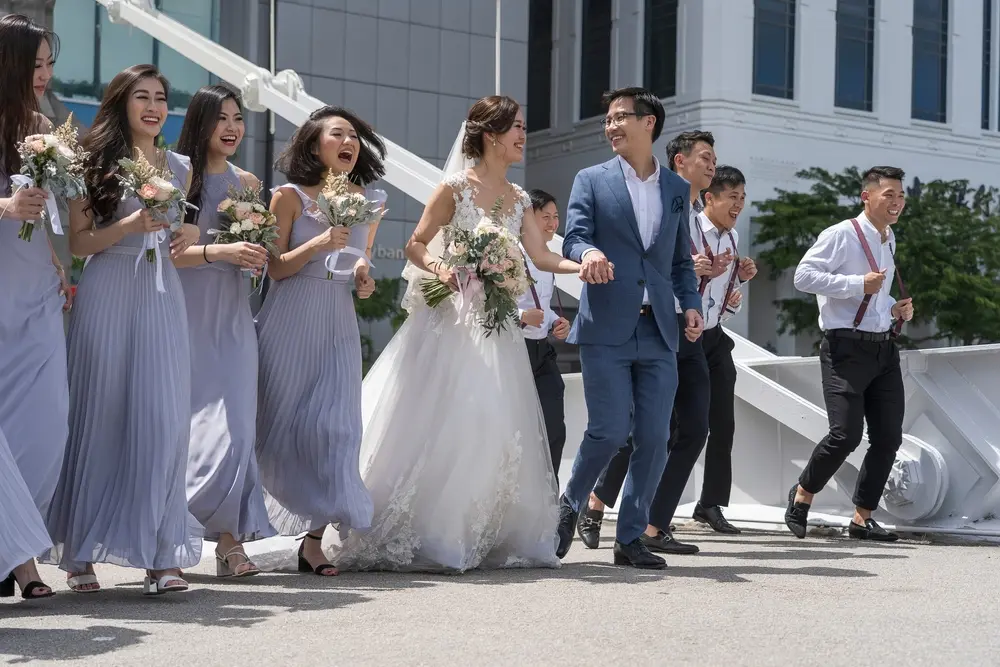
Singapore (AsiaNews) – Fewer Singaporeans are getting married, with the city-state recording its lowest number of marriages in nearly a decade outside the COVID-19 pandemic. Yet a new government survey suggests those who do marry remain overwhelmingly satisfied with their relationships.
The findings, released on 10 July by Singapore's Ministry of Social and Family Development (MSF), paint a nuanced picture of family life in one of Asia's most affluent but rapidly ageing societies.
A total of 24,688 marriages were registered in 2025, down 6.2 per cent from 26,328 in 2024. It was the third consecutive annual decline since the post-pandemic peak of 29,389 marriages in 2022 and the lowest figure since 2016, excluding 2020 when pandemic restrictions disrupted weddings.
At the same time, the number of divorces and annulments also fell. A total of 7,242 marriages ended in divorce or annulment in 2025, down 1.9 per cent from the previous year. Couples married between five and nine years accounted for the largest share of marital breakdowns.
For the first time, the ministry also measured the quality of marriages through a nationwide survey involving about 3,000 respondents.
Nearly 95 per cent described themselves as happily married, while 93 per cent said their relationship was going well. About 88 per cent said they rarely or never considered ending their marriage, and almost four in five said they frequently confided in their spouse.
Only 4.2 per cent reported being unhappy in their marriage.
MSF said the new data would help policymakers better understand family life and strengthen future marriage and family programmes.
The decline in marriages reflects broader demographic and social trends that have emerged across many developed Asian societies.
Young adults are marrying later, pursuing higher education, establishing careers and delaying parenthood amid rising living costs and housing concerns.
Civil marriages accounted for most of the decline, falling from 21,144 in 2024 to 19,682 in 2025. Muslim marriages also declined slightly, from 5,184 to 5,006.
For both groups, the sharpest decrease occurred among couples aged between 25 and 34.
Despite fewer weddings, the report found that marriages have become more stable over time.
Among resident couples, the proportion of marriages ending before the tenth anniversary fell from 17 per cent for those who married in 2005 to 13.5 per cent for couples who married in 2014.Bottom of Form
The ministry noted that the period between the fifth and tenth year of marriage remains the most vulnerable, underscoring the need for continued support beyond the wedding day.
Although the report does not analyse marriages by religion, Christian churches have long maintained that preparing couples for marriage is only the beginning of a lifelong journey.
For the Catholic Church, marriage is not simply a legal contract or a social institution but a sacrament – a lifelong covenant rooted in fidelity, mutual self-giving and openness to family life.
Recognising the pressures facing modern couples, Catholic parishes in Singapore have expanded marriage preparation and enrichment programmes over the years. Many offer mentoring by experienced married couples, retreats, parenting workshops and small faith-sharing groups that accompany couples through different stages of married life.
Church leaders have frequently observed that the early years of marriage often present the greatest challenges as couples learn to balance careers, financial commitments, raising children and caring for ageing parents.
The ministry's finding that marriages are most vulnerable between the fifth and tenth years echoes a reality that many pastoral workers have witnessed for years.
Pastoral workers note that a successful marriage is measured not only by its duration but also by the quality of the relationship.
The ministry's findings – that most respondents communicate openly with their spouses and remain committed to their marriages – reflect values that both civil institutions and religious communities seek to encourage.
Marriage counsellors say couples who continue to invest time in communication, shared responsibilities and mutual respect are generally better equipped to navigate inevitable periods of stress.
Within Christian communities, regular prayer together, participation in parish life and mutual forgiveness are often seen as important pillars of a resilient marriage.
While no relationship is free from conflict, many churches encourage couples to seek help early rather than allowing problems to deepen.
Across Asia, declining marriage rates have become a growing concern as governments grapple with ageing populations and falling birth rates.
Singapore is no exception.
Yet the latest figures also suggest that while fewer people are choosing marriage, those who do continue to value long-term commitment.
For churches, the challenge is twofold: encouraging young adults not to lose confidence in marriage while ensuring that couples receive practical and spiritual support long after the wedding celebrations have ended.
The government's findings offer a measure of optimism.
They suggest that despite the pressures of modern life, many Singaporean couples continue to find joy, stability and companionship in marriage – a reminder that enduring relationships remain possible in an increasingly fast-paced and individualistic society.







.jpg&w=3840&q=75)







