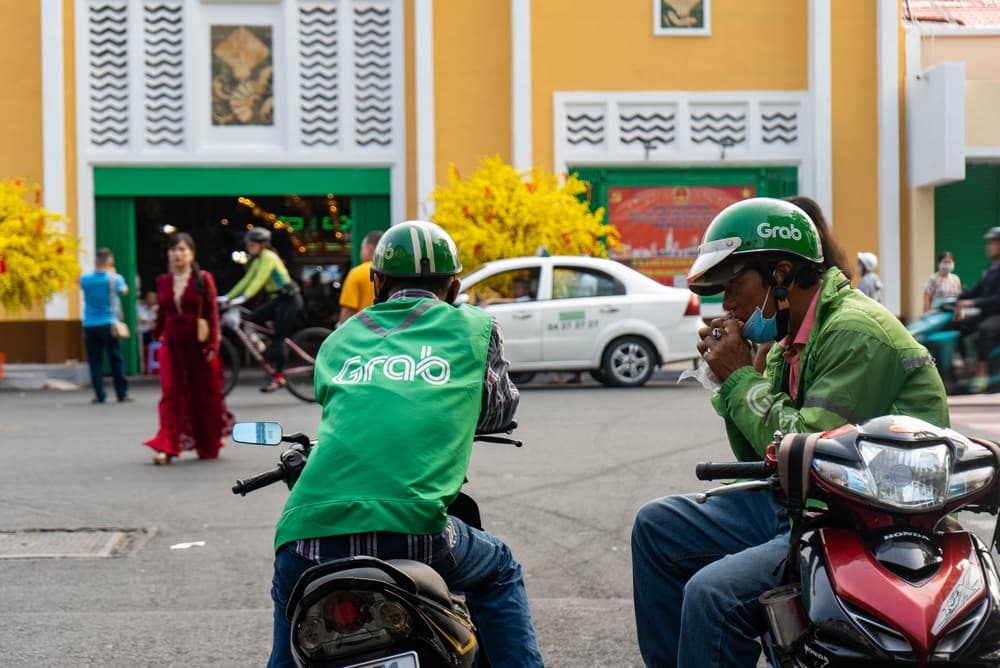
Hanoi (AsiaNews) – An appeal is currently circulating in Facebook groups for Grab drivers in Vietnam to logoff the app on 12 and 13 September.
Hundreds of drivers are planning to join a two-day boycott to protest against the commissions and deductions applied by the platform, which lets customers book motorcycle taxi rides, order food, and request other home-delivery services.
For now, the movement, which originated on social media, appears informal, but it is rapidly gaining support among drivers concerned about falling earnings amidst the rising cost of living.
The protest began in early September, when various drivers started reporting, in groups dedicated to the activity, particularly low earnings following Grab's deductions.
On Monday evening, a user posted a call to action in the Grab Drivers Community Vietnam group, which has around 166,000 members: “Let’s stand together, everyone. On the 12th and 13th. It’s truly unfair.”
The message, accompanied by a photo of drivers standing beside a banner opposing the hike in commissions and fees charged to drivers, garnered over 3,000 interactions and quickly spread to other online groups for drivers.
“Grab is charging an outrageous fee. It collects 18,000 đồng for a ride, but the driver receives only 9,630 đồng,” said one driver to explain the reason for the protest.
“There’s a 3,000-đồng platform fee, even though the app already has the data, and a 2,000-đồng Ride Cover enrolment fee. And what about recording rides without permission? That puts the deductions at around 40%–45% per trip. What do other drivers think?” he asked.
Another driver recounted earning just 230,000 dong, less than US$ 9, after expenses for an eight-hour shift.
“I headed out at 5:30 pm and got home at 1:30 am Eight hours. After 70,000 đồng for gas, I had 230,000 left. My back is wrecked. It’s bitterly disappointing.”
Other drivers compared current rates with those from a year ago.
“A year ago, a driver received 15,000 đồng for a three-kilometre trip, not counting the distance to pick up the passenger. Now we get only 13,000, while the passenger pays 25,000,” one of them wrote, noting that Grab states its commissions for the GrabBike service range between 20 and 27 per cent.
“So the passenger pays 25,000, and the driver receives 13,000. Doesn’t that seem unreasonable? Fares have been falling for about a month, while living costs keep climbing. Everything gets more expensive by the day, by the year.”
However, within online groups, some fear they cannot afford to go two days without working. “I’m in debt, so please understand that I’ll still be driving on the 12th and 13th. I have no other choice,” wrote one driver.
Another urged colleagues to reflect on the consequences of the strike: “Before you decide to turn off the app, think it through. [. . .] What work will you do to keep yourselves going? Please don’t act on impulse. And the last thing I want to remind you is: THINK OF YOUR WIFE AND CHILDREN AT HOME.”
Drivers operate as platform partners rather than traditional employees. This makes it more difficult for them to collectively negotiate working conditions and secure guarantees comparable to those of subordinate workers.
For its part, Grab has not yet responded to the drivers' demands. A message attributed to the company has circulated in driver groups, urging them “not to turn off the app on their own initiative" on 12 and 13 September, under penalty of possible "permanently deleted” accounts.
However, the authenticity of the notice has not been verified. The local news outlet Luật Khoa reported repeatedly attempting to contact Grab Vietnam and its Hanoi representative office on 9 September, but received no response.
Grab entered the Vietnamese market in 2014. In its early years, it waived commissions to capture a significant share of the sector. In 2017, it introduced a 15 per cent commission.
In January 2018, the rate increased, from 20 per cent to 23.6 per cent, prompting hundreds of GrabBike drivers to turn off their apps and gather outside the company’s Hanoi offices.
In September of that same year, the commission was set at 20 per cent following another adjustment to the terms applied to drivers. By December 2020, the deduction had reached 27.27 per cent, sparking fresh protests in Hanoi.
The core issue concerns how Grab calculates its share. Since 2024, the company has introduced a so-called flexible app usage fee in various parts of Vietnam, applied to individual rides and orders.
This measure was initially tried in select provinces before being progressively extended to other parts of the country.
According to Grab, the system is designed to account for various factors related to the ride itself, including the time and distance travelled by the driver, weather conditions, traffic, and the balance between supply and demand in a specific area at a given time.
In the terms of service updated in July 2026, the company defines the application usage fee (Phí Sử dụng Ứng dụng) as the share of revenue due to Grab under its commercial agreement with drivers, specifying that it may vary for each ride or order.
It is precisely this algorithm-based variability that is raising the most concern among drivers. Final earnings can fluctuate from one trip to the next, and, according to their complaints, it becomes difficult to determine exactly what portion of the fare paid by the passenger actually ends up in their pockets.
Furthermore, Grab’s near-monopoly on the market leaves drivers with few alternatives. Estimates cited by the local press place Grab’s market share at around 70 per cent.
It remains unclear how many drivers will actually join the protests scheduled for 12–13 September, or what impact this will have on services in major Vietnamese cities.
At present, there has been no public intervention by Vietnamese authorities to protect the drivers or to mediate the dispute.