Buenos Aires (AsiaNews) – Leo XIV, now on his third day in Argentina, said that religions are “guardians of human dignity,” as well as “expressions of our freedom” and “places in which to cultivate hope”, three aspects that “emerge from sincere prayer”.
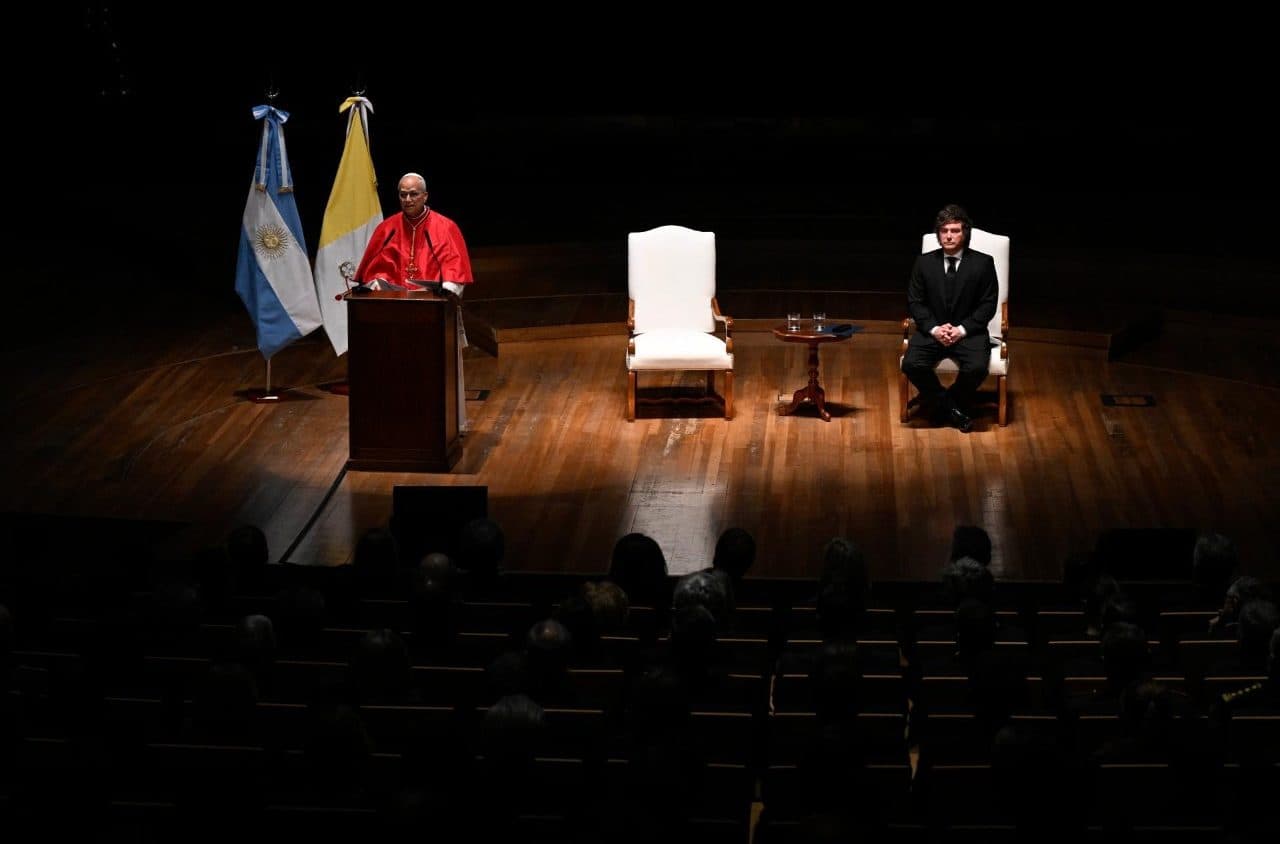
The pontiff, who was welcomed yesterday by a massive crowd of over two million people at the Mass held at the Monument to the Spaniards in Buenos Aires, spoke these words in his address to leaders of Christian communities and various religious traditions in Argentina at the Palacio San Martín in the capital.
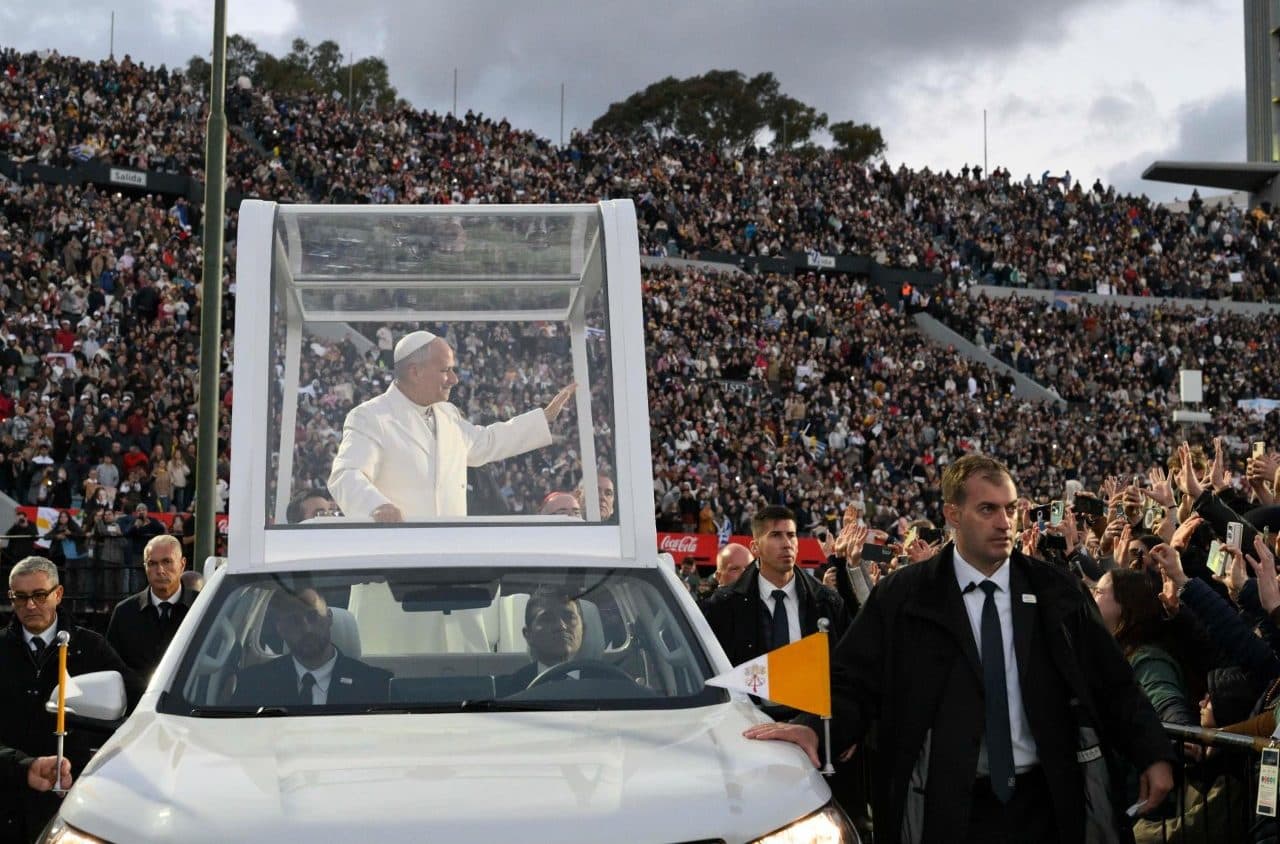
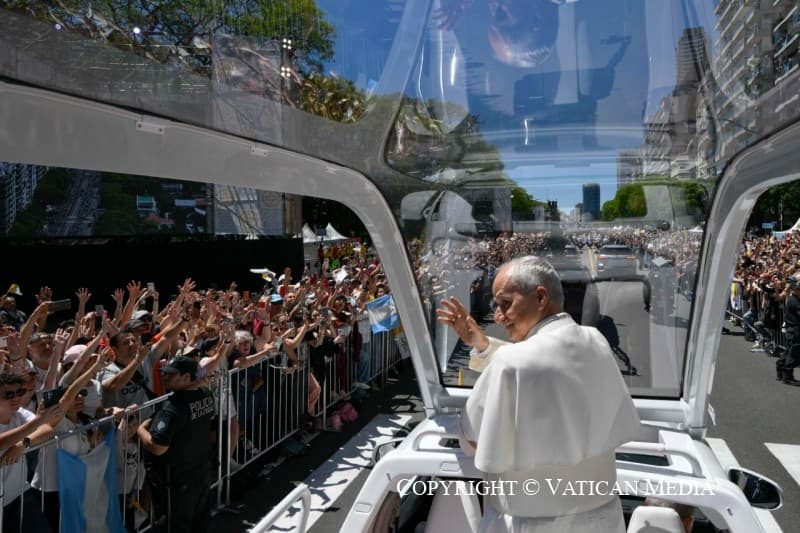
Today, he was in Córdoba, Argentina’s second-largest city and the capital of the homonymous province, known for its Spanish colonial architecture. Here he celebrated Mass at the Military Aviation School, following a tour to greet the faithful from the Popemobile.
In the evening, he is set to meet with bishops, priests, deacons, men and women religious, seminarians, and pastoral workers at the Cathedral of Our Lady of the Assumption. Upon returning to Buenos Aires, he will head back to the Monument to the Spaniards to hold a vigil with young people.
When people “speak to God, they know that they themselves are not God”
Yesterday afternoon, the pontiff in the country of his predecessor Francis, said that every religion “bears witness to the fact that the human person is defined by need and desire.”
Indeed, “we do not come from nothing and were not made for death,” he said. “Every day, we seek water, as we seek truth”.
Religions safeguard human dignity, first through “prayer”. “Whenever we pray, therefore, we must care for those who live alongside us,” Leo said.
“As we praise God for the gift of life, let us defend it, always and for everyone, from conception to its natural end, especially when it is threatened by poverty and violence,” Leo added.
“[W]hen human beings speak to God, they know that they themselves are not God,” Leo said to remind us that the Earth was not made for “us”. “So let us not destroy with our own hands the ‘garden’ that the Creator has entrusted to us!” he said.
Religions, guardians of the “wisdom of peoples”, go further and free humanity from “idols”.
Among these we see the idol of “domination, because we are not the God of others; the idol of “vainglory, because the things we possess do not make us divine; and the idol of war, because there is only one Lord and Judge of history.”
The Lord “continually gives us life and cares for all peoples. The true name of his power is love, a love that knows no end.”
Leo also spoke about the connection between speaking to God and opening oneself to the future.
“[T]he future is the time of faith. Religions are a bond between generations, an age-old memory, prophecy, expectation and promise. That is why believers always look to the future with hope,” he said.
Such hope moves people to create “bonds of a good life,” capable of uniting “peoples together in harmony.” It is a hope to be shared “with those who suffer in poverty, with those who have lost the meaning of life,” and “with all those who wish to commit themselves to renewing the world,” he stressed.
“Herein lies our service to humanity: to build a better future for all, as we await the blessed fulfilment of history”.
Meeting with victims of clergy abuse
Yesterday afternoon, the pope also met with representatives of social movements and organised labour at the Pontifical Catholic University of Argentina.
He told them that, “The human person is the author, the center and the goal of all economic and social life. The economy, therefore, must be at the service of the person, and not the person at the service of the economy.”
Before the meeting at the Catholic University, Leo met with five victims of abuse by members of the clergy and in ecclesial institutions in the country.
The Holy See Press Office also reported that, “the Pope expressed his closeness and his desire to strengthen pathways of protection, goodness, welcome and support within the Church.”
A tribute to Pope Francis
Last evening, the pontiff prayed Vespers along with Argentinian bishops and members of the synodal teams at the Metropolitan Cathedral of Buenos Aires, which is dedicated to the Most Holy Trinity, the very place where Jorge Mario Bergoglio served as archbishop for seven years.
While there, Leo paused in prayer before a commemorative plaque dedicated to Pope Francis.
Eight of the Argentine pope’s nieces and nephews were also present; they gave the Holy Father a white rose, a symbol associated with Thérèse of Lisieux. Afterward, he said that he felt “deeply moved.”
A museum dedicated to Pope Francis was inaugurated at this site on 7 July 2013, with personal mementos and liturgical items used during his fifteen years of pastoral ministry in Buenos Aires.
The family: a “privileged place for coming to know and encounter Christ”
Yesterday afternoon, Leo XIV celebrated Mass at the Monumento de los Españoles (Monument of the Spaniards), donated in 1910 by the Spanish community, as the name suggests, drawing the largest crowd of his entire pontificate so far.
The government estimated that about 2.5 million people were present, surpassing the number of people who gathered for the visit of John Paul II, the last pope to visit Argentina, 39 years ago.
In his homily, the pontiff spoke about families, a topic that has also reappeared in other addresses he delivered during his stay in Latin America.
He mentioned “difficult circumstances,” such as “instability, social hardship, precarious employment, domestic violence, painful separations and addictions that destroy young people’s futures”.
“Amid all these hardships and crises, God’s word shines out as a source of hope,” he said. The family is “privileged place for coming to know and encounter Christ.”
“Open the doors of your homes to Christ! Speak naturally to your children about Jesus, and remain united to him,” the pope urged in his homily.
“In the intimacy of the home, faith is passed on along with life itself, through the simplest gestures: a blessing before meals, a prayer before going to bed, forgiveness and mutual listening, grandparents teaching their grandchildren to pray, going to Mass on Sundays, and preparing for a retreat or a pilgrimage.”