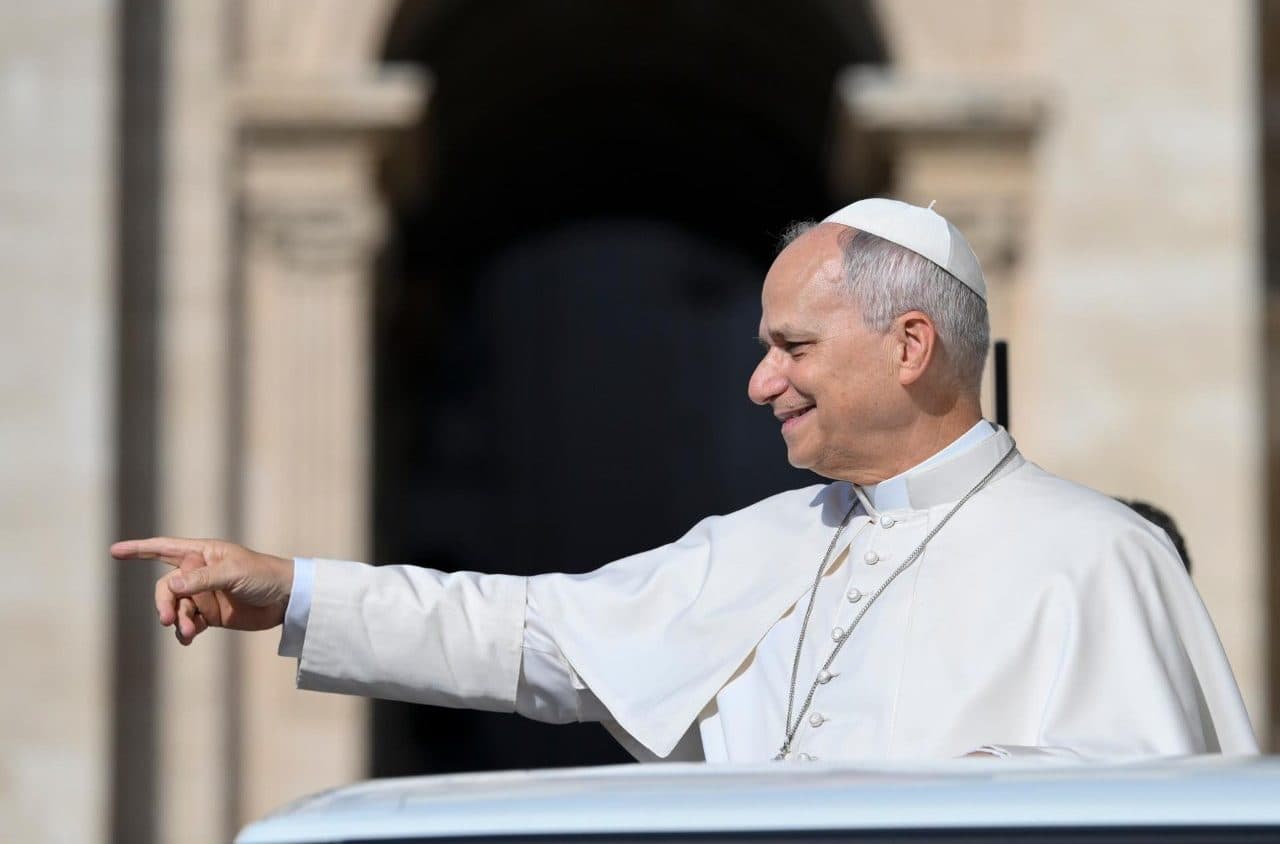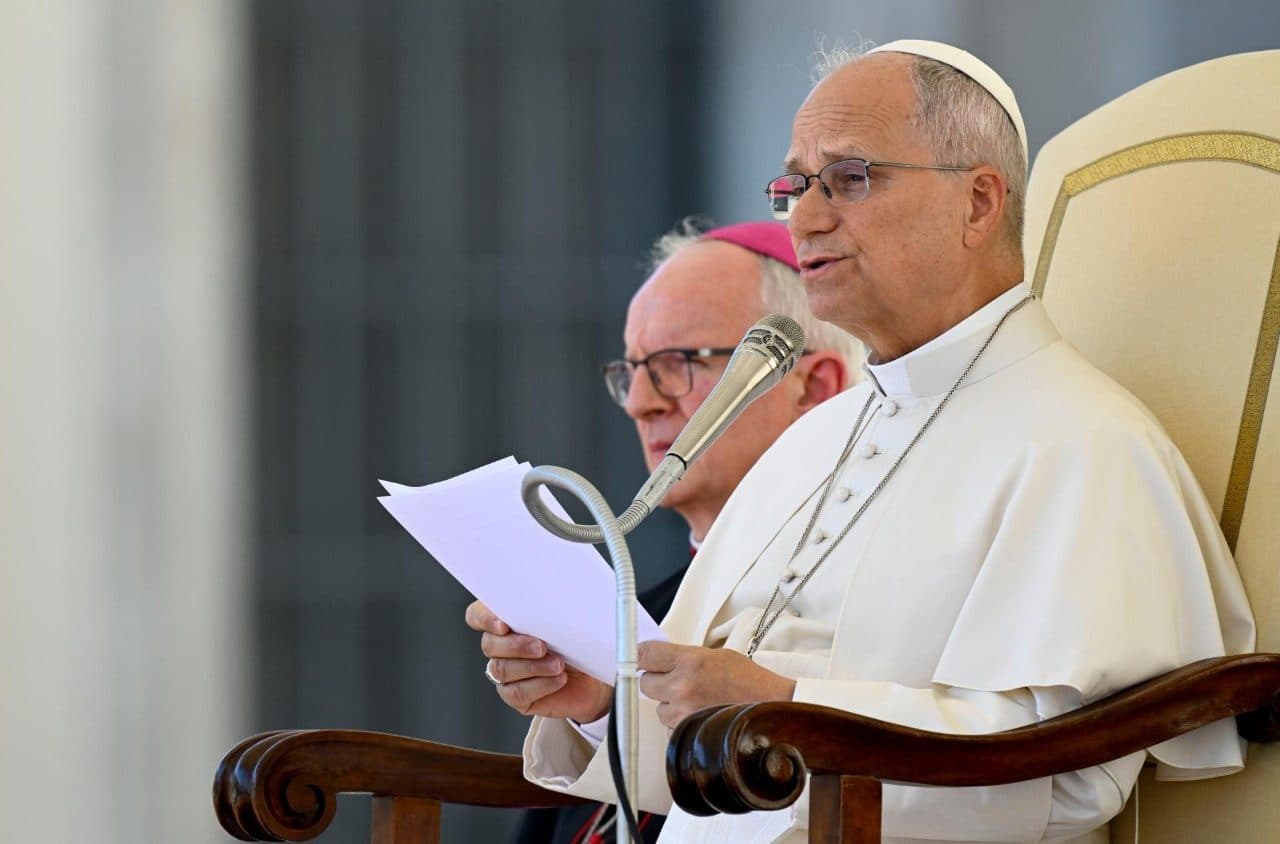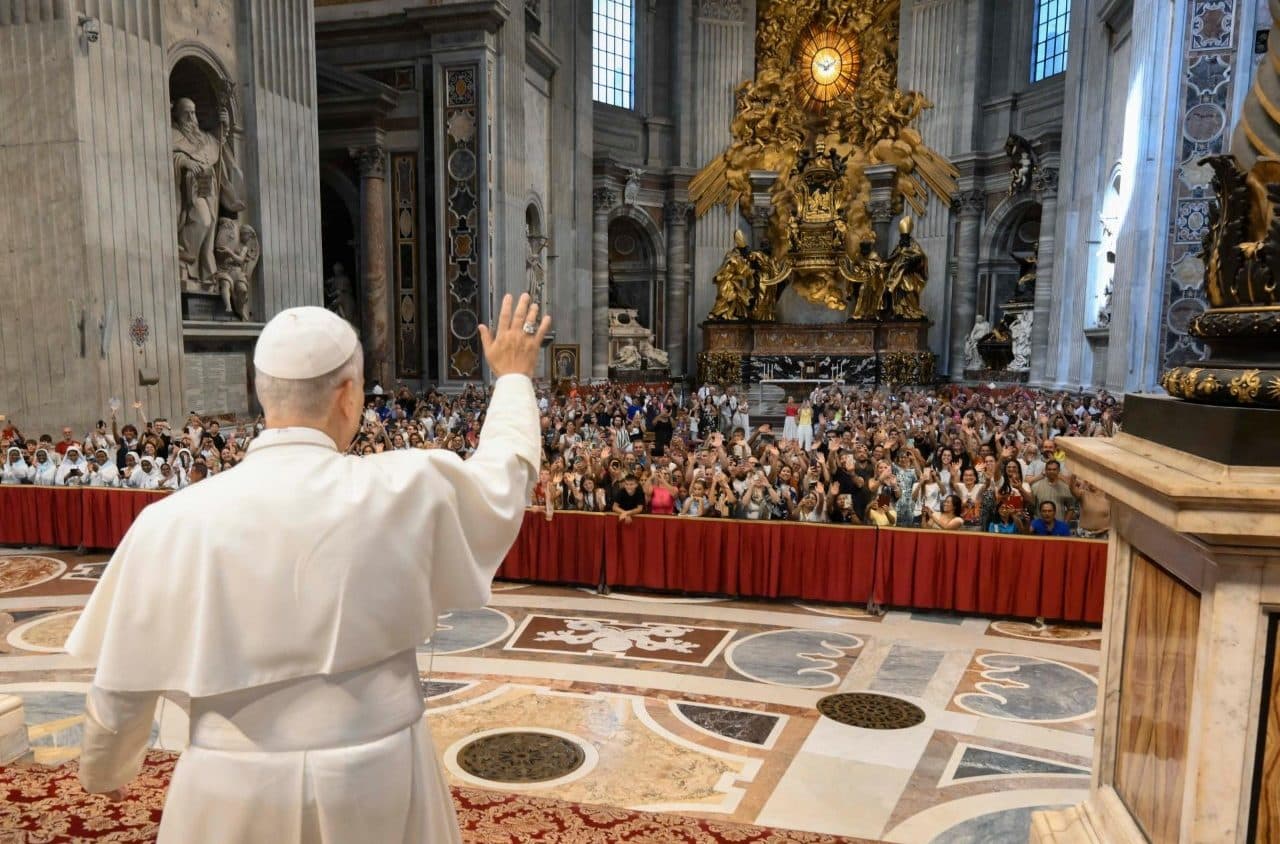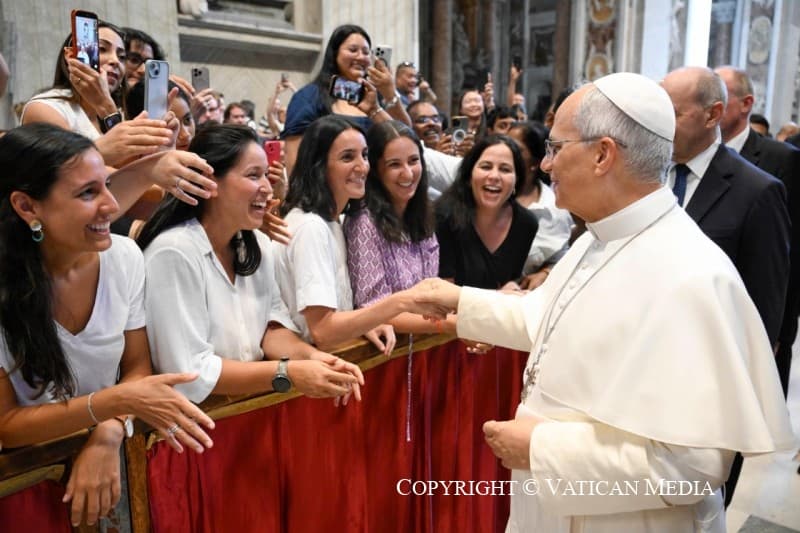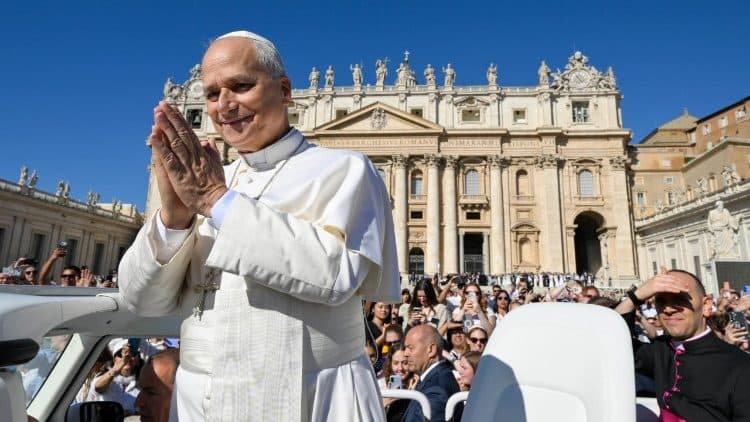
Vatican City (AsiaNews) – Pope Francis welcomed some 300 people in the Clementine Hall in the Vatican who attended a conference titled, The 21st century: a new time of martyrs? held yesterday at the Augustinian Patristic Pontifical Institute.
Even in our time, marked by a “culture of power, of boundless force and by the ceaseless development of weapon systems”, the “new witnesses to the faith" have a place and life, not as martyrs, saints, or blesseds in the canonical sense, but as human beings who live out the Christian faith with "heroism”.
Against the background of profound "darkness of selfishness and oppression" that often weighs upon humanity, they are “like stars that shine”, helping “the Church to reflect more fully the light of Christ the Lord, so as to show contemporary humanity the path that leads to the civilization of love”.
Giving “their life for the Gospel”
Witnesses of faith are “brothers and sisters who, in different geographical, historical and political contexts, have given their life for the Gospel,” the pontiff said, adding that he was “pleased” to welcome the group that took part in the conference promoted by the Dicastery for the Causes of Saints and the Commission for New Martyrs-Witnesses of the Faith.
The latter was set up by Pope Francis in 2023 “to gather testimonies about those who have lost their lives for Christ, irrespective of the canonical process, so that their example is not lost,” he explained.
Some common causes of death among these witnesses of the faith include “abuse of power” and the actions of “criminal organization(s)” whose injustices they oppose “in the name of the Gospel.”
Thus, they represent a “broader” category that embraces and honours “complex historical situations in which the perpetrators’ motives cannot be explicitly attributed to ‘hatred of the faith’.”
The Commission’s work is thus “historiographical and educational in nature, not a legal one,” the pope noted.
The new martyrs “heroically manifest the Christian way of life, which never seeks confrontation, but rather defuses it through the power of meekness.” As “witnesses to the faith,” they “do not propose an ideology, but show a faith lived out in everyday life. Their credibility stems from the consistency between their words and actions, a consistency often taken to the point of the supreme sacrifice.”
For this reason, they give their life “for justice, truth, peace and freedom”.
Catechesis on Gaudium et Spes
This morning, Leo also presided over the Wednesday General Audience in St Peter’s Square, attended by approximately 25,000 people.
He continued the series of catecheses on the documents of the Second Vatican Council, pursuing reflections on the Pastoral Constitution Gaudium et Spes, promulgated by Pope Paul VI on 7 December 1965.
Leone XIV looked at the document’s second chapter, dedicated to the “human community”, which “invites us to consider ‘the growing interdependence of men’ as ‘one of the salient features of the modern world’.”
This conveys a heightened sense of “urgency” today. Indeed, “technological development, the spread of mass media,” and AI “are opening up new possibilities, breaking down barriers and distances,” while “relationships are tending to become less and less personal, more virtual,” he said.
There is, therefore, the risk “of becoming accustomed to delegating to algorithms decisions that are the sole preserve of the human conscience.” Faced with this, the Christian community can offer its contribution to ensure “that social relationships have real substance and personal depth”.
“The perfection of the human person and the development of society must be regarded as closely interdependent: to set them against one another or separate them would be to render them meaningless. History, even recent history, clearly confirms this truth,” he added.
Be “open to the logic of reciprocity”
For the pope, “Gaudium et Spes affirms that the diversity of people and peoples in the world must not be considered as a danger or a threat, but rather as a resource for enrichment and growth.”
In fact, “Conflict, which at times degenerates into violence, is the result of the power of sin and the way it conditions mindsets and actions.” Hence, “We must be ever more open to the logic of reciprocity, sharing and care, as is also the case amongst the various members of the human body”.
As the Council Fathers pointed out, some of the “practical and particularly urgent consequences” are “respect for the human person, [. . .] respect and love for adversaries or for those who think and act in ways different from our own,” and respect for “the fundamental equality of all human beings, which demands social justice.”
Ultimately, “the Council Fathers exhort us to overcome the individualistic mindset and to adopt an attitude of responsibility and participation,” the pope noted.