Warsaw (AsiaNews) – According to the plenary session on fundamental freedoms at the Warsaw Conference on the Implementation of the Human Dimension of the OSCE, held in October 2026, civil liberties in Central Asia remain under severe pressure. Although the scale and nature of repression vary across the five countries, events over the past year point to a growing pattern of worrying regional trends.
Across the region, legitimate civic activism is often viewed as a threat to national security, stability and social cohesion, whilst criticism of the government is labelled as ‘false’ and ‘defamatory’. Independent civil society organisations, particularly those receiving foreign funding, are subject to increased scrutiny, stigmatisation and harassment.
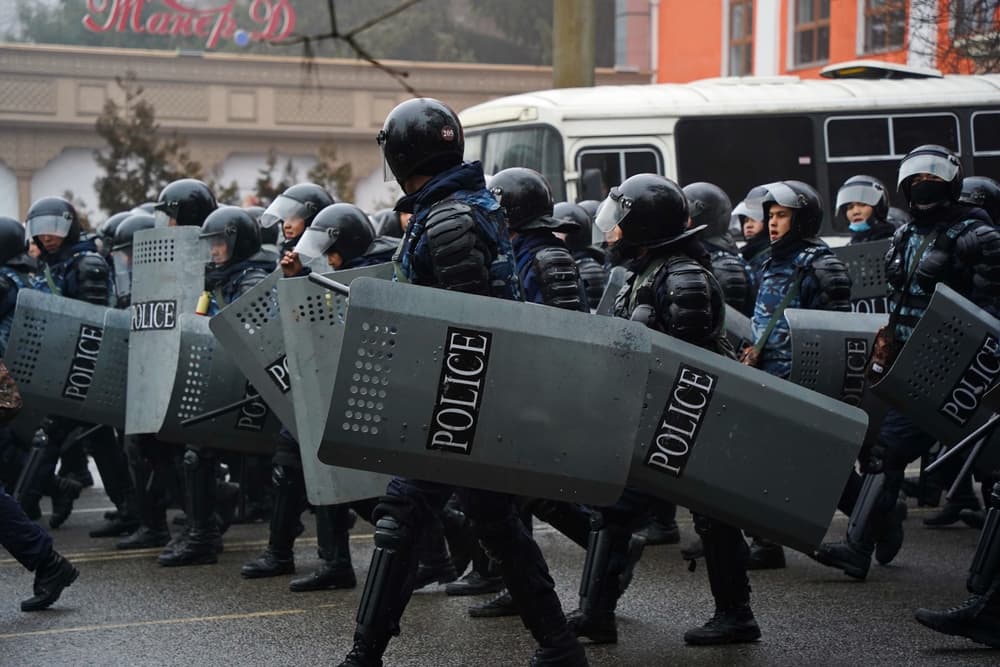
Freedom of peaceful assembly remains severely restricted, and impunity is widespread for serious human rights violations linked to the suppression of mass protests. Human rights defenders, activists, journalists, bloggers and other critical citizens are increasingly subject to persecution, including criminal proceedings, arrests and imprisonment.
Repression is taking on new forms, extending increasingly into the digital sphere and beyond national borders. Independent civil society organisations in Central Asia operate in an increasingly difficult environment: whilst legal and regulatory frameworks and operating conditions vary significantly across the five countries, common challenges include obstacles to registration, excessive scrutiny, restrictions and hostile rhetoric, particularly towards organisations receiving foreign funding, growing pressure on groups working on non-discrimination, minority rights and other sensitive issues, and reduced funding opportunities, which undermine the ability of associations to carry out their activities.
In Kyrgyzstan, the restrictive ‘foreign representatives’ law adopted in 2024 continues to have a significant deterrent effect on civil society. It has led to widespread self-censorship amongst organisations, particularly those working in the field of human rights, despite the fact that only a few of them have officially registered as ‘foreign representatives’. In August 2026, President Sadyr Žaparov called for severe punishment for alleged ‘enemies of the people’, accusing them of acting under the influence of foreign forces, receiving funding from them and seeking to destabilise the country.
In Kazakhstan, the authorities cited alleged concerns regarding transparency and security to tighten reporting requirements for organisations receiving foreign funding for certain core activities, with effect from January 2026. The public register has been expanded to include not only the names of such organisations, but also the sources and amounts of the foreign funding they receive.
In Uzbekistan, civil society organisations continue to face onerous restrictions on access to foreign funding, including the requirement to obtain prior approval from the judicial authorities for any amount exceeding the equivalent of approximately $3,700.
In Tajikistan, organisations are subject to excessive scrutiny and reporting requirements, including with regard to foreign funding, against a backdrop where official rhetoric often portrays civil society representatives as potential threats rather than as legitimate participants in public life. In July 2026, President Emomali Rakhmon called for a further tightening of control and financial transparency for associations.
In Turkmenistan, national legislation grants the authorities broad powers of control over public associations, including those with foreign-funded projects. The sector is dominated by state-run and state-supported organisations, and the tightly controlled environment significantly restricts the operational space of registered associations, preventing them from analysing or criticising state policies.
In addition to restrictive legislation, arbitrary practices and hostile rhetoric, civil society organisations in Central Asia – including those in exile for security reasons – have suffered a significant reduction in international funding, whilst domestic funding remains extremely limited. Consequently, a growing number of organisations are struggling to maintain their core activities and provide support to communities.
Freedom of peaceful assembly is severely restricted throughout Central Asia, and the authorities often view peaceful gatherings primarily as a threat to public order, rather than as the exercise of a fundamental right.