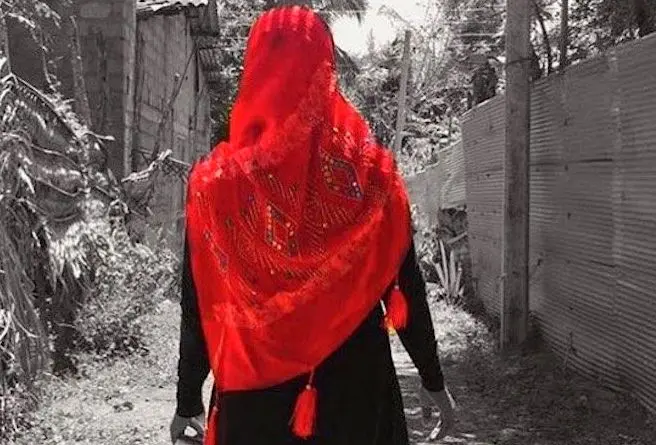
Damascus (AsiaNews) – “Cover up, servant of God.” In early 2025, cars were broadcasting this message through the capital’s neighbourhoods. Women heard it on the streets; the message made no mention of the freedom to choose how to dress.
Less than two years later, another directive reached girls about to enter university. This time without loudspeakers: two words in the admission criteria, “men only”, were enough to bar even a candidate with excellent grades from a course of study.
Between the street and the university, the source and the force of the message change. The organisers of each of those cars used for preaching have not been identified, nor is there any evidence that those rounds were carrying out a government decision. University admission criteria, on the other hand, have official authority. Both situations raise a question: is a Syrian woman a citizen free to choose, or is she an individual whose choices can be restricted by others?
From clothes to ‘priorities’
The car tours in Damascus, in January and February 2025, were accompanied by posters on the rules of ‘Islamic’ dress. However, others defended women’s freedom to choose what to wear. The dispute went beyond clothing: who would set the rules for public life, and what direction would Syria, under interim President Ahmed al-Sharaa, take following the fall of the previous regime of Bashar al-Assad?
The issue had already emerged in statements by representatives of the new administration. On 17 December 2024, Obeida Arnaout, then spokesperson for the political administration, had cited female biological and psychological characteristics deemed unsuitable for certain roles, referring to the Ministry of Defence. Aisha al-Dibs, appointed head of the Office for Women’s Affairs on 20 December, emphasised in an interview at the end of the month the importance of self-care, faith, family and one’s husband, as well as the importance of ‘priorities’ and the educational role in society.
Those words did not herald a ban on women working. However, they made public participation conditional on a test that is not imposed on men in the same way: conforming to a pre-established idea of what a woman ought to be. When institutions adopt that idea as a criterion, advice that could be rejected becomes a constraint that is difficult to overcome.
In terms of education, this issue has come to the fore at the al-Hurriya School in Damascus, known as a ‘secular’ institution. Since 5 September, a decision has been circulating to separate boys and girls into distinct classes and playgrounds at secondary level, whilst maintaining co-education at primary level. The school management stated that it had acted independently, without official directives, citing academic and behavioural issues – including arguments and romantic relationships – and the withdrawal of female pupils whose families rejected co-education.
However, parents objected to the lack of consultation and to the blanket separation as a response to the behaviour of a few.
In doing so, the co-education of girls and boys became a problem, rather than an opportunity to learn mutual respect.
The separation also affected family celebrations. On 22 September, the Douma municipal council banned grooms from attending wedding celebrations reserved for women at the city’s venues. A similar decision followed in Sarghaya on 27 September. The post from Douma was subsequently deleted without confirmation that the measure had been revoked. These local measures do not demonstrate the existence of a national policy against the mixing of the sexes, but they fuel fears that institutions are taking control of personal choices.
Exclusion precedes choice
The move with the most far-reaching consequences for girls’ futures came from the Ministry of Higher Education and Scientific Research. On 30 September, it published the admission criteria for 2026–2027, including courses reserved for men. The Syrian system allocates places based on A-level results and candidates’ preferences. Here, exclusion precedes selection: certain options are off-limits to a young woman, regardless of her marks or academic preparation. These conditions determine who can enter the institution and obtain a qualification. They do not merely decide who gets a place in a class: they block a path to a profession, an income and independence. If it is gender that closes the door, merit alone is not enough to reopen it.
At the National University of Defence Sciences, admission is restricted to men for programmes relating to the army, navy and air force, including mechanical engineering, electronics, computer science, mechatronics, naval engineering and aeronautical engineering. The restriction also applies to administration and economics, as well as legal and social sciences within the Faculty of Humanities and Administrative Sciences at the same university. At the Syrian University of Security Sciences, the faculty and its associated technical institute admit only men.
Apart from these two universities, the restrictions apply to the Aleppo Railway Technical Institute, the oil and gas institutes in Rmeilan, Homs, Deir ez-Zor and Baniyas, and the Radio and Television Authority at the Idlib Media Technical Institute. In this case, one detail stands out above all others: the list extends far beyond combat roles to include administration, economics, technical activities and media production.
The ban does not apply to all law, humanities or aviation courses in Syria. Aeronautical engineering at the Higher Institute of Applied Sciences and Technology and cyber security remain open to women. Nevertheless, this point remains the basis for these exclusions.
In a television interview, Nour Habboub, Director of Student Affairs at the Ministry, defended the conditions: the vast majority of courses are open to both sexes, and the requirements of defence and security institutions have been agreed with the relevant ministries. Furthermore, the senior official attributed the restrictions in the oil and railway sectors to the nature of the work. In Idlib, limited resources and a lack of interest among women in previous years are said to explain why the programme was reserved for men, whilst this year the management and marketing courses have been opened up to women.
However, the scarcity of female applicants in the past does not justify the exclusion of those who wish to enrol today. Nor does the scarcity of resources explain why only girls should bear the brunt of this. Even characterising the restrictions as predominantly pre-existing does not resolve the issue: in 2025, girls were able to apply for instrumentation courses at the oil institutes in Homs, Baniyas and Deir ez-Zor, as well as for accounting and warehouse management courses in Homs. Maintaining a restriction requires justification; extending it requires a further explanation.
And the effects go far beyond the enrolment form or formal or bureaucratic restrictions. Closing off a course of study limits employment opportunities and economic independence, forcing a girl to reshape her ambitions according to opportunities defined by her gender. A prospective applicant summed it up in an interview: “ ‘No one,’ she said, ‘has the right to force me to choose a particular subject or to exclude me from another’.”
Talent and opportunity
The questions become more pressing in the face of other images put forward by the authorities. On 1 April, Omar al-Hosari, president of the General Authority for Civil Aviation and Air Transport, announced a meeting in London with the Syrian refugee pilot Maya Ghazal. He praised her tenacity and success, alongside the skills of Syrians abroad. He championed the role of women in aviation and invited her to join the Syrian airline in the future: “Rebuilding the sector,” he said, “means investing in Syrians wherever they may be”.
On 22 September, the Ministry of the Interior celebrated the graduation of 150 female police officers in al-Tall, in the presence of Minister Anas Khattab. Images of women trained in security work stand in stark contrast to a discourse that limits their participation on biological grounds. They also make it more difficult to justify their exclusion from certain university courses.
Civil and military aviation, police training and university education are distinct paths. Comparing them does not render every requirement contradictory. But if a woman can fly a plane and work in the police force, why should gender close certain doors before her abilities are even assessed? Why celebrate success without offering others the chance to try?
The vehicles used for street preaching and university entrance criteria do not depend on a single authority. Yet the power to decide how a woman should look, with whom she may study and what she may learn continues to accumulate. For a country that must rebuild and reinvent itself, openness faces a concrete test: can a young woman choose her future, or will she find the words ‘men only’ emblazoned on the very first door she knocks on?







.PNG&w=3840&q=75)