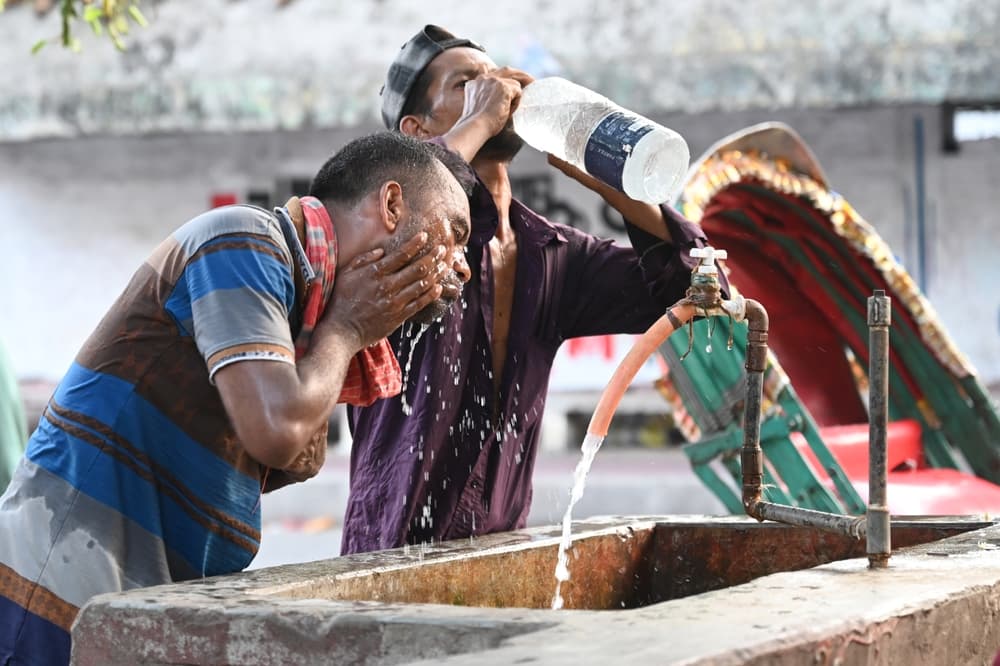
Bishkek (AsiaNews) – An unusual heatwave has hit the countries of Central Asia. In Tajikistan, residents are reporting power cuts, whilst in Kyrgyzstan electricity is being temporarily cut off in some areas due to increased consumption. In Uzbekistan, the authorities have ordered the suspension of hazardous outdoor work during the hottest hours of the day. In Kazakhstan, high temperatures have caused road surfaces to warp. In this region, which is particularly vulnerable to climate change, all temperature records have been broken.
From 17 to 22 July, the highest temperatures in Tajikistan were recorded in the low-lying areas of the Khatlon region.
In Šakhristan province, the air temperature reached 46 degrees, and forecasts for the coming days in Bokhtar and Kulyab indicate 48 degrees. In Dushanbe, the maximum temperature hovered around 43 degrees, and meteorologists are forecasting a peak of 44 degrees. Since mid-July, new record high temperatures have been recorded in many cities across Central Asia, in some cases exceeding 50 degrees.
In Turkmenabat, the temperature reached 47.6 degrees; in Samarkand and Fergana, 42.7 degrees; in Syrdarya, 44.6 degrees; in Bishkek, 43.2 degrees; and in Shymkent, 45 degrees. Residents in western Tajikistan are complaining of power cuts, and in recent days residents of Dushanbe and other parts of Tajikistan have also reported frequent power cuts.
Residents of Zarafshon, Chimteppa and districts 33 and 102 of the capital have reported unannounced power cuts on social media, and similar reports have come in from other towns and villages across the country. Residents are reporting overheating and damage to cables in some areas, and the heat is also increasing the use of air conditioners, fridges and fans, putting a strain on the electricity grid. Further measures are being introduced in markets and other crowded areas; in particular, fresh water dispensers are being installed at the Korvon market and in some other open-air commercial areas for traders and visitors.
In Uzbekistan, restrictions on outdoor work are in force; the State Labour Inspectorate has issued an order to all khokimat (mayors) across the country to protect public works employees working outdoors. Work that could pose a threat to employees’ lives and health must be temporarily suspended between 10.00 and 17.00.
Employers are required to introduce flexible working hours, provide employees with drinking water and personal protective equipment, as well as shaded rest areas. Those who have not passed the compulsory medical examinations or who have been deemed unfit for work on health grounds are prohibited from working.
Temporary power cuts have also occurred in some areas of Bishkek and the Chuy region.
According to Kyrgyzstan’s national electricity grid, consumption has reached record levels, and the infrastructure is operating at maximum capacity. In some parts of the capital, water and telecoms services were disrupted, lifts stopped working and traffic lights went out, due to the emergency shutdown of two high-voltage power lines. High temperatures have damaged roads in the Žambyl, Pavlodar and Turkestan regions of Kazakhstan; six areas of thermal deformation on concrete roads have been identified, and road maintenance teams with specialist equipment have been dispatched to carry out repairs.
As previously explained to Asia-Plus by Nawruz Odinaev, head of the Khimoya law firm, employers are obliged to ensure safe and hygienic working conditions: “If an employee discovers a danger to their life and health and is unable to eliminate it, they have the right to stop work. The employee’s average wage is maintained until the hazard has been eliminated,” the lawyer clarified.
According to Jamila Baidullaeva, head of Tajikistan’s Hydrometeorological Centre, temperatures of around 40 degrees in July are normal for the country’s lowland regions, but if such temperatures persist for four or five days, they can be considered abnormal. The expert also explained that air temperatures are measured in the shade; thermometers placed in the sun near hot tarmac or roads may show higher readings and may not reflect the actual air temperature.