Jakarta (AsiaNews) - Forests destroyed by fires in Indonesia must be restored, rather than converted into plantations, mining sites, or other business developments, this according to an appeal issued by the Commission for Justice, Peace, Migrants, and Itinerant People of the Catholic Bishops' Conference of Indonesia, which urges the government to enforce the law strictly, fairly, and transparently against those responsible for the blazes and environmental destruction.
The demand is laid out in a statement titled Listening to the Cry of the Earth, Defending Life Amid Forest and Land Fire Disasters in Indonesia, released in Jakarta last Monday and signed by Commission Secretary Father Mathen Jenarut.
The statement expresses concern over fires affecting various regions across the country, specifically Sumatra, Kalimantan, Papua, Maluku, and Sulawesi.
According to the Commission, this is not merely an environmental emergency; it is an issue that touches human dignity, social justice, and the ability to ensure sustainable living conditions for future generations.
The figures cited in the statement illustrate the scale of the problem.
According to the Ministry of Forestry, 11,772 hotspots, detected by satellites, had been recorded in Indonesia as of 10 October.
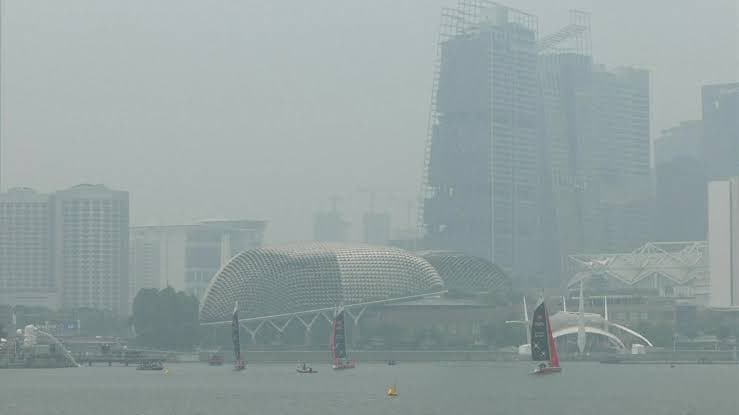
Meanwhile, the Ministry of Health reported that, in August alone, more than three million people in seven provinces were exposed to smoke resulting from the fires.
As of 17 October, 311,363 cases of acute respiratory infections had been recorded in the affected areas of Sumatra and Kalimantan.
The Commission warned that not all hotspots necessarily correspond to fires, and that not all respiratory infections can be directly attributed to exposure to the haze.
Nevertheless, its appeal emphasises that the data reveal the severity of the risks to public health, particularly for those with limited resources to protect themselves.
Beyond compromising air quality, the fires destroy ecosystems and threaten the livelihoods upon which many local communities depend.
Indigenous populations are especially vulnerable, as their material and cultural survival is often inextricably linked to the forests and the land.
For this reason, the Commission warns that economic interests not be allowed to take precedence over human safety, environmental protection, and the fundamental right to live in a healthy environment.
It further calls on the government and businesses to adopt more transparent and responsible land management practices, alongside increased investment in fire prevention, a revision of land-use policies, and the restoration of damaged ecosystems.
A central point of the statement concerns the future of the burnt-out areas.
The Commission rejects the possibility of these lands being repurposed for new plantations, mining operations, or other commercial uses; it argues that restoring forests is not merely a technical undertaking, but a moral and legal obligation to preserve ecological balance.
Forests cannot be viewed solely as economic resources, as they sustain the lives of communities and the entire natural environment.
The bishops’ appeal sets out seven requests directed at the government, the business sector, and civil society groups: prioritise human health and safety; hold those responsible for the fires accountable; protect the rights of indigenous peoples and local communities; promote sustainable land management; strengthen solidarity with those affected; restore damaged forests; and translate ecological conversion into concrete behaviour, environmental education, and fairer public policies.
The Commission also draws upon Pope Francis’s encyclical Laudato si’ and his teaching on the connection between the cry of the Earth and the cry of the poor, noting that environmental degradation cannot be separated from the suffering of those who bear its most severe consequences.
Hence, it calls on Catholics, and all people of good will, to boost solidarity and transform concern for the ecological crisis into concrete action.
Protecting vulnerable communities also extends to migrants. Indeed, the Commission’s pastoral mission includes providing support to Indonesian migrant workers and their families.
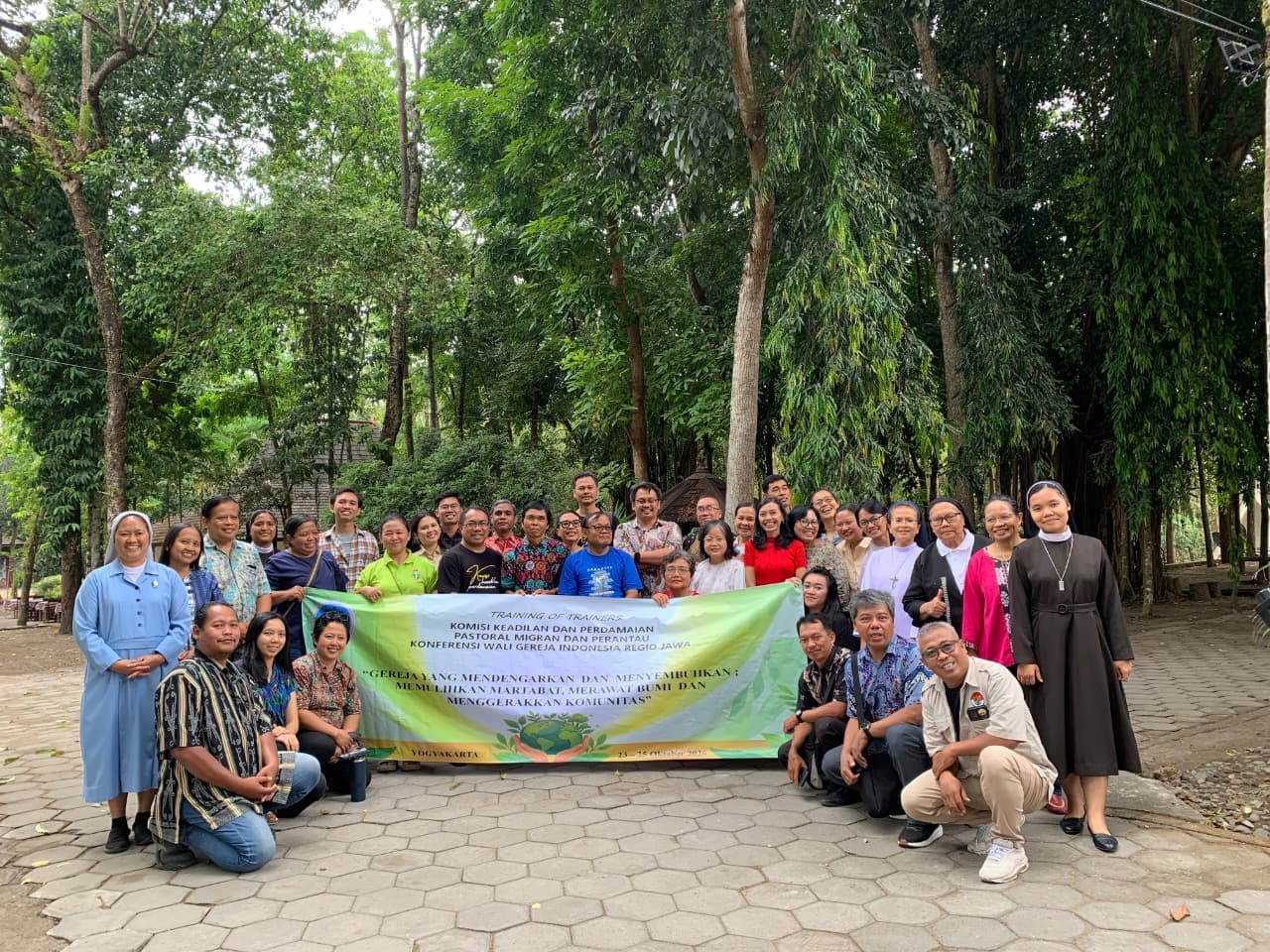
In this regard, Sister Fransiska Kristina, a Passionist nun originally from West Kalimantan, told AsiaNews that, during a training-for-trainers programme, dioceses within the ecclesiastical region of Java agreed on two initiatives to strengthen pastoral accompaniment.
The first involves creating a database of migrant workers, starting from the level of basic ecclesial communities and extending it to parishes. The second entails using profiling tools to gain a better understanding of the economic, professional, and educational circumstances of migrants and their families.
This information is intended to help parishes develop more targeted interventions, identify high-risk situations, and support those facing difficulties in their workplace, including through advocacy and legal assistance.
For people returning to Indonesia, this accompaniment should also encompass psychosocial, economic, and healthcare-related reintegration.
Thus, both the statement regarding wildfires and the initiatives for migrants reflect a consistent focus on those most exposed to environmental and social crises.
Ultimately, for the Commission, defending our common home also means safeguarding the lives and dignity of those who risk paying the highest price.