Kathmandu (AsiaNews) – More than 100,000 people in Nepal live in potentially flood-prone areas, at risk primarily of rapid development in the country’s mountainous regions, where the construction of hydroelectric plants, roads, and new tourism facilities is pushing settlements ever closer to waterways, this according to a study published in the Scientific Reports.
Between 2016 and 2023, the number of buildings located along the potential paths of floods, triggered by the sudden drainage of glacial lakes, has increased by 78 per cent, research shows.
The study looks at risk exposure across mountainous regions in Nepal, China, and India, estimating that approximately 300,000 people live in areas within the reach of floodwaters. More than 80 per cent of the at-risk buildings, along with 108,500 people, are in Nepal.
According to the study, more than 23,000 people in the country live in areas less than ten metres above riverbed levels, a zone where the danger is particularly high.
To identify these high-risk areas, researchers cross-referenced public data, including census information, with simulations of potential flooding caused by the failure of glacial lakes.
“First we identified buildings and populations located within 50 metres above the existing river level,” said Mohan Bahadur Chand, speaking to the Kathmandu Post. “Second, we simulated glacier lake outburst floods (GLOF) to understand how far the floodwaters could reach and which buildings would be affected,” added the researcher in the paper who is also an assistant professor at the Department of Environmental Science at Kathmandu University.
The surface area occupied by buildings within 50 metres of riverbeds has increased by 46 per cent in the area under study. However, it is the growth of development directly along potential flood paths that is of particular concern to researchers.
This expansion is driven primarily by hydroelectric projects, the construction of commercial roads along waterways, tourism facilities built without adequate planning, and the rapid urbanisation of floodplains.
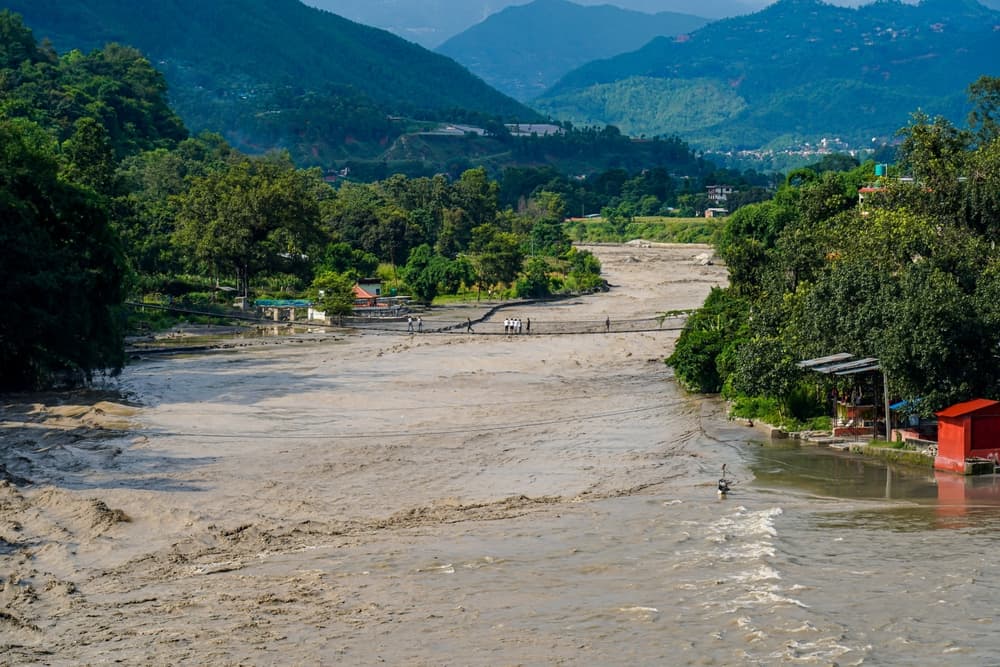
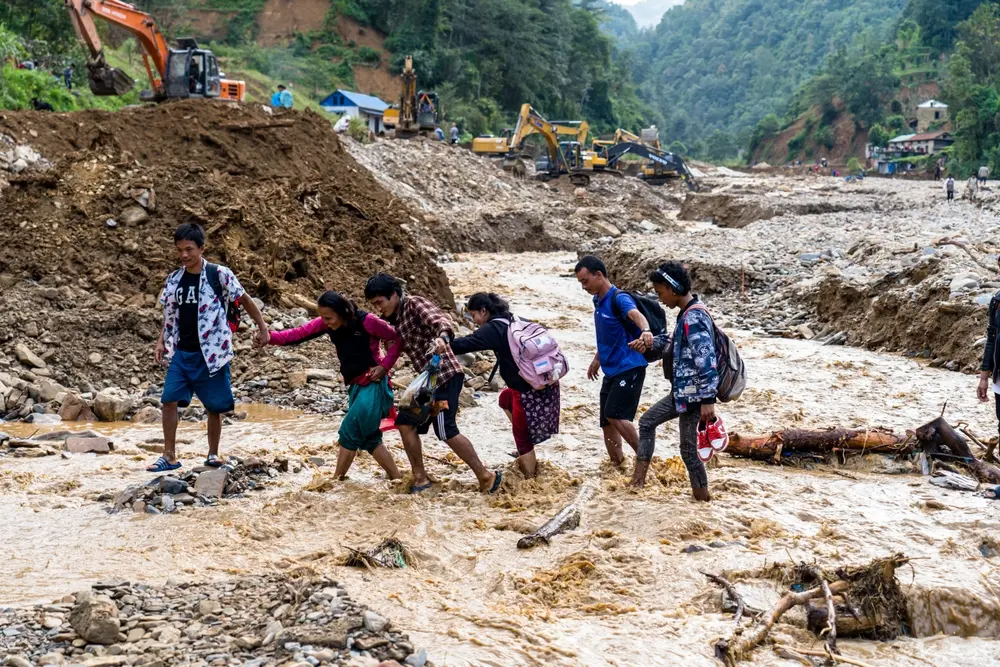
These findings were made public after a devastating flood struck the Rasuwa region and the Bhotekoshi River, claiming thousands of lives. The tragedy has highlighted just how dangerous extreme weather events can be in Himalayan valleys.
According to the Kathmandu Post, floodwaters reached settlements located as high as 82 metres above the river level. The official toll stands at 1,455 dead, with 5,285 people still reported missing.
In mountainous regions, even minor shifts in temperature and precipitation can have severe consequences for glaciers and downstream rivers.
Recent studies indicate that, during certain winter months, temperatures in the Himalayas have risen by as much as three degrees, while ice in the Hindu Kush glaciers is melting twice as fast as it once did.
The number of potentially dangerous glacial lakes is also on the rise; in 2020, Nepal identified 21 such lakes within the Gandaki, Koshi, and Karnali river basins.
Yet, the issue goes beyond climate and the management of natural hazards. Economic and infrastructural choices are also reshaping the geography of human settlement.
Basanta Raj Adhikari, director of the Centre for Disaster Studies at Tribhuvan University, explained that over the past few decades, the expansion of roads, shifts in economic activities, and internal migration have profoundly altered the distribution of the population in the mountains.
“Most roads are built along river corridors, where construction materials are easily available,” he said. “But we did not adequately assess flood risks,” he added.
Indigenous communities are particularly heavily impacted. Shankar Limbu, a lawyer, has criticised both the study and government policies for failing to pay sufficient attention to their plight.
He cited the case of the Tamang people in the Rasuwa region, whose traditional livelihoods have been compromised by the construction of hydroelectric power plants.
The loss of land, he explained, has forced many to abandon farming, livestock rearing, and the gathering of medicinal herbs, compelling them instead to seek work as manual labourers along the rivers.
For Limbu, “Those who lost their lives in the Bhotekoshi floods did not die, they were murdered,” as a result of development choices that exposed these communities to avoidable risks.
The lawyer also raised concerns regarding the potential impact of a planned hydroelectric project in the Bhotkhola area, which would involve the use of 192,000 tonnes of explosives and 188,000 detonators for tunnel excavation.
Some 26 glacial lakes lie upstream, and, according to Limbu, the blasts could trigger structural failures and floods capable of destroying settlements downstream.
Nepal already has a national policy for disaster risk reduction, approved in 2018, which mandates land-use planning based on the assessment of local hazards. However, the study notes that these guidelines have largely remained on paper.
Adhikari notes that local administrations lack adequately trained staff to implement them, while the central government has failed to ensure rigorous oversight or impose sanctions for non-compliance.
Among the necessary measures, the researcher points to mapping the most exposed areas via remote sensing, installing ground-based sensors to strengthen early-warning systems, and limiting the expansion of settlements in high-risk zones.
Another potential solution could involve providing incentives to relocate homes to safer areas.