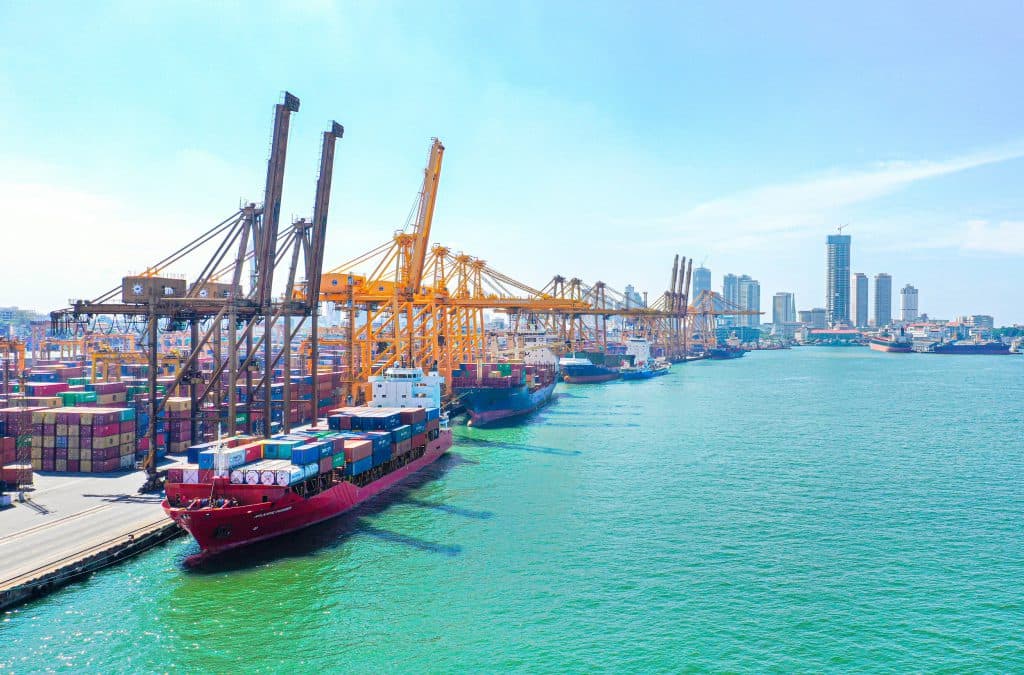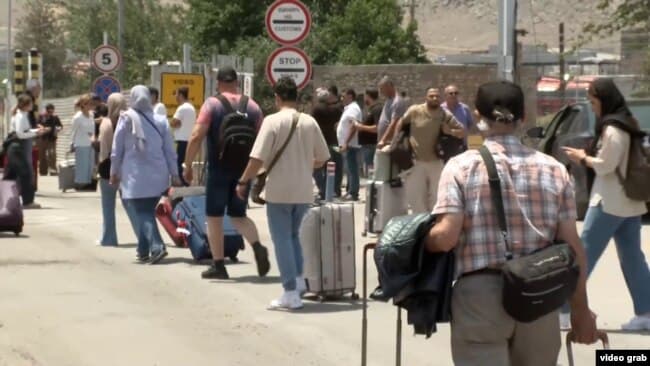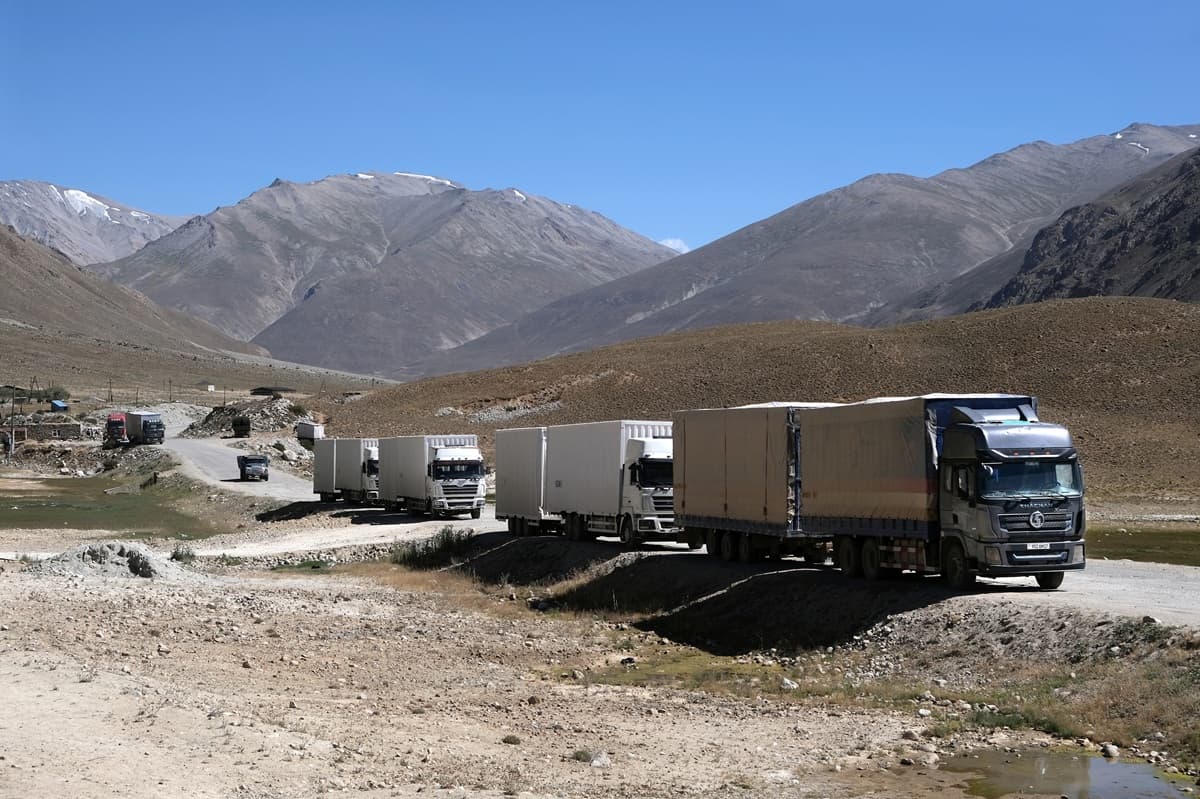
Dushanbe (AsiaNews) – Freight traffic transiting through Tajikistan has risen by 74 per cent over the last six months, and the Ministry of Transport believes the country is gradually becoming a transit route. New roads, logistics centres and the digitalisation of transport services are expected to accelerate this process, as Minister Azim Ibrokhim stated at a press conference in Dushanbe, reporting that transit freight traffic in the first six months of this year totalled around 32,700 tonnes – 13,900 tonnes more than in the same period last year.
“This is a sign that Tajikistan is being recognised as a transit country, and we are doing our utmost to accelerate this process,” said Ibrokhim, noting that to realise its potential, the country must not only build and rebuild roads, but also improve logistics, develop services for carriers and digitise transport services, whilst acknowledging that Tajikistan does not yet have a fully-fledged logistics centre. “We have warehouses, cold stores and so on, but we do not have a single logistics centre, and we plan to step up our efforts in this area as well,” added the minister.
The head of the Ministry of Transport regards digitalisation as one of the most important tools for the sector’s development, and the ministry has developed a programme comprising 34 modules designed to cover the entire transport sector, from freight and passenger transport to the issuance of permits, passes and waybills, as well as equipment inspections and transport service accounting.
Funding for these modules has already been allocated, thanks to a contract with the South Korean company Samsung, explained Ibrokhim. The Centre for the Digitalisation of the Transport Sector is also collaborating with the Ministry of Transport of the Republic of Korea; currently, 11 modules have already been completed, 9 are under development and a further 14 are in the design phase. Once all 34 modules have been developed, “there will be no sector of the transport industry that has not been digitised”, the minister emphasised.
According to Ibrokhim, the digitalisation is being implemented with the sector’s needs in mind and is coordinated with the Agency for Innovation and Digital Technologies under the Office of the President of Tajikistan. The first phase involves the introduction of 42 types of public services in the transport sector, which should simplify procedures for obtaining permits, processing transport requests and managing freight and passenger transport.
The ministry is already seeing the benefits of digitalisation, and all banks operating in the country are cooperating with the government; key development partners include the World Bank, the Asian Development Bank and the European Bank for Reconstruction and Development.
For a transit country, it is essential that hauliers can access services quickly and complete the necessary procedures. This applies not only to road conditions but also to the speed of document processing, transport transparency, cargo monitoring and the ease of doing business; digitalisation should reduce bureaucracy, speed up the issuing of permits, improve freight accounting and make transport services more accessible.
The Ministry had previously announced that the electronic system of the Transport Sector Digitalisation Centre is linked to the Tax Commission’s ‘One-Stop Shop’ and the Agency for Innovation and Digital Technologies. The Centre also operates a call centre on 8808, which handles enquiries regarding freight and passenger transport, permits and season tickets, and the strategic plan envisages that by 2030, 100 per cent of transport documents will be issued electronically.