Milan (AsiaNews) – In China, food scandals involving counterfeit or substandard products sold via live-streamed broadcasts continue to make headlines.
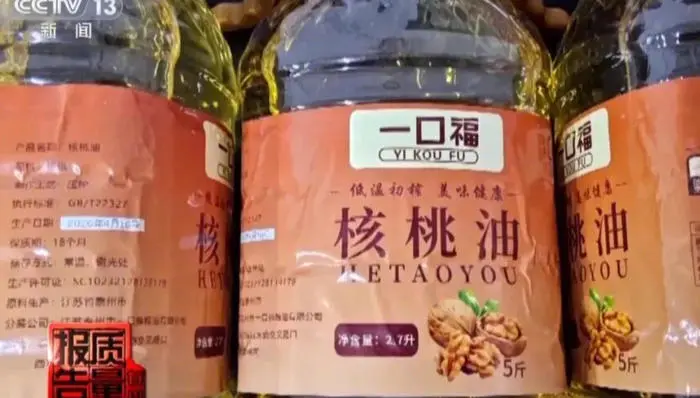
The most recent came to light in late September, when CCTV News reported that an inspection by the State Administration for Market Regulation revealed that walnut oil sold under the Chinese brand Yikoufu was, in fact, nothing more than ordinary soybean oil, bottled and sold with a deceptive label.
The product – promoted during a staged charitable campaign ostensibly in support of farmers – was sold for just 39 yuan, rather than its listed price of 298 yuan.
A long list of scams
This case follows a list of commercial frauds that have filled the pages of local news, and even garnered international attention in recent years.
It is an issue that warrants reflection well beyond China’s borders, especially today, World Food Day, an initiative promoted by the FAO under the theme Innovate Today. Nourish Tomorrow.
Just two years ago, sweet potato noodles promoted by Dongbei Yujie, a Chinese influencer with over 24 million followers, known for videos showcasing rural life in northeastern China, came under scrutiny.
Subsequent laboratory tests revealed that the noodles actually contained cassava starch, a cheap thickener used in the food industry as a substitute for the higher-quality, more expensive sweet potato starch.
Another well-known case of deceptive advertising, also dating back to 2024, involved mooncakes from the Hong Kong-based Meicheng brand.
Although live streamers presented these treats, traditionally consumed during the Mid-Autumn Festival, as originating from the former British colony, it was discovered that they were actually made in mainland China. What is more, contrary to what was advertised, the filling was not made with donkey meat, but with pork.
In recent years, the proliferation of mobile Internet has fuelled rapid growth in China’s e-commerce market.
Projections indicate that the market will reach US$ 2.64 trillion by 2031, with a compound annual growth rate of 9.46 per cent. These figures place it among the fastest-growing digital retail markets in the world.
One of the key drivers of this sector is undoubtedly live-streaming shopping. In 2024, this segment generated US$ 807 billion in gross merchandise value and is projected to maintain a compound annual growth rate of 18 per cent through 2026, with over 60 per cent of new shoppers coming from third-tier or smaller Chinese cities.
The success of live-streamed sales stems from several factors: the ability to entertain and emotionally engage consumers, impactful visual marketing, and time-limited promotions – often bolstered by narratives centred on public well-being or campaigns supporting the most vulnerable segments of society.
All of this makes the e-commerce business a fertile ground for illicit practices, despite the existence of consumer protection laws.
The Supervision and Management Measures for Live Streaming E-commerce, drafted by China’s State Administration for Market Regulation, explicitly prohibit industry operators and sellers from marketing substandard, adulterated, or counterfeit goods, or fakes passed off as authentic, through their channels.
Furthermore, engaging in deceptive promotional activities that could mislead consumers or other business operators is banned.
Moreover, if sales volume exceeds 50,000 yuan, such violations may even constitute a criminal offence under Article 140 of the Criminal Law of the People’s Republic of China. In the case of the Yikoufu walnut oil, for instance, total sales surpassed three million yuan, well above the established threshold.
In any event, to establish criminal liability, it must be proven that the parties involved were actually aware that the products being sold were counterfeit or non-compliant.
While live-stream hosts might occasionally be unaware of the true nature of the goods they promote, manufacturers and suppliers are almost always cognisant of it.
Shifting responsibility
Although existing legislation, including the Law on the Protection of Consumer Rights and Interests, the Food Safety Law, and the Product Quality Law, clearly define the responsibilities of manufacturers, sellers, and live streamers, the lack of effective, robust enforcement mechanisms, and inadequate verification processes mean that those who commit such offences frequently go unpunished.
When problems arise, manufacturers claim to be mere contract producers, intermediaries assert that they are only suppliers, live streamers insist that they are simply offering recommendations, and platforms maintain that they provide nothing more than technical services.
In short, everyone involved tries to evade their responsibilities, shifting the blame onto one another and leaving consumers high and dry.
The latter, in fact, are often hard-pressed to check the quality and characteristics of a product, gather evidence, and establish the legal basis for a violation.
High costs discourage them from pursuing claims for damages, further fuelling the trend of selling counterfeit or poor-quality goods by live streaming, a practice that has effectively become an “established industry norm”.
Only by plugging legislative loopholes, ensuring that control measures are truly effective, and compelling prominent streamers to take responsibility for their actions will it be possible to regulate the growth of e-commerce and transform it into a genuinely reliable purchasing channel.