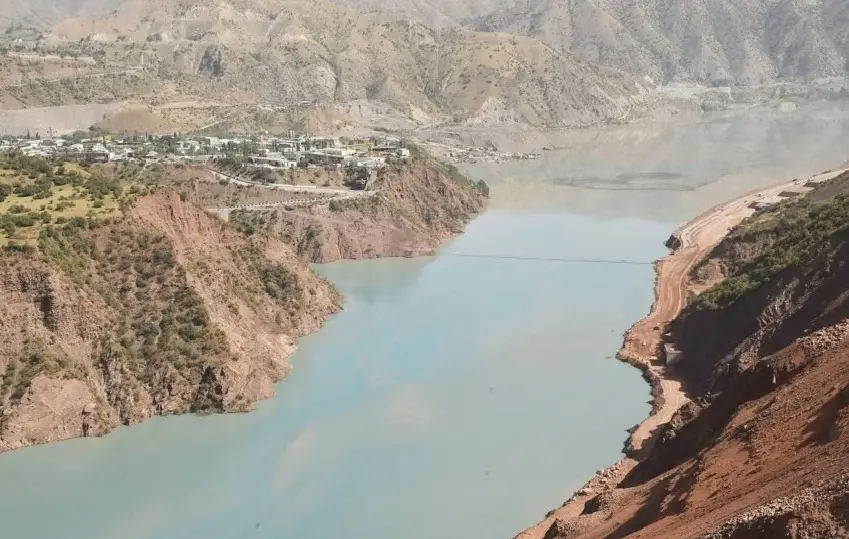
Dushanbe (AsiaNews) – In Tajikistan, over 25,000 people living in the flood-prone area of the Rogun hydroelectric reservoir are still awaiting resettlement.
Since 2008, the year the government resumed construction of the hydroelectric power station, residents of settlements located within the future reservoir area have been banned from building new structures. The issue of compensation for those displaced remains unresolved.
The family of 75-year-old farmer Mukim Khasanov, like thousands of others, is living in a state of uncertainty.
They live in the village of Khakimi in Nurobod province, not far from the Rogun hydroelectric power station. In the coming years, they will have to leave their home – which has been home to several generations of the family – as the village is expected to be submerged when the reservoir is filled.
“When the reservoir starts to fill, the river water flowing through the Khakimi Gorge will rise and reach the outskirts of the village. The ground here is sandy, and perhaps in a week’s time it will all start to crumble,” says Mukim. The authorities have allocated the family a plot of land in another province, but they lack the funds to build a new home.
“We haven’t received any compensation yet, and it’s impossible to start building work on a pension. When the house and property were valued, prices were completely different – including those of building materials – but now everything costs a fortune; for example, back then a wooden plank cost 50 somoni (around $4.80), whereas now it costs 150,” says the farmer.
The property valuation was carried out many years ago, but the authorities have not yet disclosed the amount of compensation, nor the payment date.
Khasanov recently travelled to Dushanbe to visit the management office for the power station’s flood zone to seek answers to these questions, but was not received, the reason given being the director’s prior commitments.
The farmer emphasises that he understands the importance of the Rogun hydroelectric power station to the country, but does not know how his family will be able to make a living under the current conditions: “We cannot work either here or there; any building work is prohibited… as soon as we start building even just a shower, they immediately say: ‘This is a floodplain, building is prohibited,’ and there is no money to start building in the new settlement.”
In 2012, a new settlement, Rogunion, was established on the outskirts of Dushanbe; its name recalls the places of origin of its inhabitants. Several dozen families from the village of Khorsada were relocated here. According to a local resident, Muzaffar Mardonov, the authorities had promised the displaced people large plots of land:
“They had promised 20–30 acres for growing potatoes, but they didn’t deliver; they promised to give land to our children, but they didn’t deliver. They gave me a house, but 75 other people are still waiting for a plot, and they’re in a very difficult situation. There is a hospital and a school, albeit small ones.”
According to the resettled residents, there is virtually no arable land in the village or the surrounding areas, and many residents have been forced to migrate to Russia in search of work. Some have been allocated plots of land near a large landfill site in Moscow.
According to official figures, over 50,000 people are due to be resettled to make way for the Rogun reservoir. The Ministry of Labour reports that displaced people are receiving a subsidised loan of around $540, as well as a one-off financial payment of $10–20 per person.
When construction of the power station resumed in 2008, the project’s cost was estimated at $3 billion; today it exceeds $6 billion.
The Rogun hydroelectric power station is the largest hydroelectric project in Central Asia; its construction began during the Soviet era. The plant is set to be equipped with six hydroelectric units, each with a capacity of 600 megawatts. Two units have already been commissioned, and the third is due to come on stream in September 2027.