Milan (AsiaNews) – At least eleven universities and technical institutes in China offer courses specifically dedicated to rare earths, with more than 500 new students enrolled each year, with no comparable universities in the world offering equivalent programmes.
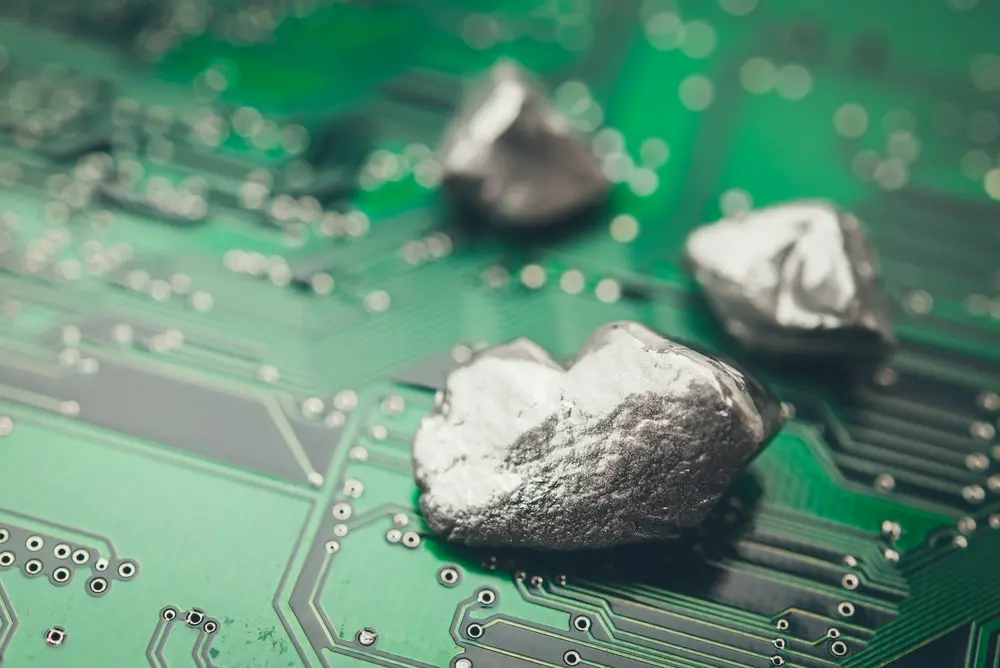
This gap offers a key to understanding the nature of China's dominance in the critical minerals sector. Rare earths, the 17 metals essential for much of today's cutting-edge technology, are actually widely available across the globe. Brazil, for example, alone holds nearly a quarter of estimated world reserves.
The crucial issue upon which China has built its monopoly, however, begins after extraction, when the individual elements must be chemically separated from the ores in which they are embedded.
A major Chinese advantage at this stage lies in the know-how of tens of thousands of technicians trained in the country's mining institutes, a figure many times higher than the approximately five hundred experts the United States can rely on.
The contest between Beijing and Washington plays out partly through this human capital, perhaps even more so than through the mines themselves.
While Beijing introduced restrictions on rare earth exports in April of last year, it applies them selectively. In fact, overall Chinese exports of these minerals have risen, and companies in the sector continue to generate substantial revenue, but flows to countries facing political pressure have plummeted.
The most striking example is yttrium, a metal used in thermal coatings for jet engine blades. Following the introduction of restrictions, supplies to the United States all but ceased, forcing US aerospace manufacturers to ration their stockpiles.
Beijing subsequently allowed some shipments after a months-long freeze, adjusting supplies based on ongoing negotiations with Washington, negotiations that rank among the hottest topics surrounding next week's summit between Xi Jinping and Donald Trump.
Japan has faced a similar treatment. Following statements made last November by Prime Minister Sanae Takaichi regarding the Taiwan Strait, IT received not a single kilogram of terbium between January and July, a stark contrast to the 20 tonnes delivered during the same period the previous year.
Lastly, since August, some Chinese suppliers have completely refused to ship to the United States in retaliation for US sanctions against several Chinese electronics certification laboratories.
Beijing tightens control over facilities and technicians
As of 2024, China’s entire rare-earth industry is controlled by just two state-owned groups. China Northern Rare Earth (CNRE), based in Baotou (Inner Mongolia), dominates the light rare-earth segment thanks to the massive Bayan Obo deposit, while the China Rare Earth Group (CREG), based in Ganzhou (southern China), specialises in heavy rare earths, far more valuable to the technology industry.
In 2025, Beijing stopped publishing national production quotas, the annual extraction and refining caps assigned by the Ministry of Industry to authorised producers, making it even harder to distinguish official output from production that bypasses regulated channels.
Available data indicate a significant discrepancy between the magnet industry's actual needs and recorded volumes, a gap driven by both off-quota production and smuggling from mines in Myanmar.
The differences between China and the US regarding rare-earth expertise are not merely numerical but also economic.
According to calculations by the publication ChinaTalk, the average annual salary for technicians at China Northern does not exceed US$ 20,000, whereas at MP Materials, the company operating the only active rare-earth mine in the United States, the average salary exceeds US$ 92,000. Consequently, Beijing has deemed it necessary to implement measures to prevent a brain drain.
Since last year, the Ministry of Commerce has been requesting detailed lists of qualified personnel from companies and, in some cases, has ordered the pre-emptive surrender of their passports. New regulations regarding travel abroad came into effect in China on Tuesday.
This crackdown followed an incident in which a listed company controlled by the China Rare Earth Group lost all its key executives, from the chairman to the chief financial officer, within a few months; according to unverified reports, they had secretly left the country.
The same logic applies to the companies Beijing seeks to attract to its rare-earth industrial hubs.
In Baotou, for instance, a competition for innovative enterprises awarded 300,000 yuan in late August to a Suzhou-based company that develops motors for electric vertical take-off aircraft.
The prize was only part of the incentive. Participating companies were offered the chance to open a local branch within a year, with grants of up to ten million yuan available for those setting up in the dedicated rare-earth technology zone.
Seven companies that had submitted proposals signed location agreements on the day of the final itself. China’s rare-earth capital thus aims to cluster companies that process and utilise rare earths around the deposit sites.
The American push to catch up – and its limitations
In an effort to counter China's monopoly, US federal agencies plan to invest more than US$ 37 billion in funding, including equity stakes, loans, price guarantees, and purchase commitments, starting with direct state investment in MP Materials.
However, the most ambitious test case is Brazil, where the American company USA Rare Earth acquired the Serra Verde mine in the state of Goiás for approximately US$ 2.8 billion.
Washington has allocated over US$ 1.3 billion to the facility, with a significant contribution from the US Department of Defense, and has guaranteed purchases for 15 years. So far, however, technical results have been disappointing.
During the start-up phase, the plant managed to recover only 20–30 per cent of the rare earths present in the processed material, far below the 80 per cent projected in the plans, as reported by Bloomberg.
This further confirms that the efficiency of extraction and separation processes relies on years of operational experience and cannot simply be bought with money.
There are other examples illustrating that possessing vast mineral reserves is of little use when the expertise to process them is lacking.
Malaysia holds estimated rare-earth deposits of 16.1 million tonnes but lacks the technology to refine them; consequently, its sole mining company ships all extracted material to China.
An exception is the facility owned by the Australian company Lynas in Kuantan, the first outside China to produce dysprosium oxide on a commercial scale, for which the Pentagon is preparing a purchase contract featuring a guaranteed minimum price of US$ 110 per kilogram for neodymium-praseodymium oxide.
The Malaysian government, which had banned the export of unprocessed rare earths in 2024, is now considering lifting the ban in light of interest from US and Australian parties.
However, the memory of Bukit Merah, a village in Perak where a rare-earth processing plant operated in the 1980s, remains vivid in the country. The disposal of the plant's radioactive waste sparked a prolonged protest campaign by residents following a series of leukaemia cases and other serious illnesses attributed to pollution.
For its part, Zimbabwe has opted for a more drastic approach regarding critical minerals. In July, the government banned the export of antimony and tungsten with immediate effect, following an earlier decision to halt exports of lithium concentrate.
The mining sector had already recorded strong revenue growth in the early months of the year. In April, the first African export of lithium sulphate took place from a plant controlled by China’s Huayou Cobalt, a move signalling an intent to shift a larger share of processing operations directly into the country.
The desire of producer nations to retain a greater share of processing activities puts pressure on the plans of both Washington and Beijing.
So far, however, China appears to be adapting more effectively, as it directly transfers facilities and technicians to these locations, resources the West is not yet able to provide to the same extent.
The G7 has set a goal of reducing dependence on Chinese rare earths to no more than 60 per cent by 2030. The challenge, however, is that establishing processing plants takes many years, and training the technicians needed to operate them takes even longer.