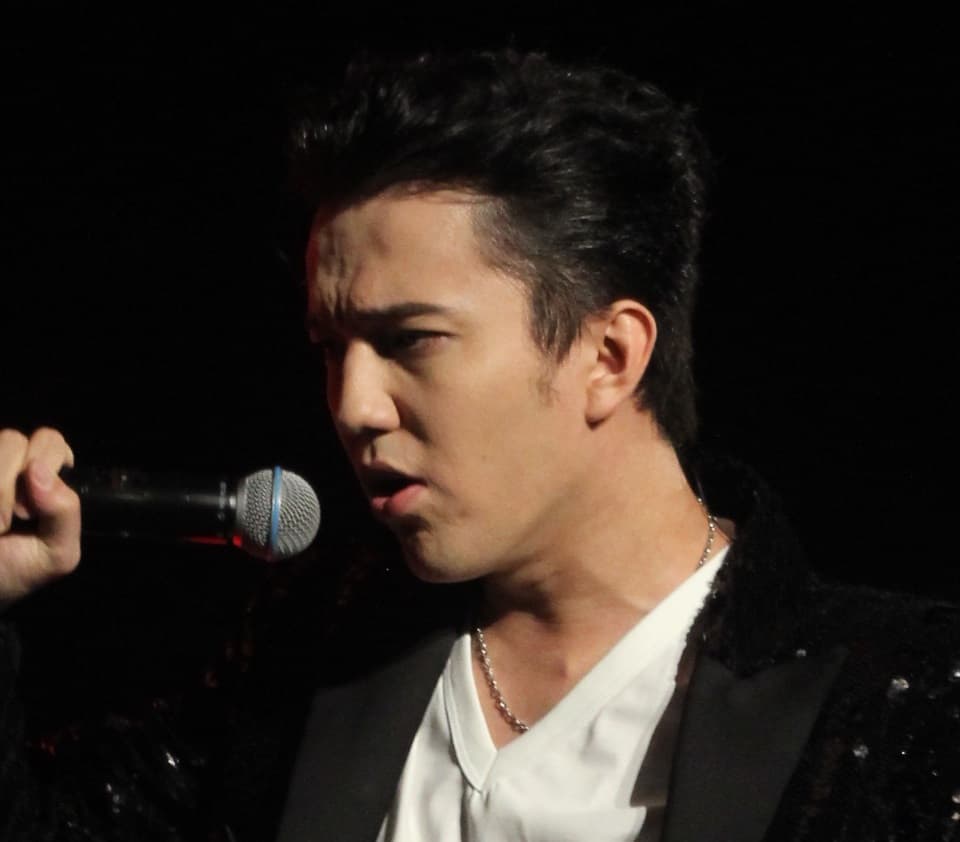
Milan (AsiaNews) – Han Hong is a highly successful singer in China who, in recent years, has also become a leading figure in the world of charity and philanthropy.
Last month, however, a simple polite remark uttered in dialect during a film premiere unexpectedly sparked an online media storm, drawing an avalanche of criticism.
The chain reaction in public opinion began with accusations of "emotional blackmail”, then quickly expanded to attacks on the film's phoney topic and the director's moral integrity, ultimately involving Han Hong's charitable foundation itself.
The end result is that the film's earnings are now stuck, around 120 million yuan, while the cancellation rate of monthly donations to Han’s foundation reached 27 per cent.
Han Hong oversaw the production of the soundtrack for the film Catching Spies (抓特务). On 17 June, during the film's premiere in Beijing, she addressed the audience in typical Beijing dialect: "走个面儿" (zǒu ge miànr), an expression meaning "come and show up" or "come and support us”, with the intent of inviting Beijing residents to flock to watch the movie.
Originally a polite remark, typical of personal relationships within the entertainment industry, it triggered a chain reaction in public opinion, the psychological subtleties and social difficulties it reflects deserve further exploration.
The pressure of short videos on movie theatres
In the public's perception, a film's box office should depend on the quality of the work and its relevance to the market, not on whether a celebrity uses their public credibility to "put their face on the line" and ask viewers to pay for tickets.
The expression "showing up" was interpreted as a form of moral pressure imposed from above. Since Catching Spies is a film about a particular topic, coming at a time when short videos in China are putting pressure on movie theatres and going to the movies is declining, it would hardly have sparked a strong push for audience consumption.
In any event, director Feng Xiaogang, a pioneer of New Year's Eve films, never asked viewers to "give something back" during the height of his box office success; but today, in a period of market weakness, he seems to rely instead on personal relationships as a safety net, which is even more likely to trigger a psychological reaction of rejection from the audience.
More broadly, the context is one shared by hundreds of millions of workers in gig jobs, with unstable incomes; in this situation, the financial threshold for going to the movies is already up.
The film and television industry has been declining for a while under the dual pressure of streaming platforms and artificial intelligence technologies; actors in supporting roles are losing their jobs, and the polarisation of box office revenue is getting worse.
Against this backdrop, asking audiences to "show up" is understandable, but may also seem out of place. The decline of the traditional audiovisual industry, however, is certainly not something that can be reversed with the public support of a few celebrities.
Han Hong, leveraging the reputation she built over years of charitable work to secure personal relationships in the entertainment industry, outside of her role, was perceived as overstepping her bounds, further reinforcing the impression of “emotional blackmail”.
Online attacks despite apologies
Although Han Hong quickly issued a public apology for her inappropriate statement, things are still spinning out of control.
Internet users have uncovered her foundation's annual budget. In 2025, it raised approximately 783 million yuan, spent 289 million, and has a positive balance of approximately 800 million yuan. Each month, 74 million yuan is invested in low-risk investments, while over a million monthly donors frequently hear her say that “raising funds is hard”.
This raises several questions. Are directors' compensation excessively high? Are some donations unrecorded? Does the auditing firm lack sufficient qualifications? The foundation has never provided assistance to individuals: what do these facts prove?
On 12 July, blogger Sima Sanji, who had filed a complaint six years earlier, filed another, raising concerns that the special ambulances purchased by the foundation came from a related company without the necessary permits. Since then, confidence in the Han Hong Charitable Foundation has tanked.
Along with questions about the foundation, personal attacks against Han Hong have also reached a fever pitch. Her failure to complete middle school, several rumours about her, copyright disputes, and doubts over her public image have surfaced one after another.
Questions can legitimately come from public opinion and critics; in fact, some have exploited the celebrity's popularity to attract attention, spread false news, and monetise online traffic. However, such collective hostility, endlessly amplified by a single remark, is undoubtedly a manifestation of the current climate of distrust in society.
The Chinese Red Cross precedent
The rejection elicited by the expression "showing up” perhaps stems from the disconnect between the way it is expressed and the perceived real-life gap: a platitude, uttered in front of an audience of strangers, ends up being perceived as a form of coercion.
Even celebrities have their weaknesses; under the spotlight, their flaws are magnified, and blame ends up extending even to the charitable work they have nurtured for many years, revealing the harsh side of online violence.
Public distrust of charity, however, didn't form overnight.
After the Guo Meimei case in 2011 shook the credibility of the Chinese Red Cross, the logic of social trust shifted: from trust in institutions and organisations to trust in people perceived as sincere, modest, and approachable.
After the collapse of trust in official charities, the public became more inclined to trust actual endorsers rather than large organisations; Han Hong won over supporters precisely because of this personalised image of charity. But once a personal image shows a crack, the backlash becomes particularly fierce.
One can apologise for a single statement, but the suspicion that arises from a fracture takes much longer to heal.
In an age where trust is already fragile, every "commonplace remark" uttered by a celebrity can be weighed, and the aura of charity has never been a form of capital that can be lightly consumed.