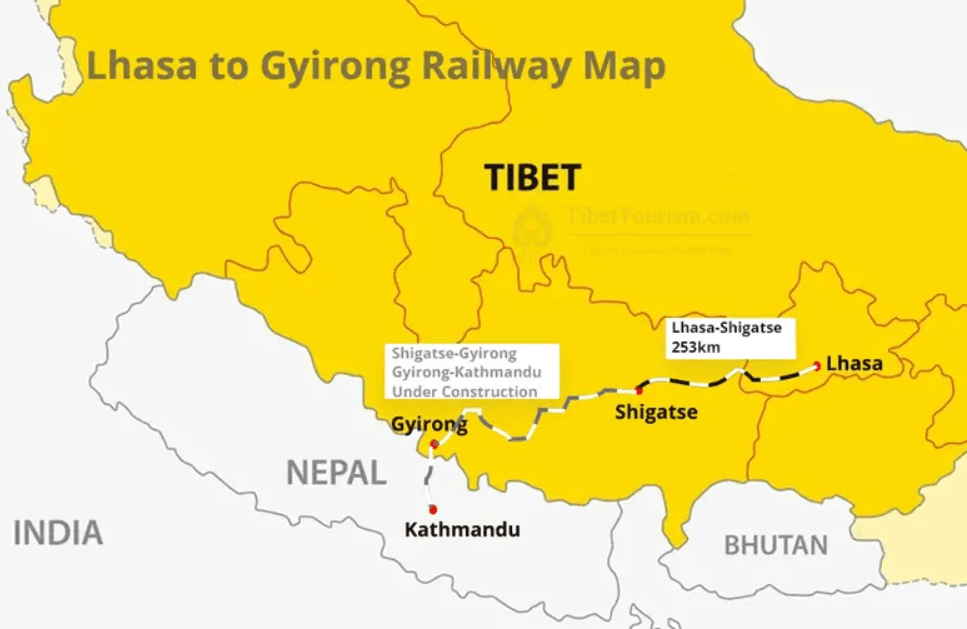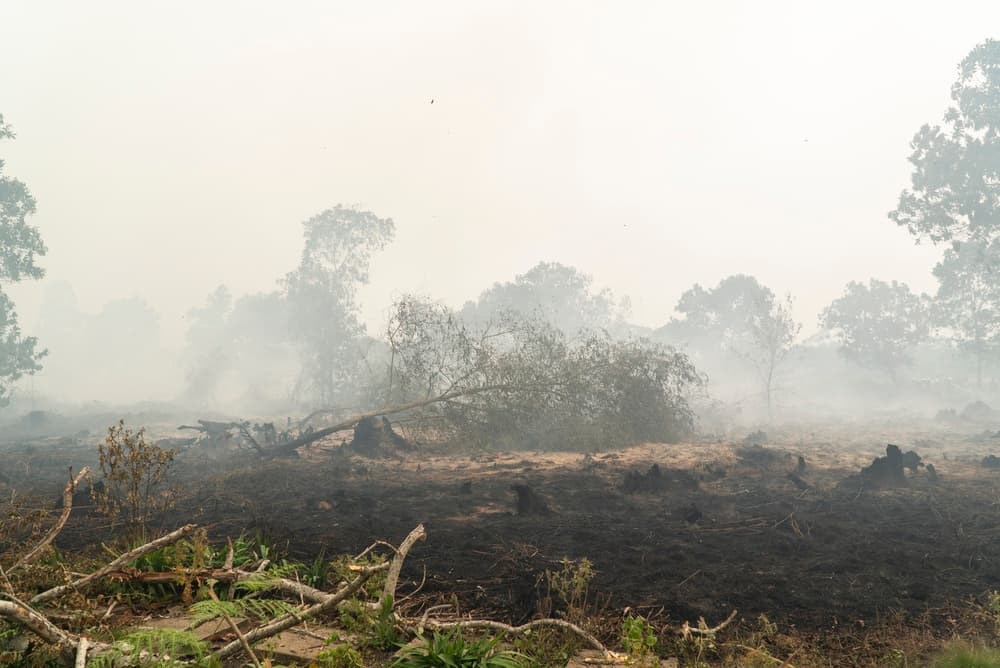
Milan (AsiaNews) – The scale of the disaster that has unfolded on the border between Tibet and Nepal is plain for all to see. And the priority today must inevitably be to mobilise efforts to search for the missing and to provide relief to the affected populations. But there is also another aspect that must not be underestimated in the current news coverage: the fact that the area involved is particularly sensitive, even from a political point of view, for Beijing.
On the one hand, the tragedy is striking the ‘Tibet Autonomous Region’ – as Beijing refers to the territory it annexed in 1955 and whose autonomous identity it has been seeking to eradicate for decades, including through drastic measures such as the new ethnic groups law strongly championed by Xi Jinping. It is no coincidence that the Chinese state media are emphasising the President’s direct involvement in organising the relief efforts. But the Nepalese area affected by the disaster is also very important to Beijing, which, particularly in recent years, had invested heavily in the Gyirong Pass and the corridor leading to Kathmandu. And not only for logistical and commercial reasons, but also with a view to controlling the Tibetan region.
An interesting insight into this aspect of the story is provided by an insightful article published last April by Galen Murton, a lecturer at James Madison University in Virginia who studies the geopolitics of the Himalayan region.
China’s gamble on Gyirong
Diplomatic relations between China and Nepal – as Murton points out – began in 1955, shortly after China’s annexation of Tibet. The two countries established a Himalayan border stretching approximately 1,414 kilometres. The 1961 Border Treaty and subsequent protocols and cartographic surveys helped to establish the current territorial boundaries. During this period, border security, trade and infrastructure development became closely linked: China began using economic aid and infrastructure construction as tools to strengthen its relations with Kathmandu.
However, it was particularly from the 2000s onwards, and especially after 2010, that China’s economic presence in Nepal grew rapidly. In 2014, Chinese direct investment surpassed that of India for the first time, making China the country’s leading foreign investor. Beijing has also considerably increased its economic aid to Nepal, channelling it mainly towards infrastructure, training and technical assistance. Particular attention has been paid to the northern districts – which are poor and difficult to reach – where the construction of roads enables local populations to access markets and healthcare facilities located in Tibet.
A turning point in Sino-Nepalese relations – notes Prof. Murton – was the earthquake that struck Nepal in 2015. On that occasion, China stepped in with a major humanitarian operation, reopening roads and repairing damaged infrastructure, and allocating some $480 million for reconstruction. At the same time, relations between Nepal and India were deteriorating due to the blockade of the southern borders, which triggered a severe energy crisis. It was precisely in this context that China capitalised on the situation by developing the new Gyirong Pass – which has now been devastated by the disaster – through which fuel supplies were transported. The facility took on significant political importance.
In 2017, Nepal also officially joined the Belt and Road Initiative (BRI), and in 2019 the two countries presented the Nepal-China Trans-Himalayan Multi-Dimensional Connectivity Network project, which aims to create more efficient economic corridors and transport infrastructure across the Himalayas. The aim was to boost trade, investment and tourism. Meanwhile, a transit and transport agreement allowed Nepal to use certain Chinese ports for trade with third countries.
The dream of transforming Nepal into a major trans-Himalayan trade corridor has, however, remained largely an unfulfilled project. The complex geology of the Himalayas, landslides, logistical difficulties, political instability in Kathmandu and diplomatic disagreements have slowed down many projects. The situation then deteriorated further with the Covid-19 pandemic, when China closed its fourteen main border crossings with Nepal, which only reopened fully last year.
Tibet and the Nepalese mountain communities
These problems have not, however, halted relations between Beijing and the Nepalese mountain communities. “Long neglected by the government in Kathmandu due to their geographical remoteness and the historical marginalisation of indigenous communities,” writes Galen Murton, “the border populations of Nepal’s northern districts now depend on crucial Chinese aid. From eastern to western Nepal, the elected leaders of rural municipalities in the Himalayan districts are regularly invited to the Tibet Autonomous Region to discuss ongoing adjustments to trade relations and the distribution of aid packages. These leaders routinely exploit their position in strategic and sensitive border areas to secure support from the Chinese government.”
“Provided in part to extend a geopolitical reach into culturally Tibetan areas,” the American scholar adds, “this material and in-kind support from China often includes the supply of excavators and road-building materials, as well as solar panels, batteries and other equipment intended for rural development. As long as Tibet, and control over its unstable environment, remains a central concern for the Chinese Communist Party, the neighbouring regions of Nepal and their ethnic Tibetan populations will continue to remain under the watchful eye and extraterritorial reach of the Chinese authorities”.
All this, of course, also comes at a political price. At secondary border crossings, particularly in the Mustang and Humla regions, China has developed not only roads but also advanced surveillance systems. This infrastructure enables Beijing to monitor more closely the movements of Nepalese populations, who are culturally and historically linked to Tibet. Border security is therefore also closely linked to the cultural repression of Tibetan minorities, as part of a strategy of political and territorial control. But the local populations – as Murton observes – are not simply passive. Communities such as those in Lapchi and Tsum Nubri have developed strategies to circumvent border closures, using family networks, alternative routes and small border crossings to obtain food, medicines, fuel and other goods from Tibet.
RED LANTERNS IS THE ASIANEWS NEWSLETTER DEDICATED TO CHINA. TO SUBSCRIBE, CLICK HERE.