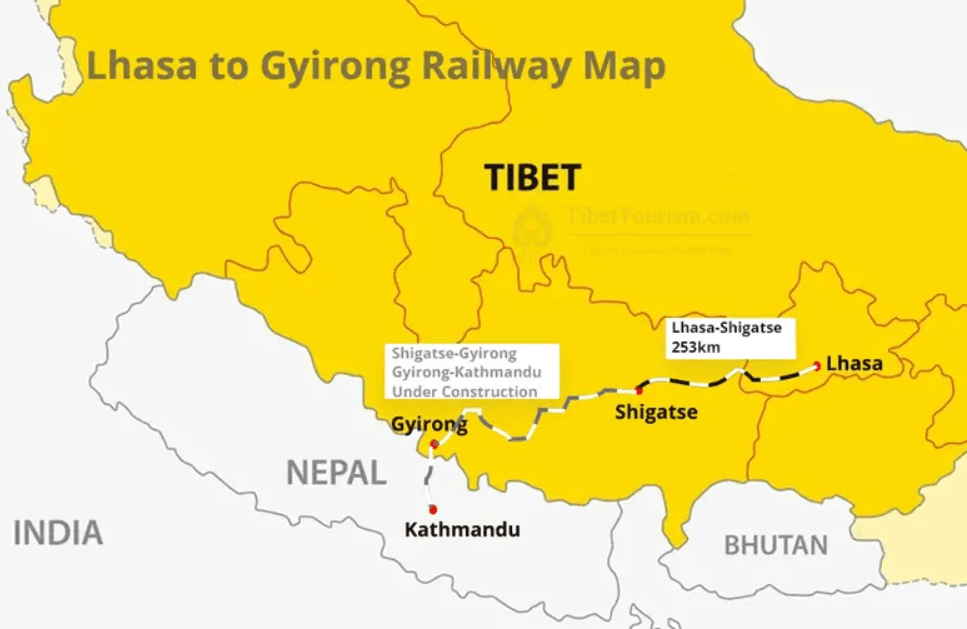
Kathmandu (AsiaNews) – Nepali authorities are trying to look beyond the disaster that struck the Bothekoshi River Valley in the Langtang region on 26 August, where Rasuwagadhi/Gyirong, the main border crossing with the Tibet Autonomous Region and the primary trade route with China, was wiped out.
The devastation has left Nepal with few options, at least regarding trade. Experts say it could take years to restore operations at Rasuwagadhi, not only due to the extent of the damage, which affects roads and infrastructure along the river and beyond its confluence with the majestic Trishuli, but also because of the persistent risk of further disasters in the area.
The only alternative route suitable for commercial vehicles lies much further east at the Tatopani Pass, normally accessible via a steep, geologically unstable gorge; however, Chinese authorities closed this crossing to cross-border trade on 29 August due to the risk of landslides on the Nepali side.
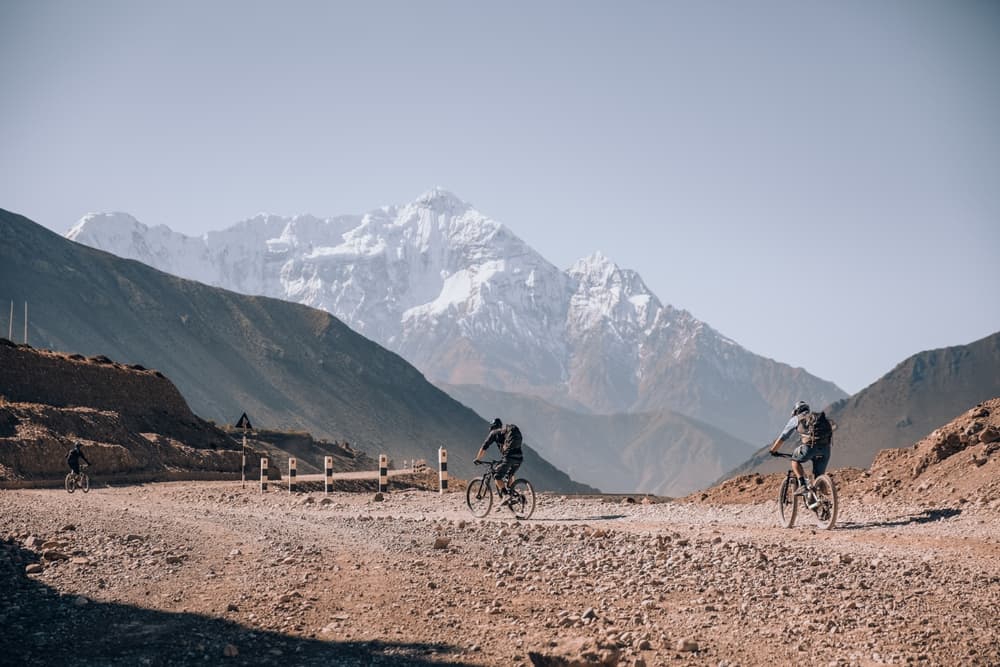
The third and final crossing between the two countries that remains operational is Korala in Mustang. Its use is limited, however, both by its high altitude (4,650 metres) and by seasonal closures caused by snowfall and the intense cold that is fast approaching.
“Korala is over 400 km away with harsh geography and high-altitude issues. It can operate for a month at most,” said Ram Hari Karki, head of the Nepal Trans Himalaya Border Commerce Association.
For heavy vehicles, the ascent to Korala from the Nepali side is prohibitive in its initial stretch, with a narrow, and winding road, rising from Pokhara, a major city overshadowed by peaks that include two eight-thousanders, Annapurna and Dhaulagiri whose slopes are a constant threat for much of the year because of possible torrent surges and landslides.
Across the plateau, the wider, unpaved tracks follow an undulating route that consistently hovers at or above 4,000 metres, placing a severe strain on both vehicles and drivers.
For some time, China, having built a commercial logistics hub on its side of the pass, has been pressuring Nepali authorities to open the route to transit; however, this can only be feasible if major infrastructure projects are undertaken along the entire path.
Such a move would transform into a highway potentially extending all the way to India, what was, until 40 years ago, a mere caravan and pilgrimage route, previously closed to non-Nepalis to preserve its Tibetan identity – Buddhist, agricultural and pastoral – and protect its landscape.
Cross-border movement is currently limited to local communities living near the border, and is only possible when weather conditions permit. The same applies to foreign visitors, which influx is restricted to the Nepali side, subject to quotas, and comes with high prices.
For this reason, there is strong opposition to opening Mustang to commercial traffic with China.
The environmental and cultural damage to a region often hailed as the mythical Shangri-La would be catastrophic. And any operations would remain precarious due to the climate, compounded by the uncertainty of ongoing changes that are already heavily impacting this remote Himalayan region.
Nepal cannot escape its geographical constraints, nor the growing threat that landslides, floods, and other disasters pose to its transport links with China.
Beijing, for its part, is aware that geography and rising disaster risks challenge connectivity with Nepal, yet it rejects the notion that these factors create an insurmountable barrier to deeper economic ties.
The Chinese approach is pragmatic, holding that damage can be prevented or mitigated through engineering interventions, even while acknowledging a certain level of risk.
However, Nepal must carefully weigh this against offers of cooperation and the prospect of entrusting projects within its territory to foreign initiatives.
In Kathmandu, the current blockage of trade with China, which accounts for 20 per cent of imports, is prompting further reflection.
This concerns not only the fragility of the mountainous terrain along the entire northern border with its giant neighbour and the improvement of bilateral relations, but also the effort to reduce trade dependence on India.
India is a neighbour that imposes an overwhelming degree of oversight on Nepal, yet relations are facilitated by a flat border featuring multiple crossing points.