Manila (AsiaNews) – While the political debate in the United States regarding the development of artificial intelligence (AI) focuses on Nvidia’s former CEO Jensen Huang, who was forced to step down following reports about his personal affairs, Southeast Asian nations are signing up for cooperation agreements poised to have a far more lasting impact on the technological rivalry between East and West.
On Saturday, in Manila, the ten-member states of the Association of Southeast Asian Nations (ASEAN) signed the Digital Economy Framework Agreement (DEFA), which seeks to integrate the region’s markets by establishing common rules for e-commerce, payments, data flow, and the development of new technologies, including artificial intelligence.
The situation involving Huang – who stepped down last week as head of the semiconductor manufacturer he had led for 33 years – has become a new flashpoint between Washington and Beijing.
This follows allegations that Alice Huang, with whom the Nvidia CEO reportedly had an affair, was a spy for Beijing rather than a Chinese entrepreneur.
China has denied any involvement in the matter, while Nvidia has stated that it has no reason to believe that any corporate secrets or information concerning national security have been compromised.
The incident, however, has provided US lawmakers with an opportunity to call for stricter controls on Chinese access to the advanced processors produced by the company.
How China circumvents US restrictions
This issue arises at a politically sensitive moment for President Donald Trump, following the 4 November midterm election defeats that saw a strong resurgence of the Democratic Party.
As Reuters reports, lawmakers from both sides of Congress are now calling for the closure of what is perceived as a loophole in US restrictions on microchips.
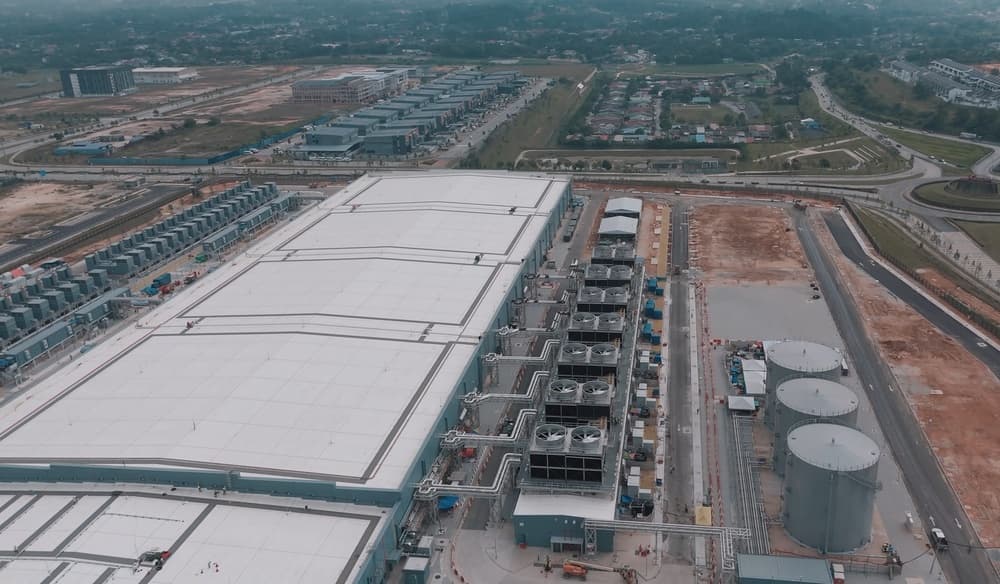
Chinese companies are able to rent computing capacity in data centres located outside of China, allowing them to remotely access servers equipped with Nvidia processors.
Thus, they can obtain the power necessary to train and operate their artificial intelligence (AI) models without directly importing US microchips, which are already subject to restrictions.
Countries that could be affected by new regulations and licencing requirements include several ASEAN members: Singapore, Malaysia, Thailand, and Indonesia.
As early as last year, the Financial Times reported that Chinese giants such as Alibaba and ByteDance were shifting some of their language model training to data centres in Southeast Asia, following US-imposed restrictions on the sale of certain Nvidia processors to the Chinese market.
According to sources cited by the Financial Times, the practice of renting computing capacity from foreign operators, who manage data centres equipped with high-end Nvidia processors, became possible after the Trump administration rescinded the so-called diffusion rule.
This had been introduced during the administration of former President Joe Biden to limit the distribution abroad of advanced computing technologies and prevent their indirect use by countries already subject to restrictions.
Southeast Asia’s importance
Beyond the semiconductor trade, Southeast Asia is becoming increasingly significant in building the infrastructure required for AI development.
According to data from the Ministry of Trade, Malaysia has approved investments in data centres totalling 385.7 billion ringgit, or around US$ 94.7 billion, since 2021.
Thailand hosts 42 such facilities, with a combined computing capacity of 3,400 megawatts and investments amounting to roughly US$ 22.6 billion.
Singapore remains a key global hub for digital networks; and for over a year, the authorities of the city-state have been investigating Megaspeed, a cloud computing company linked to the case involving Jensen Huang.
As early as February 2025, the Singaporean government reported that 22 per cent of Nvidia’s quarterly revenue was attributed to entities with operations in the country, yet less than 1 per cent of that total revenue corresponded to products actually shipped into its territory.
Against the backdrop of these complex East-West relations comes the just-signed DEFA, which is slated to take effect in early 2027.
Negotiations, which began in September 2023, have established a common framework covering digital trade, electronic payments, digital identity, data protection, and cybersecurity. The goal is to reduce regulatory fragmentation among member states and simplify cross-border operations within the digital space for both businesses and consumers.
According to ASEAN estimates, the agreement could help grow the region’s digital economy to a value of US$ 2 trillion by 2030.
From investments to regulation
However, this economic growth risks primarily benefiting China.
In June, Alibaba Cloud opened two data centres in the Malaysian state of Johor, bringing its total number of facilities in Malaysia to five.
Four months earlier, ASEAN had approved a regulatory framework for cross-border cloud computing, establishing common principles for data protection and the management of cloud services.
As some AI experts have noted, companies that provide cloud services and computing capacity can also influence the security rules and practices adopted by those who use their platforms.
If public administrations and businesses build their digital services around a single provider, switching to another system can become very costly, as it entails redesigning infrastructure, migrating data, and retraining staff.
Technological dependence thus risks turning into a long-term reliance, potentially limiting the ability of governments to enforce their own regulations.
In Indonesia, for example, Huawei has developed partnerships with public institutions and universities, including cybersecurity training programmes.
While these initiatives help spread digital skills, they also serve to entrench the use of platforms and technical standards provided by Chinese companies.
China has long leveraged its close economic ties with Southeast Asia.
By 2025, bilateral trade between China and ASEAN countries reached $1.05 trillion, surpassing the trillion-dollar mark for the first time and marking a 7.4 per cent increase over the previous year, with China remaining the organisation’s primary trading partner for 17 consecutive years.
Such an extensive network of exchanges could encourage Southeast Asian countries to introduce regulations that facilitate further Chinese investment in digital infrastructure.
At the same time, Chinese companies operating abroad remain subject to Chinese legislation, particularly regarding cybersecurity and national intelligence.
This means that such investments may also entail obligations to cooperate with Chinese authorities by sharing information deemed relevant to national security.