Bishkek (AsiaNews) – One of the most ambitious projects among the new Central Asian trade corridors is the railway line that will run from China through Kyrgyzstan to Uzbekistan. Markus Friedrich Schneider, an expert and independent analyst on Central Asian economies, shared his views with Kaktus.media on the construction of the railway, how this project will transform the economies of Central Asian countries, and the likely development scenarios.
Central Asia is entering a period of gradual change in its role in international trade: for decades, the region’s economic development has been largely determined by its geographical location, limited access to seaports and dependence on transport routes established during the Soviet era. The expansion of trade links with China, the development of trans-Caspian transport and the growing interest in alternative land corridors are now laying the groundwork for a rethinking of the existing transport infrastructure.
One of the most significant projects in this process is the construction of the China–Kyrgyzstan–Uzbekistan (CKU) railway, which is expected to provide an additional rail service between western China and the central part of the region. The creation of a further transport corridor could alter the distribution of transit flows, the attractiveness of investment in individual territories and the competitive landscape among national logistics systems.
For Kyrgyzstan, this represents an opportunity to overcome long-standing infrastructure constraints; for Uzbekistan, it will strengthen its position as a regional trade hub; whilst Kazakhstan will need to adapt to the emergence of a new route between China and the Central Asian countries. Even Tajikistan and Turkmenistan, whilst not directly involved in the construction, could benefit from further economic opportunities thanks to the expansion of regional transport connectivity.
The project is particularly significant in the context of the upcoming Bishkek Investment Forum, scheduled for 25 November this year. Discussions on Central Asia’s prospects up to 2030 offer an opportunity to view the construction of the CKU not only as an infrastructure initiative, but also as a factor in the region’s long-term economic transformation. The idea of a rail link between China and Uzbekistan via Kyrgyzstan has been under discussion for over two decades: the main obstacles have remained the challenging mountainous terrain, high construction costs, disagreements over the route and the search for an acceptable financing model.
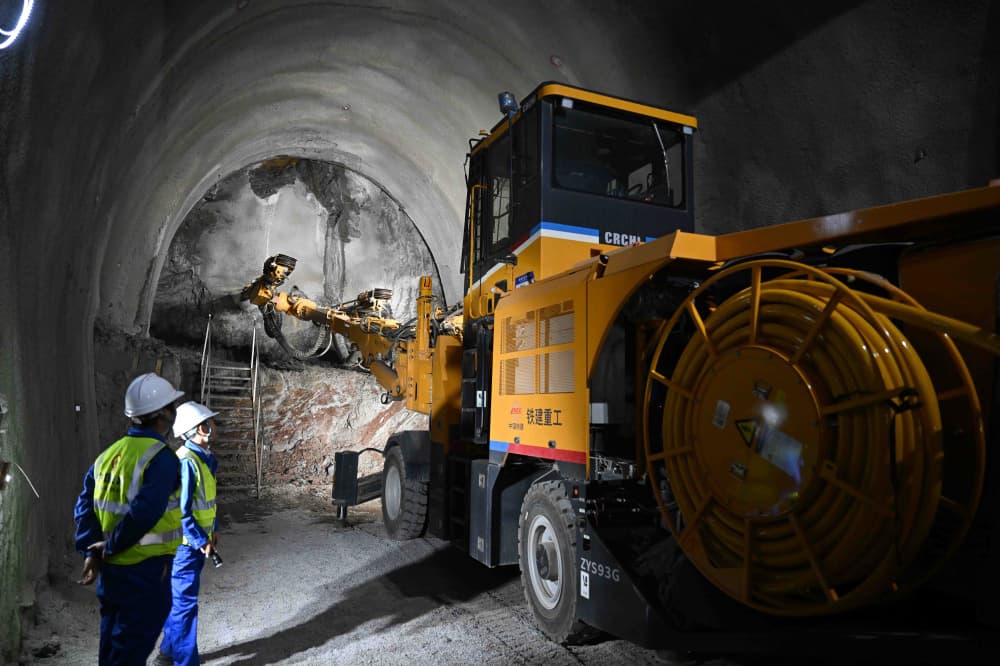
The turning point came with the signing of an intergovernmental agreement on 6 June 2024, followed by the official ground-breaking ceremony on 27 December of the same year. The project involves the construction of a railway link from Kashgar in China, via Torugart, Makmal and Manas in Kyrgyzstan, to Andijan in Uzbekistan. The total length of the route is estimated at around 530 kilometres, of which approximately 305 kilometres are in Kyrgyzstan. The Kyrgyz section is the most challenging from an engineering perspective, due to the need to construct numerous tunnels, bridges and other structures in mountainous terrain.
Economic integration in Central Asia requires the harmonisation of transport standards, the development of electronic document management, greater tariff transparency and the creation of conditions for the free movement of goods in transit.
The development of joint industrial and logistics projects is also becoming an important area. If the new railway lines were used exclusively to transport Chinese goods westwards, the countries in the region would retain a predominantly transit-based focus; the development of processing plants, distribution centres and industrial cooperation would increase the share of regional value added.
The main challenge for the states in the region is the need to shift from a revenue-generating model based primarily on transit to one in which transport infrastructure becomes the foundation for industrial development and the expansion of foreign trade; the new railway route will then become not only an alternative route between China and Western markets, but a key element in the formation of a more integrated and competitive economy in Central Asia.