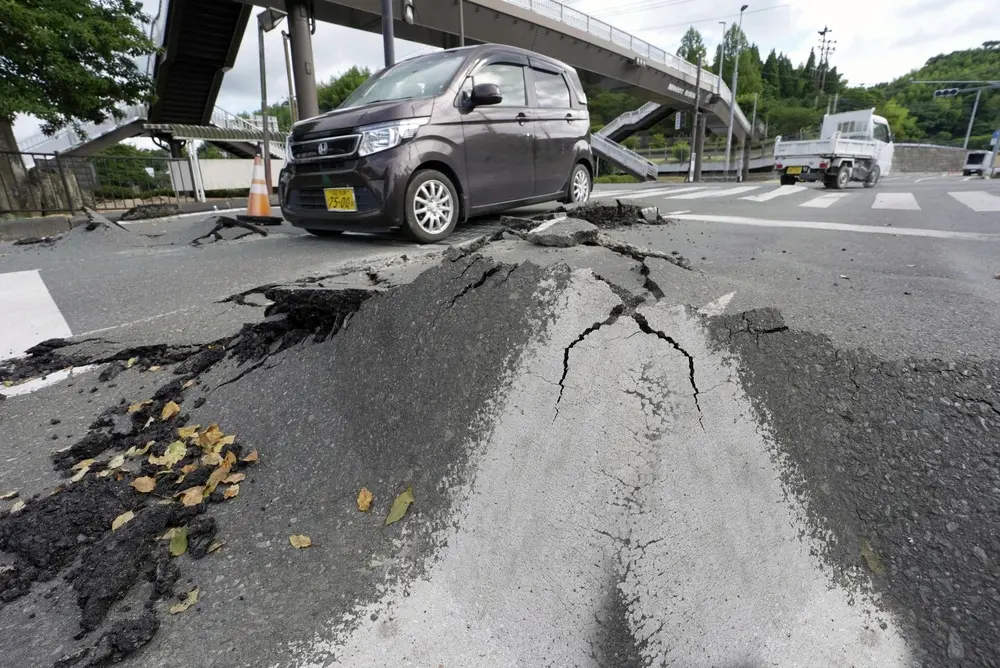
Kumamoto (AsiaNews/Agencies) – A Vietnamese national is among the 35 people confirmed dead in the 7.1-magnitude earthquake that struck the Japanese prefecture of Kumamoto on Tuesday.
Trần Văn Sơn, who arrived in Japan last January thanks to a government foreign worker programme, died when crane at the plant where he worked collapsed, crushing him.
Seven other Vietnamese workers at the same factory managed to escape.
In the same prefecture, a Vietnamese woman was wounded, while dozens of other migrant workers saw their homes damaged, forcing them to seek shelter in evacuation centres set up by Japanese authorities.
Alongside the tragedy, however, another story received considerable attention in Japan.
Five Vietnamese workers who had arrived on skilled worker visas rescued a woman who was almost in her 90s. When they returned home after the quake, they saw her nearly collapsed home.
Knowing that she lived alone, they began removing tiles, beams, and bricks with their bare hands, along with some neighbourhood residents.
With a saw and other tools, they continued digging despite repeated aftershocks, finally managing to extract the elderly woman, who was still alive.
“We only thought about getting her out as soon as possible," said Lê Huy Tuấn, one of the five rescuers, after they realised that she was trapped.
For its part, the Vietnamese Consulate General in Fukuoka began to distribute water, food, and basic necessities to the main evacuation centres hosting foreign workers.
The assistance, organised in collaboration with Vietnamese associations and volunteer groups, is also being provided to workers from Indonesia and Cambodia, many of whom work for the same manufacturing companies in the region.
According to the Immigration Services Agency of Japan, Vietnamese nationals currently in the country number over 630,000, the second-largest foreign community after the Chinese, ahead of all other Southeast Asian groups. About 480,000 are actively employed.
Over the past decade, their presence has grown rapidly in response to the chronic labour shortages caused by Japan's aging population. In the first half of this year alone, 28,488 new Vietnamese workers arrived.
A significant portion of Vietnamese migrants find employment through the Technical Intern Training Program (like Trần Văn Sơn), a system created to develop a range of skills for young people from developing countries.
However, the model has long been criticised by human rights groups for offering low wages, demanding excessive overtime, and often limiting the ability to change employers. Cases of exploitation have also been reported.
In recent years, Japan has gradually replaced this system with the new Specified Skilled Workers programme, which offers greater protections while continuing to employ many foreigners in sectors with a severe shortage of local workers: construction, manufacturing, agriculture, elderly care, catering, and food processing.
Kumamoto is one of the prefectures where the Vietnamese presence has grown most in recent years, thanks in part to the presence of manufacturing industries, like semiconductors.
Many foreign workers are also employed in the region's metalworking and construction industry, making the local economy increasingly dependent on immigrant labour, despite growing fears of foreigners in Japanese society.