Kathmandu (AsiaNews/Agencies) – The tragedy of the flood that hit the Gyirong crossing, on the border between Nepal and Tibet, is far from over. The latest estimates put the death toll to more than a thousand with the number of missing persons at least four times that.
In last Sunday's Angelus, Pope Leo XIV expressed his “concern" and called for "aid" for the affected populations, as well as prayers for “rescue workers” who are racing against time.
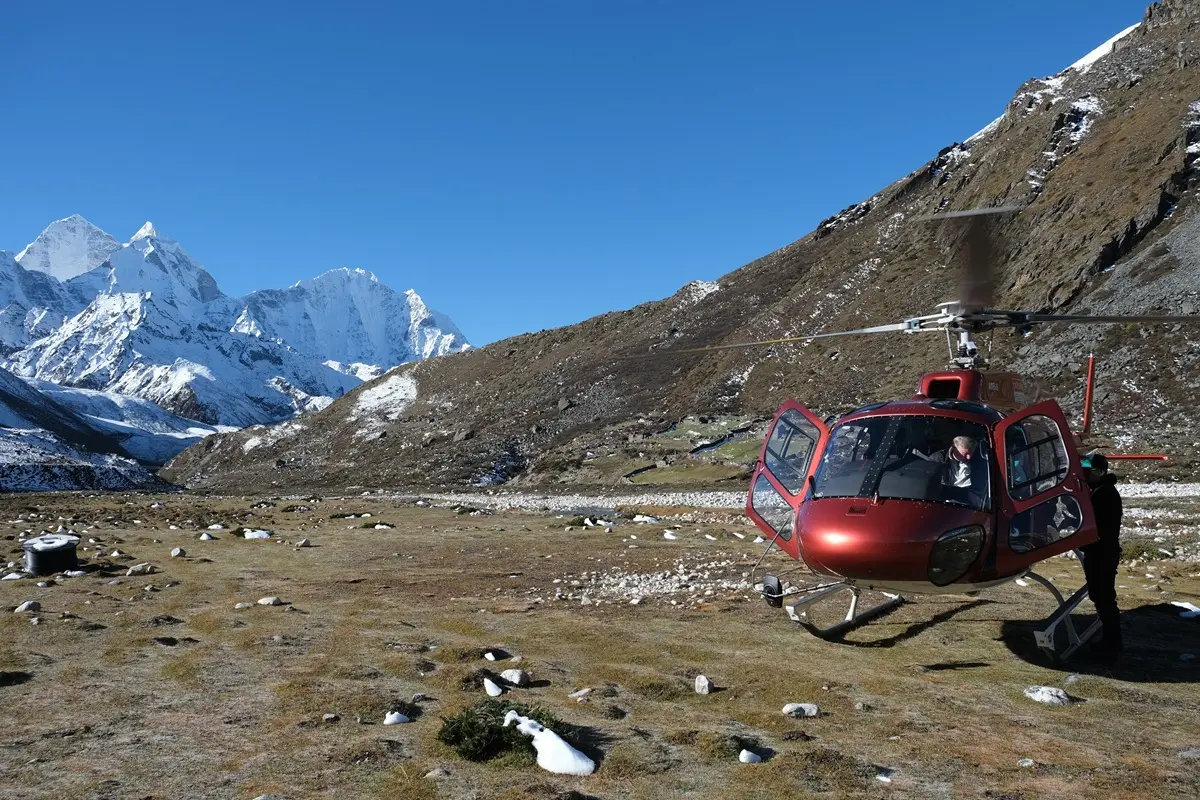
Among the latter, helicopter pilots, both military and private, are performing a fundamental service. With the roads swept away, the sky is in fact the only viable path for rescue and aid.
For the devastated areas, aircraft are a true lifeline, but also a far from easy service to provide in a rugged valley.
While the causes of the flood are being investigated (weakening of the rocks, the effects of global warming, poor infrastructure), the landscape has been profoundly changed by the shocking avalanche of water and debris, which swept away every landmark, including helipads.
A local newspaper, the Kantipur Daily, published an interesting in-depth article devoted to the work carried out in this difficult context by approximately 30 military and private helicopters, clearly explaining the difficulties they face due to communication problems, fuel supply issues, and the paucity of suitable landing sites.
Without any reference points, every landing is a challenge
From the narrow, vertical mountain gorges of Rasuwa and Nuwakot, it is impossible to establish radio contact with air traffic control. The radio channel remains open only for the first 15 minutes after take-off from Kathmandu.
The areas affected by the flooding are deemed "uncontrolled airspace”. Therefore, rescue flights rely on continuous radio communication between each other and the pilots' flying skills.
Through a common radio frequency, pilots exchange position, direction, and traffic information, which is essential for keeping a distance and avoid accidents, without outside assistance.
Flight safety in the Himalayan skies, given the unique morphology of the terrain, relies primarily on the pilot's “flying discipline”.
When flying through the narrow gorges, pilots have been trained to keep to the left, continuously communicating with helicopters coming from the opposite direction. The aircraft behave as if they were flying on roads.
In the early days of the disaster, the priority of these rescue flights was to bring to safety as many people as possible, whenever they were seen or with whom contact could be established.
This activity is ongoing, possible only given the variables associated with the operation: landing possibilities, weather, and fuel. This mission has now been supplemented by the delivery of humanitarian aid, especially to remote villages that remain isolated.
Rescued people are initially taken to Trishuli, where they are met by a team of military, police, and health workers. After receiving initial assistance, they are moved to Kathmandu.
The helicopters fly over the nearby areas of Syabrubesi, Timure, and Bhote Kosi, where towns, helipads, structures, and vegetation that were once visible have now disappeared. Even landing pads have been swept away.
Kantipur Daily reports that pilots are struggling to recognise their usual landing spots.
Furthermore, landing, where deemed possible, is risky due to the wetness of the ground, which has become unstable. Each landing is thus now linked to a thorough evaluation of all the factors at play, following early aerial reconnaissance.
"Every day is like a new helipad for us," said one officer. "That's why, in the event of a disaster, the pilot's experience and judgement are crucial."
“For us, every day is like having a new helipad,” he added. “There is no permanently prepared runway as there is at an airport. That is why, during a disaster, a pilot’s experience and judgement are the most important things.”
The difficult balance between fuel and aid
Another challenge for air rescue operations is fuel. Indeed, returning to Kathmandu for refuelling significantly slows down the pace of operations. For this reason, the government has organised refuelling at Rasuwa-Nuwa Kot, in the Trishuli region.
The fuel stored there greatly facilitates logistics. Furthermore, the decision on fuel quantity also varies depending on the mission: carrying more fuel reduces the payload, while less requires refuelling.
The current mobilisation is not just related to the normal relief effort in the Himalayan regions; it is a deployment of available air resources to respond to a national disaster.
Several agencies are coordinating the various actions. While the civil aviation sector plays a supporting role by providing planes, helicopters, airports, and other infrastructure, the army and security forces are carrying out relief efforts on the ground.