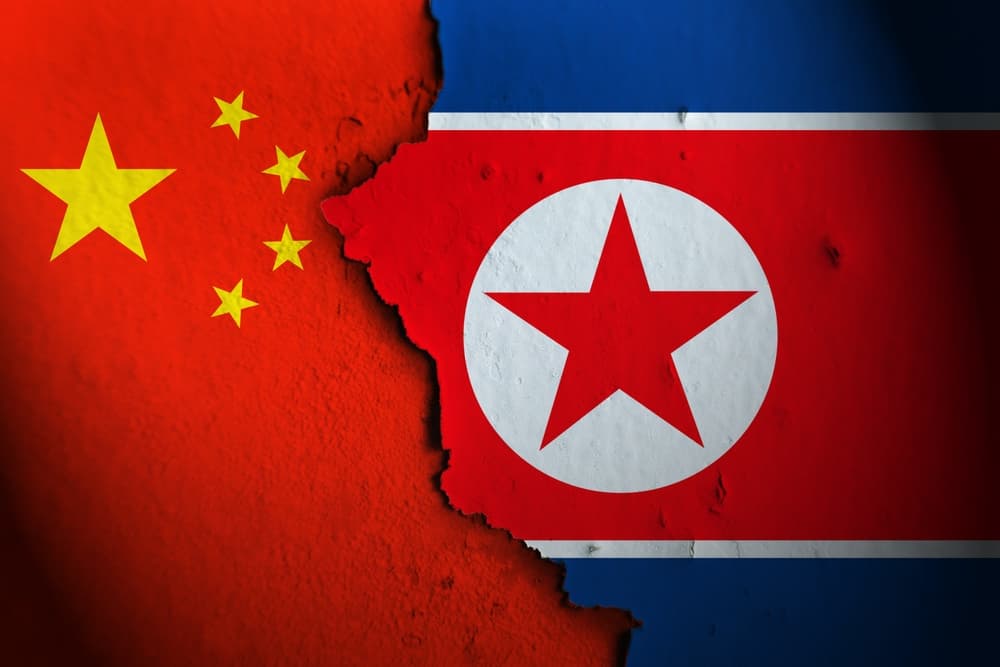
Milan (AsiaNews) – Recently, shortly after Xi Jinping's visit to Pyongyang in late June, the leadership of the North Korea’s Workers' Party of Korea (WPK) sent the government a new directive regarding China.
The WPK is asking officials responsible for foreign economic relations to be more flexible in order to encourage Chinese investors to invest more funds and thus contribute to the country's foreign currency reserve.
The document, however, also calls for a crackdown on the circulation of unauthorised Chinese films and TV series and on anyone who claims that, after Xi's visit, viewing them would no longer be punished.
This contradiction reflects the essence of the relationship between the two countries, officially characterised by strong closeness, but with a persistent level of mistrust.
The closeness at the official level is clearly evident from the succession of meetings of recent weeks.
On 11 July, the sixty-fifth anniversary of the Treaty on Friendship, Cooperation and Mutual Assistance was celebrated, an anniversary hardly noticed up to five years ago.
From 10 to 12 July, North Korean Premier Pak Thae Song led a delegation to Beijing, where they were received by Xi Jinping.
Just three days after his return, Wang Huning, the number four in China’s hierarchy and the Communist Party of China's main ideologue, travelled to Pyongyang, where he met with Kim Jong Un. At the same time, the North Korean Foreign Minister left for Moscow.
Economic relations have also intensified, proceeding hand in hand with diplomacy. In the first half of this year, bilateral trade reached its highest level since 2017, that is, before the United Nations sanctions began to take effect. Compared to a year ago, it grew by nearly 20 per cent, with North Korean exports to China alone jumping by more than 50 per cent.
Every day, dozens of lorries loaded with construction materials, medical equipment, and electronic products enter Sinuiju, a North Korean city on the border with China.
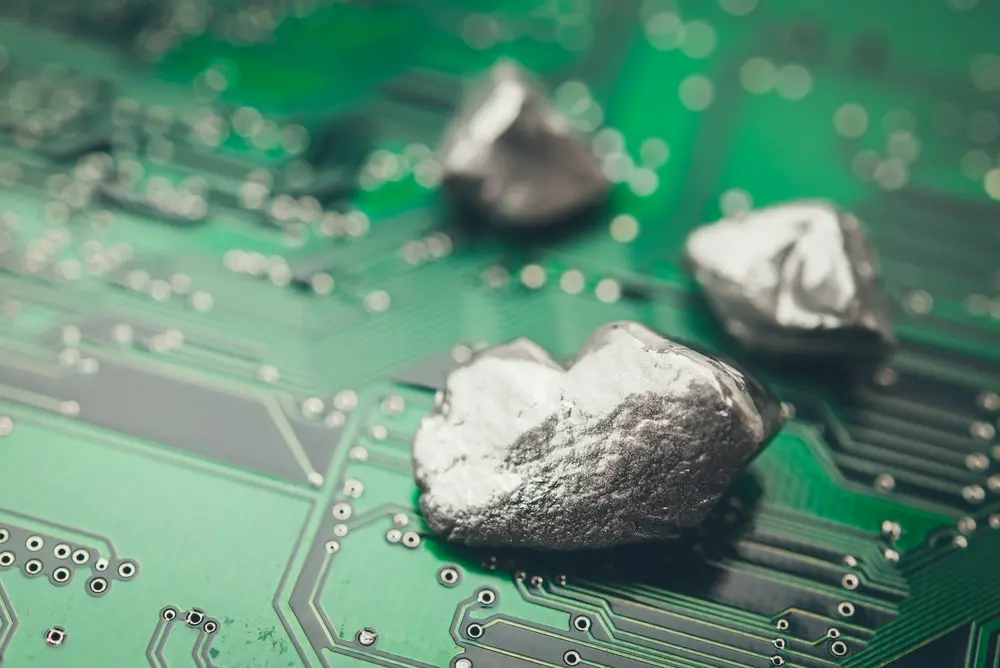
Since mid-June, hundreds of Chinese investors have visited the North's main mining companies, attracted primarily by tungsten and iron ore, and are conducting negotiations focused on ways Chinese technology and equipment can be provided in exchange for raw minerals, thus circumventing the sanctions.
What was not said
Beneath the surface, however, North Korea's official communication suggests greater caution. In the letter sent to Xi for the anniversary, Kim Jong Un spoke of a friendship born from a "bloody struggle for independence against imperialism”, without reiterating the ritual phrase "friendship forged in blood," which he had used in 2021.
During the celebrations, no North Korean leader ever used this expression, according to state media reports, while the Chinese side used it several times, starting with Xi himself.
The way North Korean media outlets prioritise news is another eloquent sign. On the date of the anniversary, Rodong Sinmun, the WPK’s daily newspaper and the regime's most authoritative voice, dedicated its opening story to the joint party, government, and military meeting on corruption in the armed forces, convened the previous day, while the celebrations and the meeting between Pak and Xi ended up on the second and third pages.
For the regime, restoring discipline in the army clearly comes before relations with its ally.
The most revealing detail, however, concerns the reports of the meetings, released in different versions by the two sides.
According to the one published by Beijing, Pak assured North Korea of its firm support for China in defending its vital interests, including Taiwan, and promised to intensify economic and cultural exchanges. These passages are absent from the North Korean report, replaced by general remarks about strengthening mutual friendship.
In April, Kim pledged to support all policies implemented by China to defend its territorial integrity, based on the "one China" principle, and reiterated the same position in June to Xi. This month, however, such explicit support is nowhere to be seen, just as diplomatic relations seemed to be reaching a peak.
The letter on 1 July for the 105th anniversary of the founding of the Communist Party of China (CPC) also had a cooler tone than the one in 2021. The reason for this caution lies in the issue of nuclear weapons.
On the eve of Pak's trip announcement, North Korea’s Institute of Enemy State Studies released a statement criticising military cooperation between Japan and South Korea, arguing that only the continued development of North Korea's nuclear forces and the full exercise of its nuclear power status can guarantee peace on the peninsula and the region.
This is a significant development, because it presents the North Korean arsenal as an instrument of regional stability, echoing the language used by both Kim and Xi at the June summit.
The following day, Kim convened the first publicised enlarged meeting of the Party Central Military Commission (CMC) in more than a year, in which the desire to increase the arsenal, both in terms of the number of warheads and its capabilities, was confirmed.
Kim has also sent signals regarding the nuclear issue on other occasions before his meetings in Beijing.
In September 2025, on the eve of a trip to the Chinese capital, he visited an institute working on developing a solid-fuel rocket motor for next-generation intercontinental missiles.
In the days leading up to Xi's visit last month, he repeatedly engaged in activities related to his nuclear programme, while his sister Kim Yo-jong denied that China had agreed to cooperate in the North's denuclearisation, as claimed by the United States.
Since 2023, Beijing has stopped referring to it in official documents, but, at the same time, has also refrained from contradicting the White House's assertion that Trump and Xi had reaffirmed their shared goal of denuclearising North Korea. For Pyongyang, this is a signal that it would be unwise to lower its guard.
Seoul's view
These same facts are seen differently in Seoul. A study by an institute close to the South Korean security community argues that the alliance between North Korea and China is morphing from a military pact intended to be activated in the event of war into permanent cooperation aimed at supporting the development and stability of the two regimes even in times of peace.
According to this analysis, the relationship between the two countries is becoming more equal because Pyongyang's nuclear and missile capabilities have increased the North's strategic value in Beijing's eyes.
The alliance between the two countries is acquiring a dimension that goes beyond the peninsula, with the risk that a crisis in the Taiwan Strait and a crisis between the two Koreas could end up intertwined.
These two different interpretations are not actually mutually exclusive. The intensity of the meetings is real, as is the flow of money between the two countries.
However, the frequency of travel and the formal language used threaten to make the relationship between the two countries appear more solid than it actually is, overshadowing Pyongyang's considerable caution.
The disparity in the relationship is also evident in what people say. As the Daily NK reports, in North Korean border towns, some people have returned only recently after they were stranded in China during the pandemic-imposed lockdown. Their experiences contradict the propaganda.
“If a South Korean customer walks into a store, employees jump up and greet them with smiles. But if it’s obvious someone is North Korean, they don’t even stand up,” said one returnee.
“We’re the same people, but South Korea gets treated like the rich ones and our country gets treated like beggars,” lamented bitterly another.
Thus, while the North Korean regime likes to highlight its important place internationally, insistently claiming that even the United States fears it, those who have crossed the border to return home are convinced that, outside North Korea, what ultimately matters is wealth, regardless of the regime's claims about its power.