Beirut (AsiaNews) – The United Nations Interim Force in Lebanon (UNIFIL), deployed in the country in 1978, is set to bring its historic mandate to an end.
This goes against Lebanon’s wishes under pressure from Israel and the United States, both of which have accused the force of being ineffective in the face of Hezbollah. In fact, UNIFIL patrols have been frequently turned back, sometimes violently, by the pro-Iranian militia whenever they approached the latter’s positions, with Hezbollah claiming that such patrols required the presence of the Lebanese Army.
As the mandate comes to an end on 31 December 2026, the current contingent, some 7,500 strong, will gradually pull out in 2027.
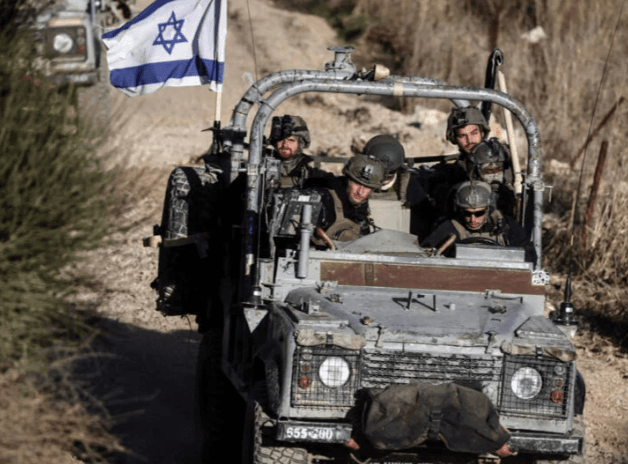
After the New Year, the force will no longer be authorised to carry out patrols, though it will retain the right of self-defence while winding down its positions, which are to be transferred to the Lebanese state. However, many of these positions are currently in combat zones occupied by the Israeli military and will, by default, fall into Israeli hands.
Set up in 1978 in the wake of Israel’s Operation Litani in southern Lebanon, with the aim of creating a buffer zone between Palestinian forces in Lebanon and Israel, UNIFIL has since served as a barometer for regional tensions.
It is evidence, in fact, that the conflict in southern Lebanon is not an isolated one, but rather a stage for broader geopolitical confrontations involving the Palestine Liberation Organisation (PLO), Israel, the South Lebanon Army (SLA, Israel’s proxy militia), and eventually Hezbollah, Iran, and Western powers.
Diplomatic shield
For the Lebanese army, the loss of this diplomatic shield and the departure of the UN mission, formally made under UN Security Council Resolution 2790, is the result of a geopolitical shift favouring the United States and Israel.
The withdrawal has sparked deep apprehension among army ranks, who see their strategic vulnerability increasing due to the resulting security vacuum, a vulnerability likely to intensify should regional hostilities resume, potentially involving Hezbollah.
While the pro-Iranian group remains vague about its true intentions in such a scenario, it would ultimately bow to directives from Tehran and join any fighting, even in the face of Israeli threats to push their forces as far as Sidon and resume the bombardment of Beirut’s southern suburbs.
“For the [Lebanese] army, the Israeli occupation and the departure of UNIFIL will, under any circumstances, be a constant source of obstruction and operational frustration on the ground, as evinced by the near-failure of the pilot zones’,” says a senior officer, who requested anonymity. "Israel’s military grip hinders our freedom of movement, fuelling frustration regarding our actual ability to fully extend our sovereignty over the national territory."
"This is all the more true," the source adds, "since the Jewish state has stated its intention to extend its presence in Southern Lebanon."
In fact, Israeli Defence Minister Israel Katz, who visited southern Lebanon on 12 August, announced that he had instructed the Israeli military to take all necessary measures to prepare for a long-term presence in the region.
This stands in stark contradiction to the trilateral framework agreement signed with Lebanon on 26 June, which stipulates a "redeployment" of the Israeli military out of Lebanese territory, alongside the disarmament of Hezbollah.
The source further notes that, without explicitly naming Israel Katz, the US State Department, which backs the framework agreement, reiterated that same day that “a permanent military presence in southern Lebanon is inconsistent with the commitments” made in the agreement.
Meanwhile, more than 600 square kilometres of southern Lebanon are currently under occupation. “Nevertheless, ambiguity regarding Israel's true intentions remains,” the source notes.
At the same time, the Lebanese army suspects that Israel is setting a political trap, seeking to exploit the Lebanese military to draw it into an internal confrontation with Hezbollah. Lebanon’s military command is refusing to allow the issue of arms control in the south to be used to pit the force against any segment of the Lebanese population, specifically the Shia community.
While the military believes it is fulfilling its duties on the ground, it is concerned by the lack of clear, unanimous political guidance from the country’s leaders, a situation that occasionally leads to confusion.
For instance, an incident involving the seizure of a tonne of explosives, taken to Beirut by a Hezbollah operative from the Bekaa Valley, triggered a mini-cabinet crisis, with some members arguing that the person should be brought before a court of law rather than a military tribunal.
In fact, following decisions made on 2 and 5 August 2024, the government has outlawed the military and security activities of the pro-Iranian party.
A logistical slaughterhouse
Leaks and accounts from high-ranking military sources and field officers reveal not only a deep apprehension regarding a direct confrontation with Israel, but also a state of critical material emergency.
“There is fear that any vacuum in the south as a result of UNIFIL's departure could have negative repercussions on stability in the region,” President Joseph Aoun said. Yet, among the troops and the general staff in Beirut, Lebanese army officers speak in far blunter terms, describing a sense of being sent "to a logistical slaughterhouse."
These views from officers highlight the absurd gap between the expectations of the international community and the army’s actual capabilities.
“We are being asked to extend state sovereignty all the way to the international border, facing a hyper-technological army (Israel), and control the territory in the face of a battle-hardened militia (Hezbollah), all while our soldiers sometimes lack the fuel for their patrols, and their salaries no longer cover their basic needs," a military source said, speaking on condition of anonymity.
UNIFIL did more than just patrol; it provided vital logistical support, training, fuel, medical care, and financial subsidies. Without massive, direct international financial compensation, the Lebanese Army may well lack the material means even to maintain a presence on the ground.
A highly difficult transfer
The primary logistical challenge that will arise when UNIFIL packs up is the transfer of its fixed, non-mobile positions. Italian General Diodato Abagnara, a UNIFIL commander, has confirmed, in a statement, that transferring responsibilities to Lebanese forces is proving "very difficult" in the current climate.
More than half of UNIFIL’s positions and outposts are in areas currently under Israeli military control following recent fighting, making their physical handover to the Lebanese Army extremely complex from a practical standpoint, the general notes.
Furthermore, the Lebanese Army faces a serious recruitment challenge if it intends to extend its authority into southern Lebanon without leaving sensitive positions unmanned, both inside the country and along its borders; this could also compromise the "civil peace" missions it regularly carries out during periods of sectarian tensions.
At present, however, recruitment efforts are severely hindered by funding issues and concerns regarding demographic balance. Securing the additional personnel required to reassure Israel will be no easy task, especially given that the Israeli government has warned against the potential infiltration of the Lebanese army by Hezbollah.
A geopolitical Illusion
This desire to avoid internal confrontations is all the more significant given that, according to retired General Khalil Helou, "any action taken by the Lebanese army in the south is presented in Beirut as a measure of national sovereignty and protection for the population, not as a joint operation with Israel."
In General Helou’s view, the notion that the Lebanese Army and Israel might engage in "tactical coordination" to eradicate Hezbollah is "a dangerous geopolitical illusion." On the other hand, the military expert believes that "the withdrawal of UNIFIL will force the Lebanese state to stop hiding behind the UN."
Alternative solutions
Anonymous sources suggest that the Lebanese military command is quietly pushing for alternative solutions that would prevent them from being left alone to face the Israeli army.
Some officers have stated that the military hopes for the realisation of a proposed, substantial European civilian and military mission (EUSM), currently under consideration, which would focus on training, technical assistance, and information sharing.
Another possibility being explored is an expansion of United Nations Truce Supervision Organisation (UNTSO), the long-standing UN truce observation body, which would allow for continued operations within an international legal framework.
Established on 29 May 948, by UN Security Council Resolution 50, UNTSO was the UN’s first military observer mission.
Its observers monitor ceasefires, oversee armistice agreements, and help prevent the escalation of incidents between the parties. Its area of operations spans several Middle Eastern countries, including Lebanon, Israel, and Syria.
"The main thing is to ensure there is no vacuum. On our own, we won't hold out," a security source concluded.
Aware of the Lebanese army's material needs, France and Italy are putting money for the transition. The EU has already mobilised significant funding through the European Peace Facility, including a major package, worth €100 million (US$ 112 million), released earlier this year to equip Lebanese soldiers.
Furthermore, French and Italian diplomats are preparing a major international donors' conference (in late 2026 and early 2027) to quantify and fund the requirements for barracks, fuel, vehicles, and communication systems needed for the Lebanese army’s deployment to the border.
In the meantime, UNIFIL has been discreetly advised to "take its time" in completing its administrative withdrawal from Lebanon in 2027.
GATEWAY TO THE EAST IS THE ASIANEWS NEWSLETTER DEDICATED TO THE MIDDLE EAST. WOULD YOU LIKE TO RECEIVE IT EVERY TUESDAY? TO SUBSCRIBE, CLICK HERE.