Milan (AsiaNews) – There is another economic and financial system at work. It is not the one tracked daily by the indices of Wall Street, the Nasdaq, the Dow Jones, or by the prices quoted in the City of London.
Nor is it an economy separate from the Western one: in fact, it utilises the West’s markets, banks, currencies, financial instruments and investors. But it has its own centres of gravity, its own institutions and, to some extent, a different conception of the purposes for which capital can be allocated.
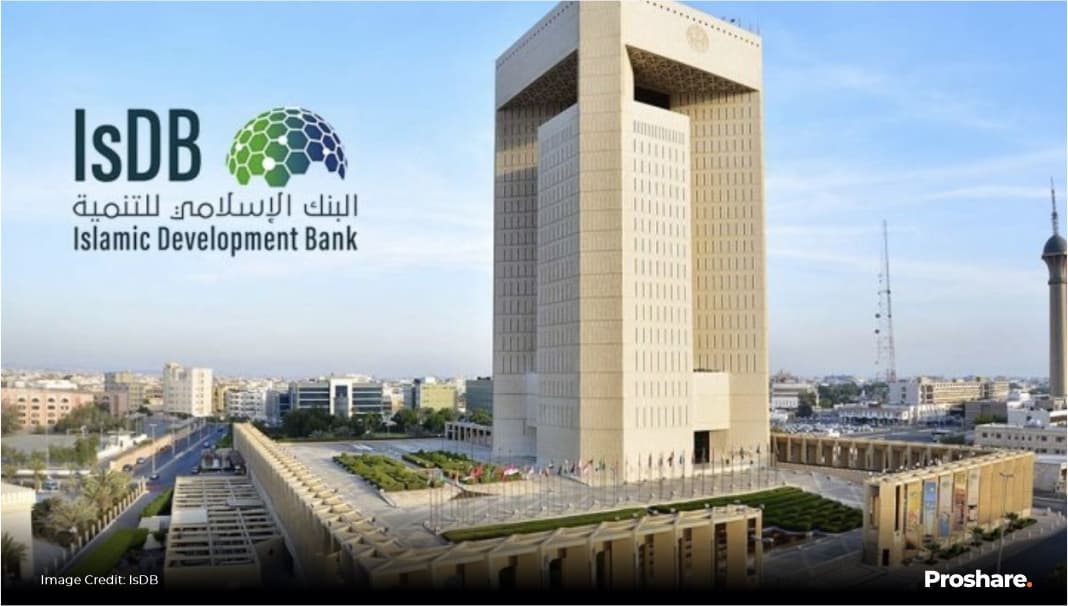
A snapshot of this reality comes from Jeddah, Saudi Arabia’s second most populous city. On 29 September, the Islamic Development Bank (Islamic Development Bank, IsDB), which is headquartered in this city on the eastern coast of the Red Sea, approved $938 million in new funding for six countries: Uzbekistan, Tunisia, Nigeria, Pakistan, Syria and Kyrgyzstan. Energy, agriculture, healthcare, transport, water and sanitation: sectors that appear very different, but are united by the goal of building infrastructure and strengthening national economies.
Multilateral institution
It is not a huge sum when compared with the vast daily flows of global finance. But it becomes significant when one considers where the money is going. Tashkent will receive $115 million for a wind farm with battery storage and a further $202.15 million for the mechanisation of agriculture. Pakistan will receive $100 million for the fifth phase of the polio eradication programme. Tunisia will receive €335.49 million for the extension of the motorway network in the regions of El Kef and Jendouba. Syria, at a particularly delicate stage in its reconstruction, will receive $2.92 million for the road transport sector. Kyrgyzstan will receive 70.7 million for water and sanitation, whilst Nigeria is set to receive 60.67 million for agricultural development in Katsina State.
The IsDB was established in 1975 and today comprises 57 member countries spread across four continents. Saudi Arabia is its largest shareholder, holding 23.51 per cent of the capital; it is followed, amongst others, by Iran, Libya, Qatar, Indonesia, Egypt and Kuwait. We are therefore not dealing with a Saudi national bank lending money abroad, but with a multilateral institution of the Islamic world.
In 2025, the IsDB Group approved net financing of $15.8 billion, 20.2 per cent more than the $13.1 billion in 2024.
Actual disbursements reached $11 billion. Within the bank, approvals drawn from ordinary capital resources totalled $5.7 billion: 46 per cent allocated to transport and connectivity, 20 per cent to water, urban services and related infrastructure, and 16.1 per cent to healthcare.
These figures compel us to look beyond the usual portrayal of international finance. For capital from the Islamic world does not necessarily remain in the coffers of oil-producing countries. It seeks out projects, infrastructure, markets, connections and food security. And it builds networks and relationships.
Of course, it would be simplistic to define these financial operations merely as a large-scale ‘petrodollar recycling’ scheme. The IsDB’s financial activities are far more complex. In fact, the bank also raises funds on international markets through sukuk, financial instruments compliant with the principles of Islamic finance. Given that Islam prohibits the payment and collection of interest (riba), sukuk offer returns based on participation in assets, activities and projects (with a particular focus on social utility and the common good) that generate income, such as rental income.
Within the context of globalisation
In March 2025, the Islamic Development Bank raised US$1.75 billion through an issue subscribed to by banks, institutional investors and central banks; in June of the same year, a further US$1.2 billion. In May 2026, it placed a further US$1 billion, with a book of orders exceeding US$2.65 billion. The IsDB’s issues are also purchased in Europe, Asia and the United States. In the 2026 placement, 52 per cent was purchased in the Middle East and Africa, but 24 per cent in Asia, 19 per cent in the United Kingdom and Europe; and 5 per cent by US offshore investors.
Islamic finance, therefore, does not exist on the fringes of financial globalisation. Rather, we can say that it is part of globalisation whilst simultaneously carving out its own space within it. Whilst in the West we often continue to equate the global economy with what happens in New York, London, Frankfurt or Hong Kong, other players are building financial and infrastructural networks according to their own logic. The IsDB’s stated objective is the socio-economic development of its member countries; but the result is also the strengthening of a network of relations between countries united by their belonging to the Islamic world.
To be clear: this does not mean that these countries all pursue the same interests, nor that there is an indistinct ‘Muslim economic bloc’. The differences in economic objectives between Saudi Arabia, Turkey, Indonesia, Pakistan, Iran, and countries in sub-Saharan Africa or Central Asia are often profound. And many of these countries compete with one another for investment, markets and influence.
Nevertheless, there is a shared financial infrastructure that is gaining in importance. Alongside the IsDB, there are affiliated institutions such as the International Islamic Trade Finance Corporation (which deals primarily with trade finance) and the Islamic Corporation for the Insurance of Investment and Export Credit (active in the insurance sector), which in 2025 facilitated over 9.2 billion dollars’ worth of trade agreements and investments between member countries of the Organisation of Islamic Cooperation (OIC) and supported $5.6 billion in inward foreign direct investment.
Economy and geopolitics
Also worth mentioning is the Arab Fund for Economic and Social Development (AFESD), based in Kuwait, which finances projects in Arab countries, particularly in the sectors of infrastructure, energy, water, agriculture, healthcare and education.
Nor should we forget theArab Bank for Economic Development in Africa (BADEA), which promotes cooperation between Arab countries and sub-Saharan Africa by supporting infrastructure, rural development, trade and social services.
In short, looking solely at the stock markets means observing capital as it is traded. Looking instead at these institutions, however, means realising where capital chooses to go: a road in Tunisia, a dam or a water supply network in Central Asia, a healthcare programme in Pakistan, a wind farm in Uzbekistan, or an agricultural project in Nigeria.
This is where the economy also becomes geopolitics. Not necessarily because there is a hidden strategy behind every funding decision, but because infrastructure, energy, water, transport, trade and healthcare create dependencies and relationships destined to last far longer than a stock market listing.
Whilst in the Western world there is all too often discussion of how to maintain one’s influence in the global economy, a significant part of the Islamic world, through the levers of finance and the economy, seems committed to strengthening relations and development.
The $938 million deal announced in Jeddah a few days ago is merely one piece – a small one, all things considered – but one that helps to piece together a much larger picture.