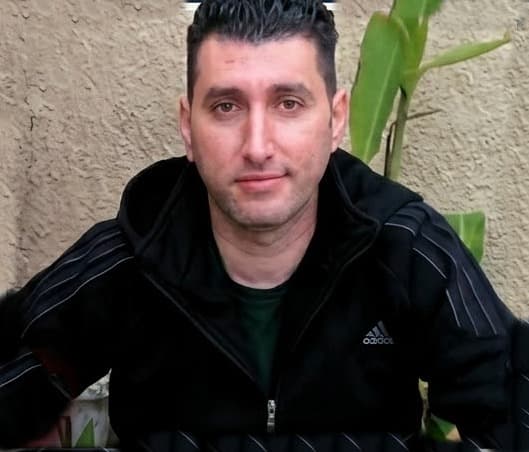
Damascus (AsiaNews) – Maher Nawras Sankari was standing outside his home when several armed men abducted him.
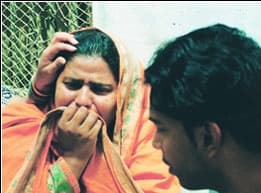
At around 8 am on 19 October, a black car collided with his motorbike in Suqaylabiyah, a predominantly Christian town in the province of Hama. Masked men got out of the vehicle and abducted the jeweller, according to eyewitness accounts and CCTV footage.
Another morning of routine chaos has thus highlighted the limitations of official announcements regarding a return to calm. The identities and motives of the kidnappers remain unknown. Whether it is for ransom or for religious reasons, how can armed men abduct someone outside their own home, just a few weeks after an operation by the security forces?
The kidnapping follows the attacks in March, the tensions in July and the renewed violence on 3 October. The following day, the security authorities had spoken of a row between young people that escalated to involve a shop, following which arrests were made in Suqaylabiyah and the neighbouring Qalaat al-Madiq.
Local and church sources, however, reported shots fired at homes and damaged shops. Furthermore, residents contested the portrayal of the violence as merely a personal dispute.
On 20 October, the Syrian Christian Observatory reported the release of Joud Arab, following the earlier releases of Imad al-Abdallah and Joseph Dweib, who had been detained by the security forces after the violence.
The releases were preceded by initiatives from Greece: MEP Fredis Beleris had called for protection for the community, referring to Athens’ diplomatic efforts. His direct role in the releases remains to be clarified. Meanwhile, Sankari’s fate remains unknown.
Father Fadi Sankari, a Greek Orthodox priest from the town, has called for protection for women, children and the elderly, urging restraint and an end to acts of revenge. The issue goes beyond the cessation of gunfire: what will prevent a new outbreak of violence once the security forces’ presence is scaled back?
A human rights report dated 13 May, based on 13 interviews and visual evidence, documents looting, damage and shootings on 27 and 28 March. It compiles allegations of failure to intervene or complicity on the part of officers, which must, however, be verified by an independent investigation. It also criticises the dismissal and withdrawal of complaints without a clear determination of responsibility: does reconciliation rebuild relationships or replace justice?
Fear beyond Suqaylabiyah
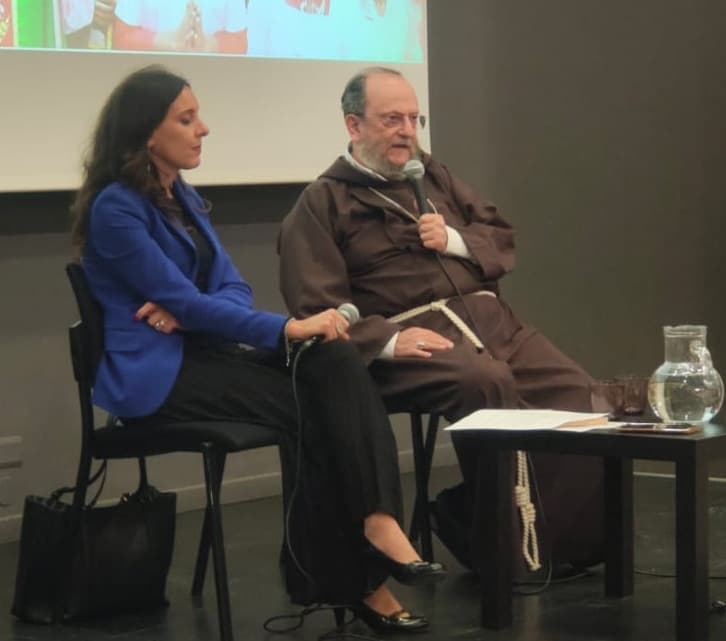
On 15 October, the Portuguese branch of Aid to the Church in Need (ACN) published the testimony of Fr Fadi Azar, a Franciscan priest working in Aleppo. The priest described the rise in kidnappings and thefts amidst poverty and inflation, with no tangible improvements since the fall of Bashar al-Assad.
His account also touches on pressures of a specifically religious and denominational nature: vandalised cemeteries, hostile graffiti on church walls, and vehicles belonging to radical Islamist groups distributing leaflets urging Christians to convert to Islam. Some Christians, he reported, have lost their jobs or been denied opportunities because of their faith.
Economic hardship and insecurity reinforce one another. Families are struggling to make ends meet and fear they will have to sacrifice their faith and way of life in order to stay. The pressure to emigrate is growing, whilst the Church provides education, healthcare and material aid.
The testimony does not prove any government policy, but calls on the authorities to combat intimidation and discrimination. Keeping churches open is not enough to guarantee religious freedom if the faithful face harassment outside or exclusion in the workplace.
Meanwhile, the suicide bombing of the Greek Orthodox church of Mar Elias in Damascus on 22 June 2025 remains in the background; the attack killed dozens of worshippers and injured just as many, whilst the Syrian Ministry of the Interior subsequently attributed the attack to Islamic State. Of course, dismantling extremist networks is necessary, but it does not address the issue of recurring local attacks, nor does it replace day-to-day protection.
A Parliament for all Syrians?
On 18 October, the People’s Assembly opened its first ordinary session. The rules of procedure, approved in July, stipulate that ordinary and extraordinary sessions must begin with the recitation of verses from the Qur’an. These same rules envisage an institution representing the entire population, and not all Syrians are Muslim. If the opening of Parliament were to involve Christian hymns, the question would equally arise as to the place accorded to non-Christian citizens. The issue concerns the religious identity of a public institution, rather than the right of believers to pray.
The constitutional declaration of 13 March 2025 lends concrete weight to the debate. It affirms equality and freedom of belief, but requires the president to be Muslim and establishes Islamic jurisprudence as the primary source of legislation. Promises of citizenship thus coexist with a religious barrier to access to the highest office of state.
Other minorities, too, share this concern. The sectarian killings on the coast in March 2025 and the abuses against the Druze in Suwayda in July of the same year have fuelled fears that one’s identity alone can expose people to violence. Whilst the circumstances and those responsible differ, the lack of protection and impunity leave rights at the mercy of local power dynamics.
Who speaks on behalf of Christians?
The authorities present Christian participation as evidence of inclusion. Among the most visible figures are Hind Kabawat, Minister for Social Affairs and Labour and the only woman in the government announced on 29 March 2025, and Nawar Najmeh, who has become spokesperson for the Higher Committee for the People’s Assembly Elections.
However, they do not have a mandate to speak for all Christians. Critics ask whether their presence changes policies or merely reassures domestic and international public opinion. Some have used the term ‘dhimmi’ pejoratively, accusing figures close to the authorities of accepting a subordinate position.
This controversy does not reflect a unanimous Christian stance. Christian representation also includes the Assembly’s Deputy Speaker, Madonna Bishara. In an interview published on 13 October, she spoke of a newfound freedom. A few days later, Fr Azar’s public testimony described fear and discrimination. This contrast matters more than the number of Christian faces in official photographs: whose experience shapes the government’s actions?
The two missing bishops
The recurrence of abductions reopens a wound dating back to 22 April 2013, when armed men intercepted the car of Greek Orthodox Metropolitan Paul Yazigi and Syriac Orthodox Metropolitan Yohanna Ibrahim near Aleppo.
They were returning from the Turkish border area as part of efforts to secure the release of two kidnapped priests. Their driver, Deacon Fathallah Kabboud, was found dead. The fate of the two bishops remains unknown.
The identities of the victims in the footage subsequently linked to their alleged killing have never been reliably established. The Dagestani militant known as Abu al-Banat, cited in journalistic investigations, was convicted in Turkey of membership of a terrorist organisation; however, the verdict did not establish that he had killed the bishops. Thirteen years on, the lack of answers reveals a failure that endures through successive administrations.
What makes it possible to stay?
Finally, the government promises a state for all Syrians. Following the attacks in Suqaylabiyah, the Churches have called for investigations, compensation, the establishment of accountability and arms control, rejecting the characterisation of recurring violence as isolated incidents. The restriction of certain festive celebrations to prayers within churches has shown how fear can curtail public life even without a formal ban.
Father Azar’s appeal concerns all religious minorities. Church aid supports the families who remain, but it cannot replace effective protection from the state. Freedom means being able to work, move about, dissent and profess one’s faith without one’s religious identity becoming a burden.
The future of Syria’s Christians will be measured by their freedom and security, and by their confidence that acts of aggression will not go unpunished. Between promises of equality and the experience of fear, the challenge is to make citizenship a daily guarantee and to ensure that staying is a possibility for building the future.