The environment is increasingly falling victim to military and economic objectives, comments environmental expert Mariana Toročišnikova on Radio Svoboda.
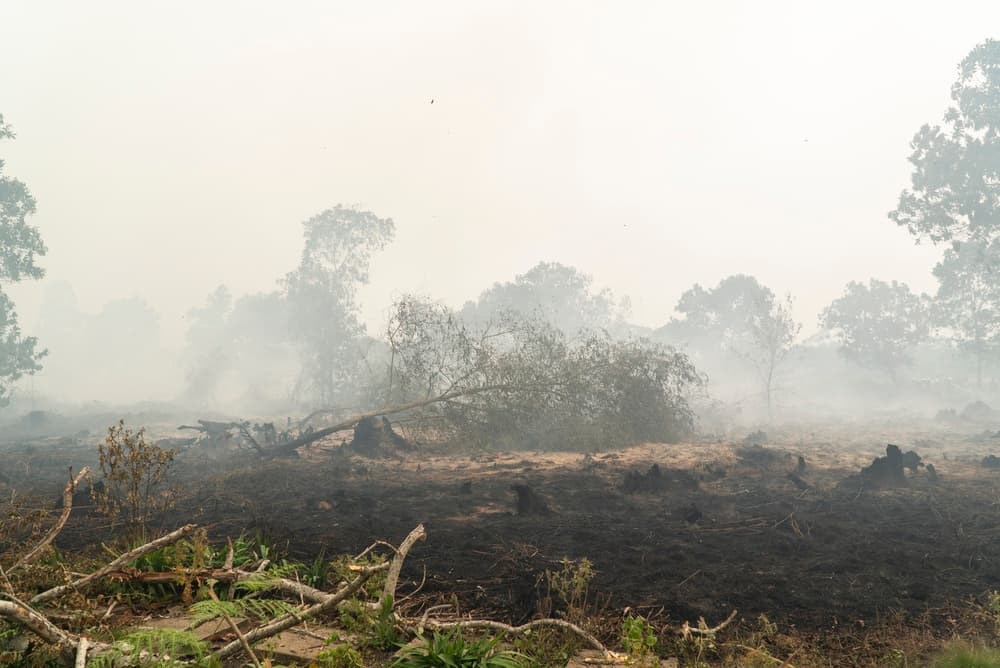
The past few weeks in Russia have felt like a disaster film, only without the special effects, because ‘it’s all really happening’. The taiga is burning beyond the Urals, the rivers of Tyumen and the Moscow region are full of dead fish, and oil spills are occurring in the Russian part of the Black Sea.
Nature is becoming a victim, write the authors of the Greenpeace International report “The Fossil Fuel Empire”, noting that since the outbreak of the war with Ukraine, up to 40 per cent of the Russian budget has been allocated to the military-industrial complex, whilst funding for numerous environmental protection programmes has been cut.
The weakening of environmental policies, against a backdrop of the climate crisis and the expansion of agriculture, is destabilising Russia’s natural ecosystems. At the same time, the number of forest fires is on the rise and deforestation is increasingly affecting intact and wild forests, particularly in Siberia and the Far East.
According to Greenpeace experts, this threatens not only Russia’s own future but also global stability, as it accelerates the climate crisis and contributes to biodiversity loss. As if that were not enough, Russia’s FSB is creating new enemies in the environmental sphere, and cases in which ‘state security in Russia’ is deemed to be at risk have become a mass-production system.
Verstka correspondent Julia Selikova reports on a large-scale investigation that has identified 1,497 people accused of treason and espionage for actions linked to environmental protection.
The environmentalist Vladimir Slivjak also spoke on a television programme about how the war is affecting the climate and the environment, stating that “Russia is a vast country that profoundly influences the climate; it is one of the world’s biggest polluters and one of the five countries that pollute the atmosphere the most”.
When it comes to climate change, the enormous volume of global emissions and the resulting climate change and warming, Russia plays a key role; naturally, the war in Ukraine is leading to significantly higher greenhouse gas emissions than in the past. Meanwhile, Russia is completely absent from global efforts to reduce greenhouse gas emissions.
Oil spills, for example, are a direct consequence of the war Russia started in Ukraine. Several major incidents have already occurred this year, and 2024 saw the largest oil spill in history in the Black Sea.
The Black Sea is shared by several countries, not just Russia, and it is clear that if this sea is damaged, the consequences will affect all the countries bordering its shores. When a large, industrialised country is ruled by an authoritarian regime, if that country’s president loses control, the environmental consequences are truly severe.
And not just from an environmental point of view, of course, as Slivjak states: “They say the climate is changing, that war is to blame, that Russia is directly or indirectly responsible, that this is why we have heatwaves, dry thunderstorms, forest fires… but weren’t the forests burning even before the war? I think so, and almost every year they said there had been more fires than in previous years. It is the state’s duty to tell us that we must rebuild our lives, because in the future there will be even more problems due to climate change”.
Climate change on the planet did not begin today, and it certainly did not begin because Russia started the war in Ukraine. It has been underway for a long time, but it is now accelerating across the entire planet, and a large number of natural disasters are occurring.
In 2010, there was a heatwave during which the forests around Moscow burned, shrouding everything in smoke; at the time, climatologists stated that heatwaves occurred roughly once every 10 years. Looking at Europe over the last four years, three of those years have seen record-breaking summer temperatures, three of which were characterised by intense heatwaves, each costing the European economy hundreds of billions of euros.
This phenomenon is not confined to Europe or Russia; it is being felt all over the world, albeit in slightly different ways. In some areas it takes the form of droughts, in others of floods, whilst in yet others new infectious diseases are spreading because the pathogens that cause them are moving further north.
Previously, some regions were too cold, but now the global average temperature has risen to such a level that they have become habitable, and people in the north are beginning to contract diseases that were previously found only in the south, in Africa and so on.
Unfortunately, the forecasts for climate change are very bleak, and it seems there is nothing we can do to stop this process: we can only adapt, by reducing greenhouse gas emissions to prevent the climate from becoming even more catastrophic in the future. Above all, we must be mindful of future generations.
As Toročišnikova points out, if we manage to reduce greenhouse gas emissions from the burning of fossil fuels – namely coal, oil and gas – today, by the second half of this century ‘it will probably no longer be necessary to wear protective suits to leave the house’, and the climate will still be relatively mild.
The alternative is that after 2050–2060, “people will no longer be able to leave their homes; they will need protective suits and space suits, because the outdoor environment will be completely hostile, impossible to endure”. Added to this are hunger, a lack of drinking water and epidemics – a terrifying scenario that must be mitigated by doing everything possible.
The journalist tries to imagine people’s reactions: ‘They’ll ask you: what evidence do you have? Why are you scaring us? At the start of the last century, even science-fiction writers predicted that by the end of the 20th century people would be wearing space suits and trees would no longer grow; yet everything is growing and flourishing”, and so she wonders why people do not believe these predictions from ecologists, climatologists and scientists.
Looking back at the evolution of industrial civilisation, scientific and technological progress led humanity to burn enormous quantities of coal, oil and gas. At the end of the 19th century, it was mainly coal; in the 20th century, oil and gas; and now all of these together – and this has led to a huge amount of greenhouse gases being released into the atmosphere, creating a greenhouse effect and warming the Earth.
This was happening at a time when previous generations were still accustomed to sowing at one time of year and harvesting at another, accustomed to certain climatic conditions; but then everything changed to such an extent that the harvest was lost, and there was nothing left to eat.
“And it would be fine if this happened in just one place: you can buy elsewhere, but when this happens across the whole planet, there is no one left to buy from, prices start to rise and instability begins to grow,” warns Toročišnikova.
Climate refugees are already emerging, because in many areas desertification is taking place, deserts are expanding and the amount of fertile land is shrinking. This naturally creates new sources of tension, mainly in the more developed countries and also in Russia; we are witnessing migration crises in Europe and elsewhere, but “this is just the tip of the iceberg; the worst is yet to come”, says the expert.
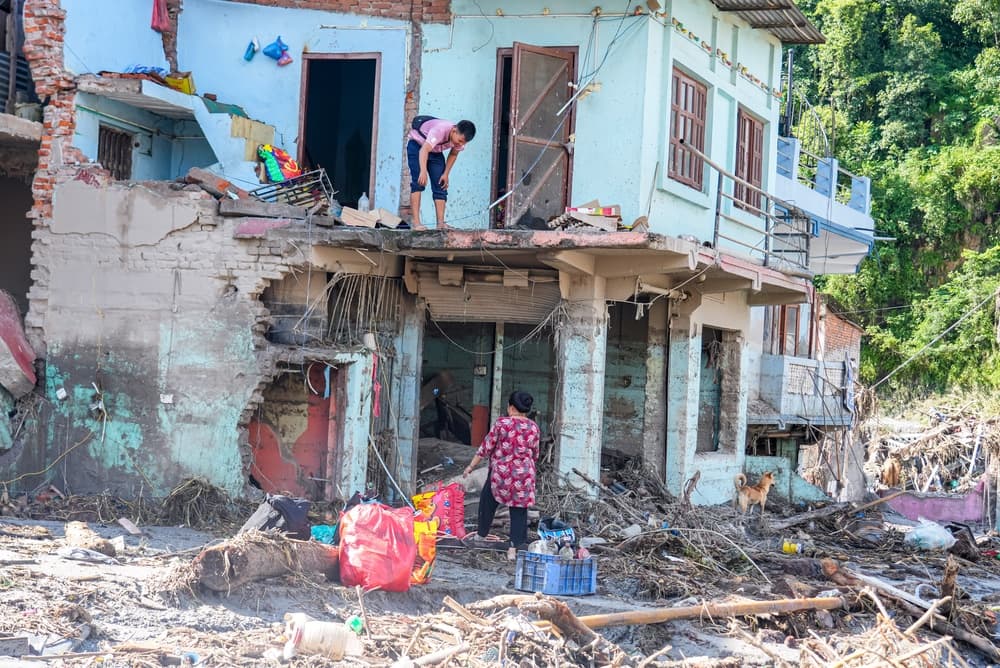
There are now floods in Tyumen, where there is no clean water, and people are complaining on Instagram about having to wash with water that smells of faeces. Floods in Siberia will become increasingly severe, and droughts will be much more intense; the Rhine and the Danube are already at extremely low levels and are at risk of drying up completely.
We must try to adapt by changing supply chains, freight transport infrastructure and energy supply systems, because we are seeing nuclear power stations that still produce a great deal of energy being shut down because the water is getting too hot and can no longer cool the reactors. Above all, we must stop polluting the world through war – something the Kremlin fails to understand.