Vladimir Putin had promised Russians that he would restore the greatness that once was the Soviet Union. Now the lines at petrol stations, caused by Ukrainian drones striking Russian oil facilities, are back with hundreds of cars line up across Russia, reaching epic proportions in the Siberian region of Transbaikal, where some motorists have had to remain in line for 15-17 hours, sometimes more than a day, often quarrelling and scuffling.
In some places, the police and the National Guard keep order with a certain disdain and indolence; in others, whip-wielding Cossacks lend an ethno-folkloric flavour to the difficult situation.
The accumulated stress ends up in videos on social media featuring ironic or depressive monologues by motorists caught in traffic, a truly foolproof way to channel social discontent in every direction.
On the whole, people are reacting to the new shortages with a healthy dose of fatalism and stoicism, echoing the slogan, “Our ancestors stood firm, and so shall we!”
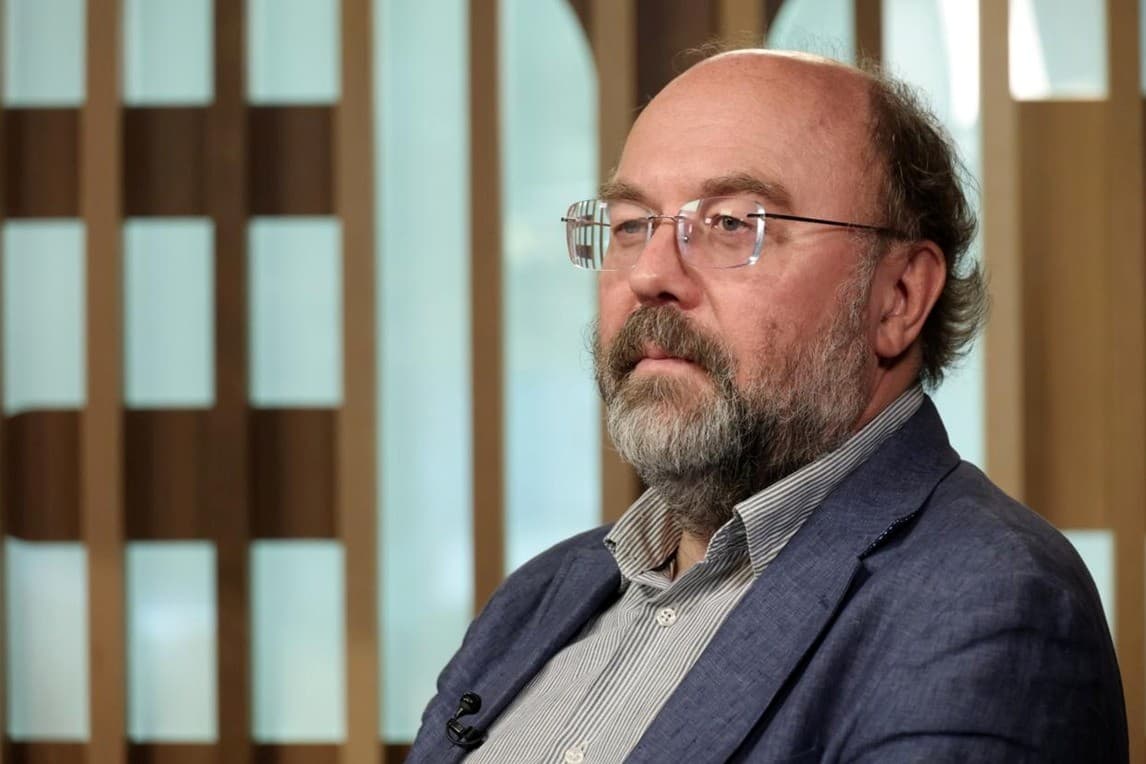
As Sergei Medvedev, historian and journalist, host of the Archaeology talk show on Radio Svoboda (Radio Fre Europe/Radio Liberty), reports, correspondents in the two capitals of Moscow and St Petersburg note that people are showing great understanding regarding the lines at petrol stations, optimistically calling them “temporary difficulties”.
Classic Soviet-era methods of coping with shortages are back: some seek out acquaintances – a trusted security guard, or a city hall employee with priority access to a pump; others roam the city at night looking for an open petrol station; and still more install additional protective covers on fuel caps, because some enterprising citizens steal petrol from parked cars at night, another nostalgic nod to the Soviet Union.
Twenty-litre jerrycans have reappeared on balconies, and the engine light comes on more and more frequently on dashboards, a sign that fuel is being shamelessly adulterated. Some have tried public transportation they haven't used in 30 years, and have been pleasantly surprised to see how much improved electric buses and subway trains have become under the leadership of Moscow's “Eternal Mayor” Sergei Sobyanin.
The question of the origin of these queues, their so-called root cause is completely ignored, just as the very word "war" is avoided: petrol shortages are seen as a "natural disaster”, something to periodically put up with.
In a moment of introspection, Medvedev talks about his youth in the Moscow of the early 1990s, "my flaming Lada, the intoxicating summer nights scented with poplars and lilacs, the long two- or three-hour lines at the petrol station on Minskaya Street in Moscow, the cigarette breaks with neighbours, the conversations about life, and the sense of camaraderie that arose in this social organism united by a common goal, with a much-coveted window to paradise: the petrol station window with the ‘No Petrol’ sign.”
The walk down memory lane includes the queues in the late autumn of 1991, when, amid Gorbachev's gridlocked perestroika, the so-called Moscow food blockade occurred and bread was hard to come by, but there was always the Georgian cooperative bakery at the entrance to a large Stalin-era building on Mayakovsky Square, now Triumfalnaya Square, where the Pekin Hotel is located.
To buy a couple of lavash, the tasty Georgian flatbread, one had to line up early in the evening. Customers drove from distant neighbourhoods, or walked from the Tishinka and Patriarshiye prudy neighbourhoods, a throwback to Mikhail Bulgakov's The Master and Margarita, and lined up silently under a high, draughty doorway.
Medvedev stood in line with them, a scarf wrapped his neck, thinking back to his mother's stories of bread lines during the war, in the cold darkness before dawn, when people huddled together and swayed for warmth, “and we were there too, standing under a draughty doorway, in the icy wind of Russian history, whose beauty lies in the fact that it always offers you a point of comparison for your current suffering and hardship, to reassure you that today is not so bad.”
Towards dawn, the smell of freshly baked bread began to waft from under the door, and half an hour later you could hold three warm, crusty lavash in your hands, tearing them off and starting to eat them on the way home.
The same retrospective and optimistic approach to the queue situation is being used today by domestic propagandists. "By the way, all this has happened before, friends, and that's okay, we survived," warns renowned journalist Ksenia Sobchak on her channel.
"No petrol? I still remember when food was rationed," host Margarita Simonyan chides her fellow citizens, indulging in nostalgic memories of carrying buckets of water in Krasnodar (“not Coca-Cola!”), while "war correspondent" Dmitry Steyshin describes the petrol situation as "the convulsions of consumer psychosis."
Queues in general are the fundamental form of social organisation and political control in Russia. According to sociologist Simon Kordonsky, the country is governed by a "resource state”, whose primary task is the distribution of resources, where access to goods is determined by the individual's place in the system of power.
In Russia, resources are monopolised by the state, and society is divided between those with privileged access, the "authorities”, and those with limited access, "the people”, i.e. between owners and requesters.
Shortages create hierarchies right away. At the top of the petrol pyramid is the army, whose needs are met first, then high-ranking officials and security forces; behind them come parliamentarians, the main state-owned companies, municipal and emergency services, each with its own share in the pipeline.
At the bottom of the pyramid are those with residual rights to petrol; their fate is one of complaints, primarily in the form of videos on social media, and lines at petrol stations.
A gap remains between the authorities and the people, a gray area where various "schemes" by intermediaries, resellers, and petrol vouchers (another nod to the Soviet past) emerge, in which a vast and disjointed black market operates.
The main pathway to this resource, a tool of social control, remains the queue, where people exchange their time for a scarce commodity.
The average Soviet citizen spent up to two hours in line every day, for a total of about 15 hours a week – approximately 25 per cent of all free time was spent queuing, 40 per cent for pensioners.
Writer Vladimir Sorokin wrote his debut novel in the twilight of the socialist era, titled unsurprisingly The Queue. The whole story unfolds in a single, multiday sequence, due to a shortage of an unknown item. The sequence extends across various Moscow courtyards, where the characters meet, talk, argue, eat, flirt, and make love.
The queue morphs into a collective body; the wait is more important than the goal, the true nature of which is not even known, and it is hard to find a more fitting metaphor for Soviet life.
In reality, it is not just Soviet life. The queue is a bond that embodies Russia's nature, an image of communal existence, in which the all-powerful state distributes benefits from the top, and the community of supplicants, organised in a single chain, wait at the bottom. For Medvedev, “The longer the queue, the stronger Russia!”
In the era of open market economics, even post-Soviet people lined up at the first opportunity: the memorable queue for a concert by Russian singer Alexei Serov, where the crowd eventually broke down the doors of the Tretyakov Gallery; the queue for an exhibition of 19th-century painter Ivan Aivazovsky; the line of devotees for the "Belt of the Virgin" and the relics of Saint Nicholas the Wonderworker in the Cathedral of Christ the Saviour.
More recently, people queued in large numbers in early 2024 to sign the nomination papers for Boris Nadezhdin, who was running against Vladimir Putin in the upcoming presidential election. Likewise, Russians lined up in great numbers to vote at Russian consulates in March. Putin won 72 per cent of the vote of Russians abroad, so it was essentially a “Putin queue”.
Now all federal regions are united by the all-Russian queuing for petrol. “My Western friends and colleagues have often wondered how long Russians will endure these queues, when the revolt of empty containers will begin? One asked me directly: for how long? To which I replied: until then,” Medvedev said recently.
In other countries, shortages cause social and political instability, in Russia, when faced with the imperfection of existence, people do not protest, they obediently get in line, without asking what the root cause is.